
If you are over 45 and persistently tired despite sleeping reasonably well, eating reasonably healthily and not doing anything obviously wrong — the explanation is almost certainly cellular. Specifically, your mitochondria are producing less energy per cell than they were a decade ago. This is not a character flaw. It is a well-documented biological process. Understanding it is the first step to doing something about it.
The NHS identifies tiredness and fatigue as one of the most common reasons people visit their GP, and notes that it often has no single cause. For adults over 45, mitochondrial decline is one of the most significant and least-discussed contributors.
The short answer: your cells are producing less energy
Every cell in your body runs on ATP — a molecule produced by mitochondria (the tiny power stations in your cells). A healthy adult produces approximately 40kg of ATP per day. After 45, mitochondria begin a progressive decline: they produce less ATP per cell, accumulate damage faster, and get replaced more slowly. The result is that your cells are running on reduced power — like a phone that no longer holds its charge the way it used to.
This is not the same as being unfit, underslept or stressed (though those things make it worse). It is a reduction in cellular energy production capacity that happens to virtually everyone after 45 to varying degrees. For a full explanation of how mitochondria work and why they decline, see our foundational guide.
What this fatigue actually feels like
Mitochondrial fatigue has a specific character that distinguishes it from tiredness caused by a bad night’s sleep or a stressful period:
- It doesn’t resolve fully with rest. A good night’s sleep helps but doesn’t restore the energy levels you had 10 years ago. That’s because sleep restores glycogen stores and allows some mitochondrial repair — but cannot fully compensate for reduced mitochondrial capacity.
- Exercise takes longer to recover from. A workout that used to leave you fine the next day now takes 2–3 days to fully recover from. Skeletal muscle is your most mitochondria-dense tissue aside from the heart. Reduced muscle mitochondrial ATP output means slower ATP regeneration between sessions.
- Mental energy is also affected. Neurons depend entirely on mitochondrial ATP for neurotransmitter synthesis and synaptic firing. Mitochondrial decline in brain tissue contributes to the cognitive fog, slower thinking and reduced concentration that often accompany middle-age fatigue.
- You notice the cumulative effect. An individual day is manageable. But by Thursday you’re running on empty in a way you never did at 35. This is cellular ATP debt accumulating across the week.
Four things that are specifically happening after 45
1. NAD+ has fallen significantly. NAD+ is the molecule that carries electrons through your mitochondria to produce ATP. Research published in Cell Metabolism (Yoshino et al., 2018) found NAD+ levels decline approximately 50% between ages 40 and 60. Less NAD+ means your mitochondria’s electron transport chain runs slower — less ATP per cell, despite the same food intake.
2. Damaged mitochondria are accumulating. Mitochondria produce small amounts of damaging molecules (reactive oxygen species) as a byproduct of energy production. In your 20s and 30s, your cells clear these damaged mitochondria efficiently during sleep. After 45, the clearance mechanism (mitophagy) slows, and damaged mitochondria accumulate — producing less ATP and more damaging molecules than healthy ones.
3. New mitochondria are being made more slowly. Your body continuously makes new mitochondria to replace damaged ones. This process (mitochondrial biogenesis) is driven by a molecule called PGC-1α, which is activated primarily by exercise. After 45 — especially with reduced exercise and increased sedentary time — PGC-1α activity falls and new mitochondria are made more slowly.
4. Magnesium is probably low. This is the most overlooked, most easily fixable contributor. Every ATP molecule must bind to magnesium to be usable. The NHS lists magnesium as essential for energy production, yet UK National Diet and Nutrition Survey data shows approximately 70% of UK adults consume below the recommended intake. Low magnesium means ATP that has already been produced cannot be efficiently deployed by your cells — you’re wasting energy output because of a missing cofactor.
What actually helps — in order of impact
1. Exercise — the most powerful mitochondrial intervention. Aerobic exercise, particularly sustained moderate-intensity cardio (where you can hold a conversation), is the single most powerful stimulus for mitochondrial biogenesis. The NHS recommends at least 150 minutes of moderate aerobic activity per week. Resistance training additionally builds the muscle mass that houses your mitochondria. No supplement replaces this. But supplements support the exercise response.
2. Fix your magnesium. At the correct form (glycinate — not oxide, which has approximately 4% absorption), 300–400mg elemental magnesium daily addresses both the Mg-ATP deficit and the sleep quality issues that compound mitochondrial fatigue. Most people notice a difference within 2 weeks. Our Magnesium 3 Complex — glycinate + malate + taurate, halal certified. Full mechanism here.
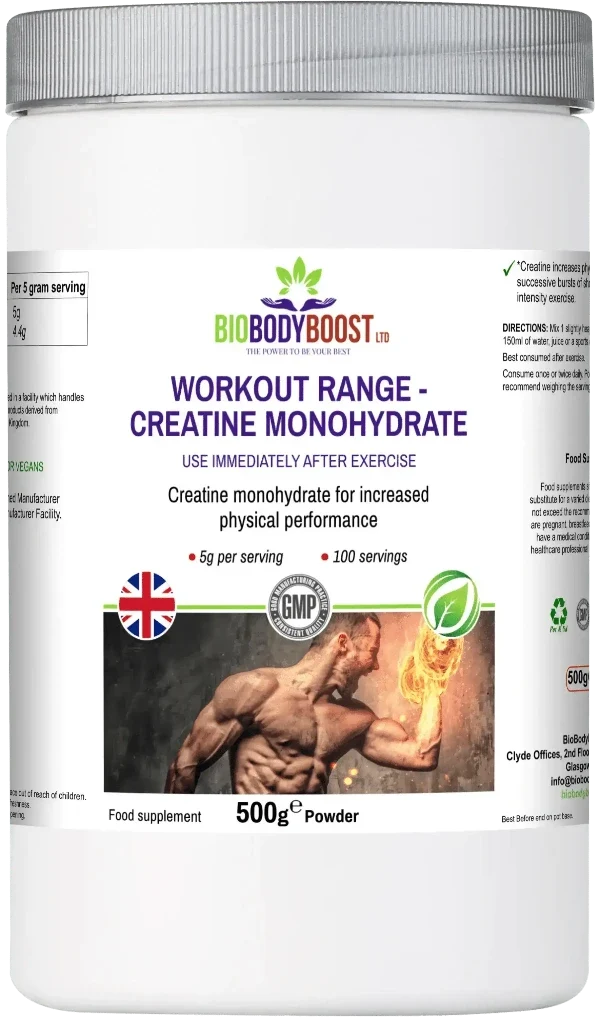
3. Add creatine. Creatine expands the phosphocreatine buffer that works alongside your mitochondria for energy. It also stimulates mitochondrial biogenesis. At 3g daily it costs pennies and has 30 years of safety data. Most people over 45 who add creatine notice improved recovery and reduced fatigue from activity within 4–6 weeks. Our Creatine Monohydrate — halal certified, vegan. Full longevity mechanism here.
4. Sort your sleep. Slow-wave deep sleep is when damaged mitochondria are cleared and new ones made. Consistently getting less than 7 hours, or poor quality sleep, directly accelerates mitochondrial decline. The NHS identifies poor sleep as a risk factor for multiple serious health conditions. Our BioSnooze — ashwagandha KSM-66 (reduces cortisol, improves sleep quality), valerian, magnesium. Halal certified. Full sleep-mitochondria mechanism.
5. Beetroot for mitochondrial efficiency. Beetroot nitrates improve how efficiently your mitochondria produce energy from oxygen — the same effort, less cellular strain. Particularly helpful if exercise fatigue or breathlessness is a feature of your tiredness. Our Red Punch — 4,500mg beetroot and Montmorency cherry, halal certified. Full mechanism here.
Browse the full mitochondria and aging guide for the complete picture.
Is it normal to feel more tired after 45?
Common, yes — but not inevitable, and not simply something to accept. The tiredness that develops progressively after 45 has identifiable cellular causes: declining NAD+ (down approximately 50% between ages 40–60), accumulating mitochondrial damage, slower mitochondrial replacement, and widespread magnesium insufficiency. These are addressable. The NHS recommends seeing a GP if fatigue is persistent and unexplained to rule out treatable conditions including anaemia, thyroid dysfunction, diabetes and sleep apnoea — all of which are more common after 45 and all of which also impair mitochondrial function. Once medical causes are excluded, the mitochondrial support approach described in this article addresses the underlying cellular mechanism.
What supplements help with tiredness after 45?
The most evidence-supported for the over-45 mitochondrial fatigue pattern: (1) magnesium glycinate at 300–400mg elemental daily — addresses the Mg-ATP deficit affecting approximately 70% of UK adults; (2) creatine monohydrate at 3–5g daily — phosphocreatine buffer and mitochondrial biogenesis; (3) N-Acetyl L-Carnitine in BioBrain — fatty acid transport into mitochondria that declines with age; (4) astaxanthin in AstaxaKrill — mitochondrial membrane antioxidant protection; (5) beetroot nitrates in Red Punch — mitochondrial efficiency via nitric oxide. These are the accessible, well-evidenced, halal-certified options. The expensive alternatives (NMN, Urolithin A, CoQ10) target overlapping but different mechanisms at significantly higher cost.
Should I see a GP about fatigue after 45?
Yes, if it is new, significant or accompanied by other symptoms. The NHS lists common medical causes of fatigue including anaemia, thyroid problems, diabetes, sleep apnoea, depression and coeliac disease — all more common after 45 and all requiring medical assessment and treatment. The mitochondrial support approach is appropriate once these have been investigated and addressed, not as a substitute for medical assessment. Blood tests worth requesting alongside a fatigue discussion: full blood count (iron deficiency anaemia), thyroid function (TSH), HbA1c (blood sugar), vitamin D, B12, ferritin.