Quick answer: Urolithin A is a genuine and promising mitochondrial supplement — it activates mitophagy (clearance of damaged mitochondria) via a specific mechanism that creatine does not replicate. Creatine supports a different set of mechanisms — phosphocreatine energy buffering and mitochondrial biogenesis via PGC-1α — with 30 years of human trial evidence vs Urolithin A’s emerging trial base. For most UK adults over 45, creatine’s evidence base is deeper, its cost is dramatically lower, and it is available in halal-certified format. Urolithin A is worth considering once the foundational stack is in place. It is not where to start.
What Urolithin A actually is
Urolithin A is a metabolite produced when gut bacteria process ellagitannins — polyphenols found in pomegranates, berries and walnuts. Critically, only approximately 30–40% of people have the gut microbiome capable of producing meaningful Urolithin A from dietary sources. This is why supplementation is relevant — it delivers the metabolite directly, bypassing gut conversion variability.
Primary mechanism: Urolithin A activates mitophagy — the selective clearance of damaged, dysfunctional mitochondria. It does this by restoring PINK1-Parkin pathway signalling, which declines with age. Think of mitophagy as the cellular recycling system: it identifies mitochondria that are producing too many damaging reactive oxygen species or too little ATP, and tags them for removal. Urolithin A specifically enhances this quality-control process.
What the human trials show: Andreux et al. (2019, Nature Metabolism, n=66) found Urolithin A supplementation at 500–1,000mg/day significantly improved mitochondrial gene expression and muscle endurance markers in older adults vs placebo. A 2022 RCT (n=88) found Urolithin A improved muscle strength and endurance in middle-aged adults. These are promising results from a relatively small trial base.
What creatine actually is
Creatine monohydrate is a compound synthesised in the body from amino acids (and found in meat and fish) that increases muscle phosphocreatine stores. Phosphocreatine provides a rapid ATP buffer alongside mitochondrial production. Creatine also has evidence for directly stimulating PGC-1α-driven mitochondrial biogenesis — creation of new mitochondria — in older adults.
What the human trials show: Over 300 peer-reviewed studies. Branch (2003, Journal of Strength and Conditioning Research, meta-analysis of 22 studies) confirmed creatine supplementation significantly improves strength and power output. Smith et al. (2014, Journal of Physiology) confirmed creatine supplementation combined with resistance training significantly increased PGC-1α expression and mitochondrial biogenesis markers in older adults. A 2022 meta-analysis (13 trials) confirmed cognitive improvements. The evidence base is 30 years deep across thousands of participants.
Head-to-head comparison
| Creatine Monohydrate | Urolithin A | |
|---|---|---|
| Primary mechanism | PCr buffer + biogenesis (PGC-1α) | Mitophagy (PINK1-Parkin) |
| Human trial evidence | 30+ years, 300+ studies | 3–4 completed RCTs (promising) |
| Muscle benefit | Very strong (sarcopenia prevention) | Moderate (improving) |
| Cognitive benefit | Confirmed (2022 meta-analysis) | Not yet studied in humans |
| UK monthly cost | £5–10 | £25–40 |
| Halal certified (UK) | ✅ BioBodyBoost | ❌ No UK brand certified |
| Safety record | Excellent (30 years) | Good (3–4 trials, no concerns) |
| Bone density evidence | Yes (postmenopausal RCT) | Not studied |
The verdict: sequence, not choose
These are not competing choices — they address different mitochondrial mechanisms and could both be used. The question is sequencing and priority given budget and halal compliance:
Start with creatine if: you want the deepest evidence base, the lowest cost, the strongest sarcopenia and muscle evidence, cognitive benefits confirmed by meta-analysis, and halal certification available now. Creatine at 3–5g/day is the highest evidence-per-pound mitochondrial supplement available in certified halal format.
Add Urolithin A later if: your foundational stack (creatine, magnesium, sleep, astaxanthin) is established, your budget allows £25–40/month for an additional mitophagy-specific intervention, and a halal-certified version becomes available. The mitophagy mechanism is distinct and complementary. But starting with Urolithin A before establishing the fundamentals is not the most efficient use of budget or biological attention.
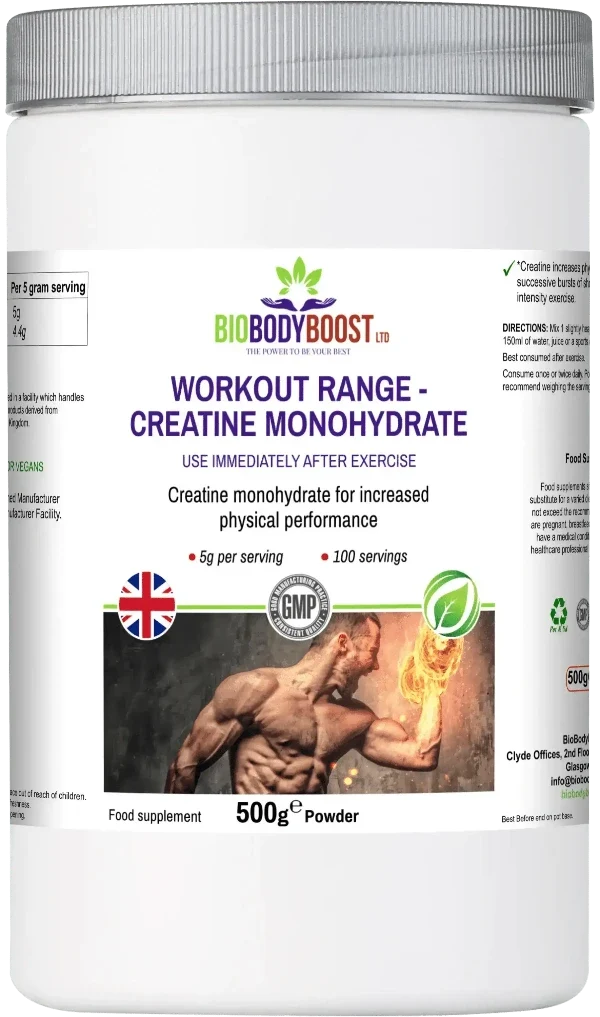
Our Creatine Monohydrate — 100% pure, halal certified, vegan, UK GMP. Full creatine longevity mechanism. See the complete mitochondria and aging guide for the full stack context.
Is Urolithin A worth taking?
It has genuine emerging evidence for a specific mechanism (mitophagy activation) that creatine does not replicate. Andreux et al. 2019 (Nature Metabolism, n=66) and follow-up trials show meaningful improvements in muscle mitochondrial gene expression and endurance markers. It is worth adding to an established mitochondrial stack if budget allows. It is not where to start — creatine, magnesium and sleep quality have deeper evidence bases and dramatically lower cost. No UK Urolithin A brand is currently halal certified, which is a material barrier for observant Muslim consumers regardless of the evidence.
What is the cheapest effective mitochondrial supplement UK?
Creatine monohydrate at 3–5g/day — approximately £5–10 per month from a quality source. It has the deepest evidence base in the mitochondrial support category (300+ studies, 30 years), supports phosphocreatine buffering, mitochondrial biogenesis and cognitive function, and is available in halal-certified format from BioBodyBoost. Magnesium glycinate at approximately £10–15/month is the second most cost-effective intervention given that approximately 70% of UK adults are below the RNI and Mg-ATP is required for all cellular energy utilisation. These two together at approximately £15–20/month cover the most impactful and accessible mitochondrial mechanisms available.