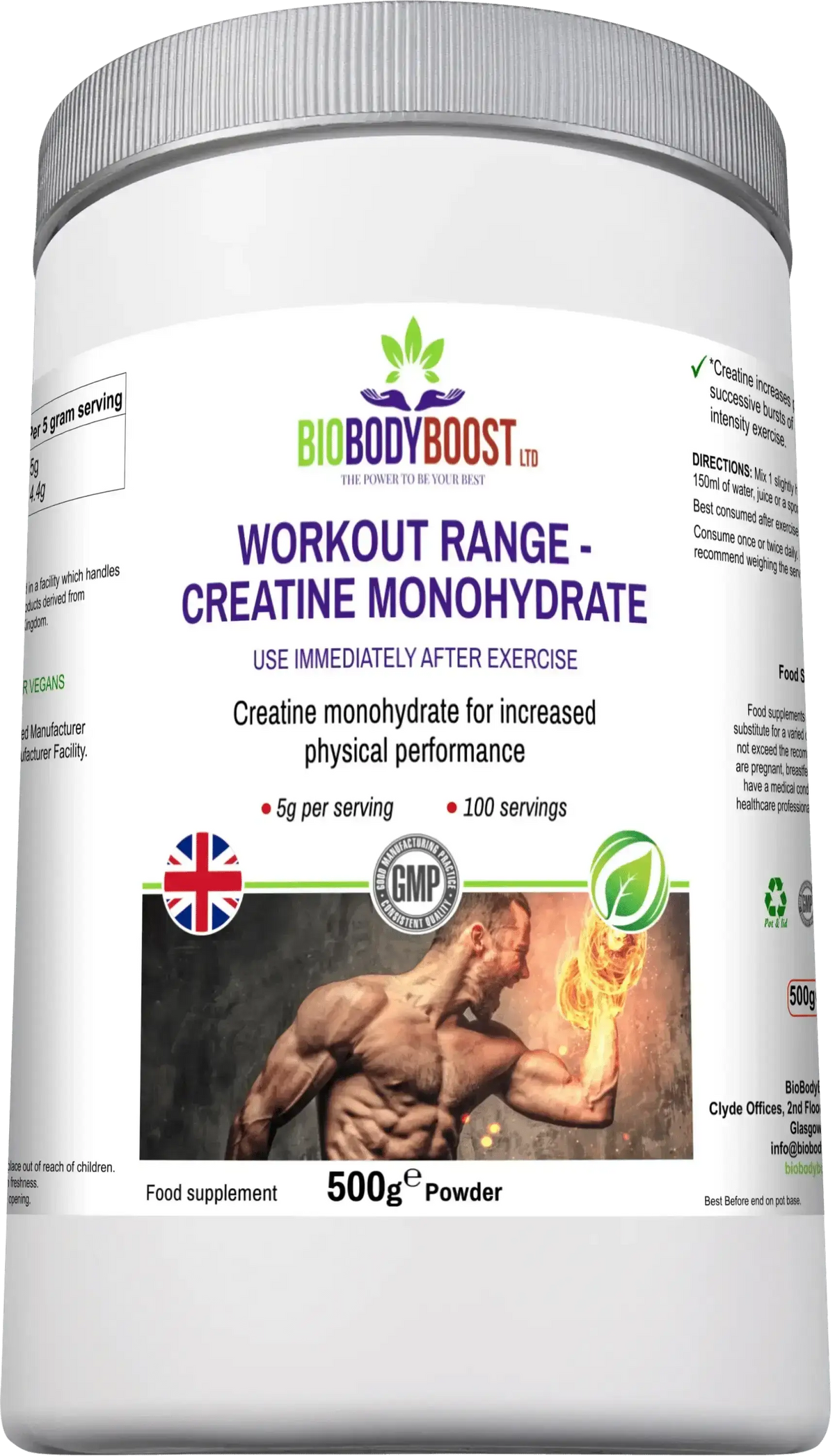
Creatine is the most researched sports supplement in existence. Over 700 peer-reviewed studies. Consistent, reproducible results across strength, power, and high-intensity performance. And yet most people buying it in the UK are being sold an underdosed product and don't realise it. The dose matters. The purity matters. And if you're Muslim, the certification matters. This covers all three.
Why Creatine Works — and Why Most UK Products Get the Dose Wrong
Creatine works by increasing phosphocreatine stores in your muscles, which regenerates ATP — the fuel your body burns during explosive, high-intensity efforts. More phosphocreatine means more ATP available per rep, per sprint, per set. The result: greater peak power output, faster recovery between efforts, and more total training volume over time.
The International Society of Sports Nutrition position stand on creatine confirms that 3–5g of creatine monohydrate per day is the clinically validated maintenance dose for saturating muscle creatine stores. The lower end (3g) works — but takes longer to saturate. Five grams is the standard for most athletes.
MyProtein Impact Creatine doses at 3g per serving. That's at the minimum of the therapeutic range — fine, but not optimal. BioBodyBoost delivers a full 5g per serving, the dose used in the majority of clinical research. Same price category. Better dose.
Why Purity and Certification Matter More Than You Think
The purity issue. Creatine monohydrate is a commodity ingredient — low-cost, widely manufactured, and variable in quality. Contamination with creatinine (a breakdown product), heavy metals, or undeclared compounds has been documented in budget creatine products. Every batch of this formula is tested for purity before release. You're not guessing.
The halal issue. Creatine monohydrate itself is a synthetic compound — it contains no animal-derived ingredients. But many creatine products are manufactured in facilities that also handle gelatine-based capsules, dairy proteins, or other non-halal ingredients. Cross-contamination risk is real. This creatine is produced in a fully halal-certified facility, giving you the full chain of custody, not just a clean ingredient list.
The source issue. MyProtein manufactures in Poland. Bulk manufactures across multiple international sites. This creatine is made in the UK, in a GMP-certified facility, batch-tested and traceable. That matters for competition athletes and anyone who takes what goes into their body seriously.
What's in Every 5g Serving
-
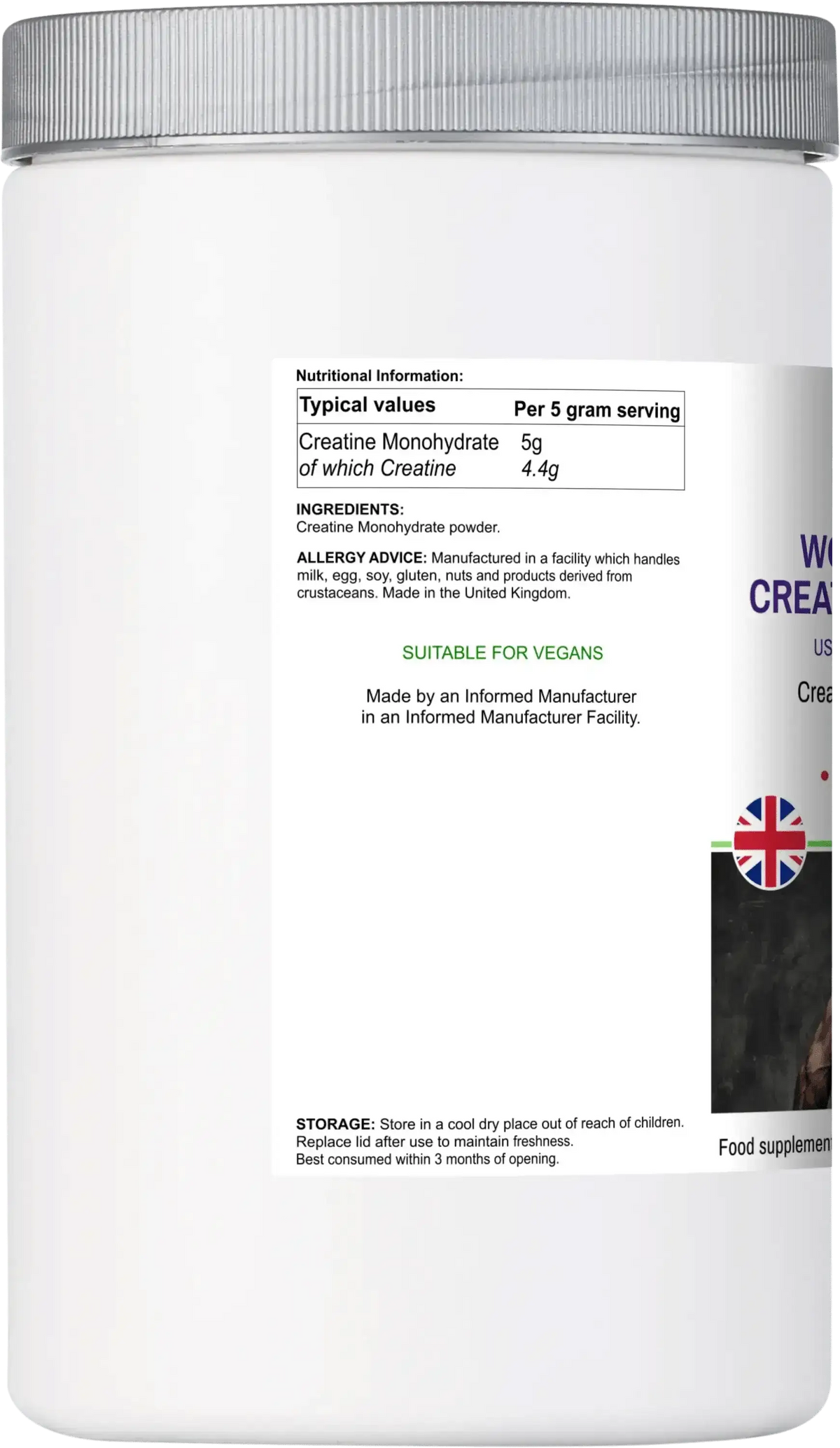
Creatine Monohydrate — 5g (100% micronised) · full clinical maintenance dose per serving
-
Nothing else. No fillers. No anti-caking agents. No sweeteners. No flavourings. One ingredient.
Micronised means the creatine particles are ground finer than standard creatine powder. Smaller particles dissolve more readily in water and are less likely to settle or clump. Mix it with anything — water, juice, a protein shake — and it disappears.
Every serving is: ✓ Halal certified · ✓ Vegan · ✓ Gluten-free · ✓ Dairy-free · ✓ UK GMP made · ✓ Batch tested · ✓ Unflavoured
BioBodyBoost vs the Competition
The most commonly purchased creatine powders in the UK — compared on the details that determine whether it actually works.
|
BioBodyBoost Creatine · £33.99/500g
|
MyProtein Impact Creatine · ~£14.99
|
Bulk Pure Creatine · ~£9.99
|
Optimum Nutrition Micronised · ~£22.99
|
| Dose per serving |
5g ✓ |
3g ✗ (sub-optimal) |
5g |
5g |
| Micronised |
✓ Yes |
✓ Yes |
✓ Yes |
✓ Yes |
| Halal certified |
✓ Yes |
✗ No |
✗ No |
✗ No |
| Batch tested |
✓ Yes |
Not stated |
Not stated |
✓ Informed Choice |
| Zero fillers |
✓ Yes |
✓ Yes |
✓ Yes |
✓ Yes |
| Vegan |
✓ Yes |
✓ Yes |
✓ Yes |
✓ Yes |
| Servings per 500g |
100 (at 5g) ✓ |
66 (at 5g) ✗ |
100 (at 5g) |
~79 (at 634g) |
| Made in UK |
✓ Yes |
Poland ✗ |
Not stated |
Not stated |
Based on publicly available product information. Prices approximate. Always verify current specs on manufacturer websites.
How to Take It
Mix 1 level scoop (5g) with 200–300ml of water, juice, or any drink. Stir or shake until dissolved — micronised creatine dissolves quickly and leaves no gritty residue. Take once daily at any time. Consistency matters more than timing. Pick a time that fits your routine and stick to it.
Loading phase (optional): Take 5g four times daily (20g total) for 5–7 days to saturate muscle creatine stores faster. Then drop back to 5g daily maintenance. Loading produces the same endpoint as steady-state dosing — it just gets you there in a week rather than 3–4 weeks. Most people skip loading and start with 5g daily. Either approach works.
Stir into your Post-Workout shake for the most convenient delivery — the carbohydrates in the recovery formula actually enhance creatine uptake into muscle cells. Or mix into WheyPro Vanilla post-training for a clean protein-creatine combination.
Is This You?
- You lift, sprint, or do any high-intensity training and want measurable gains in strength and power output
- You're currently using MyProtein creatine at 3g/serving and want to move to the full 5g clinical dose
- You need halal-certified creatine made in a fully certified facility — not just a clean ingredient list
- You train drug-tested or compete and need batch-tested product with traceable manufacturing
- You want one ingredient with no fillers, sweeteners, or flavourings that mixes into anything
- You've tried creatine before and didn't notice much — check your previous dose before writing it off
Explore the full Workout Range and Protein & Performance UK collections.
Questions We Get Asked
Is 5g really better than 3g?
The clinical range is 3–5g for maintenance. Three grams will saturate muscle creatine stores — it just takes longer (closer to 4–6 weeks) compared to 5g (3–4 weeks). For most athletes in regular training, 5g is the standard maintenance dose used in the majority of studies. MyProtein's 3g dose puts you at the lower end of the therapeutic range. If you've been on 3g and haven't noticed much, try 5g for 4 weeks and reassess.
Is this creatine halal?
Yes — fully. Creatine monohydrate is a synthetic compound with no animal-derived ingredients in the raw material. However, certification matters because of manufacturing environment. This creatine is produced in a halal-certified facility with no cross-contamination risk from non-halal ingredients. The certification covers the full production chain, not just the ingredient.
Do I need to load creatine?
No. Loading (20g/day for 5–7 days) saturates your muscle creatine stores faster — you'll feel results in about a week. Without loading, taking 5g daily, you reach the same saturation point in 3–4 weeks. The endpoint is identical. Loading just compresses the timeline. Most people skip it. If you want results faster — say you have a competition or testing period coming up — load. Otherwise, daily 5g is simpler and easier on the stomach.
Will creatine cause bloating or weight gain?
Creatine draws water into muscle cells — this is part of the mechanism. You may see 1–2kg of scale weight increase in the first week or two, particularly during a loading phase. This is intramuscular water, not fat, and it's associated with improved cell hydration and performance. It is not bloating in the gut sense. Gastrointestinal discomfort is rare with micronised creatine taken with adequate water, and is most common during loading phases where large doses are taken together.
When is the best time to take it?
Timing is not critical for creatine — it works by maintaining elevated muscle creatine stores around the clock, not by an acute pre-workout spike. Post-workout is slightly favoured in some research, but the difference is small. The most important variable is daily consistency. Take it at the same time every day, whenever fits your routine. Mixing with the Post-Workout shake works particularly well — the carbohydrate content may enhance creatine uptake via insulin signalling.
Can I stack this with other supplements?
Yes — creatine stacks well with everything. The most effective combinations: Post-Workout Chocolate shake (mix creatine in post-training), Intra-Workout if you want a creatine dose during your session, and BCAA Amino Acids for intra-session muscle preservation. Creatine does not interact negatively with caffeine despite older advice suggesting otherwise — more recent research shows no interference.
How long does one tub last?
500g at 5g per serving = 100 servings. Training 5 days a week, that's 20 weeks (5 months). Training daily, just over 3 months. If you run a loading phase first (20g/day for 7 days), that uses 140g — leaving 360g, or 72 more days of maintenance. One tub covers most people for a full training block.
Food supplements should not replace a varied diet or healthy lifestyle. Consult your GP before use if pregnant, breastfeeding, taking prescription medication, or managing a diagnosed health condition. Not recommended for children.