Last updated: September 2026 · Reading time: 8 minutes

Quick answer: Fibremaxxing means deliberately building fibre into every meal to close the UK fibre gap. The official target for adults is 30g a day, but most UK adults eat around 17–20g. Fibre supplements do count towards that total, but honestly they count for less than people think: a fibre capsule supplies around half a gram, and even a good fibre powder supplies a few grams per serving. Food does the heavy lifting. Supplements close the last few grams, add variety and make consistency easier.
What is fibremaxxing?
Fibremaxxing is the social-media name for a simple idea: eat more fibre, and eat more types of fibre. The hashtag took off on TikTok at the start of 2026, when fibre replaced protein as the nutrient everyone was talking about. Prunes, seeded bread, beans and lentils became unexpectedly fashionable.
Unlike most wellness trends, this one sits on solid ground. The UK Scientific Advisory Committee on Nutrition (SACN) set the 30g target in 2015 after reviewing the evidence on fibre intake and long-term health, and the NHS recommends the same figure. A large 2019 review in The Lancet (Reynolds et al., PubMed 30638909) found that people eating 25–29g a day had better long-term health outcomes than those eating less.
How big is the UK fibre gap?
National Diet and Nutrition Survey data shows UK adults average roughly 16–20g of fibre a day. Only a small minority reach 30g. That's a gap of 10–14g a day for most people, which is roughly the difference between a typical diet and one with an extra portion of beans, a wholegrain swap and two extra pieces of fruit.
Do fibre supplements count towards your 30g?
Yes. Fibre is fibre, whether it comes from a lentil or a psyllium husk. But this is where most fibremaxxing content goes quiet about the maths, so here it is:
| Source | Approx. fibre |
|---|---|
| 1 fibre capsule (e.g. FibreFix) | ~0.5g |
| 1 serving fibre powder (e.g. BioSlim, 5g) | 3.5g |
| Half a tin of chickpeas | ~6–7g |
| A medium pear with skin | ~5g |
| 2 slices wholemeal bread | ~5g |
So no, you cannot capsule your way to 30g, and anyone selling that idea is not being straight with you. The honest role for a supplement is:
- Topping up the last 3–7g on days when meals fall short.
- Adding fibre types your diet rarely includes, such as psyllium, glucomannan or sugar beet fibre.
- Consistency: a daily habit is easier to keep than a daily bean quota.
Why variety matters more than the number
The smarter version of fibremaxxing isn't about the biggest number. Different fibres behave differently: psyllium forms a gel, sugar beet fibre adds bulk, inulin is fermented by gut bacteria, and fruit pectins are different again. Research from the American Gut Project (McDonald et al., 2018, PubMed 29795809) found that people eating more than 30 different plant types a week had more diverse gut microbiomes than those eating 10 or fewer.
Herbs, spices, nuts, seeds, grains, beans, fruit and vegetables all count as separate plants. We go deeper on this in our gut microbiome diversity guide.

A greens powder won't provide much fibre, but it's an easy way to add plant variety to a week.
How to fibremaxx without bloating: the 4-week ramp
The most common fibremaxxing complaint is bloating and wind. That's not a sign fibre is bad for you. Gut bacteria ferment fibre, and a sudden jump gives them more to ferment than they're used to. The fix is to go slowly:
- Week 1: add about 3–5g a day (one extra fruit or a wholegrain swap).
- Week 2: add another 3–5g (a portion of beans or lentils a few times a week).
- Week 3: add nuts, seeds or a fibre supplement to close the gap.
- Week 4: hold steady and focus on variety rather than more grams.
Drink more water as you go. Bulk-forming fibres like psyllium need liquid to work, and taking them without enough water can make things worse. Always take fibre supplements with at least 250ml of water, and never take fibre powder dry.
If you have IBS, inflammatory bowel disease, a history of bowel obstruction or swallowing difficulties, speak to your GP or dietitian before increasing fibre significantly. Some high-fermentation fibres can make symptoms worse. If your bloating has a specific pattern, our bloating-by-cause guide may help.
The medication timing rule most people miss
Bulk-forming fibres such as psyllium and glucomannan can slow or reduce the absorption of medicines taken at the same time. The usual advice is to take fibre supplements at least two hours apart from medication. This matters most for medicines where the dose is carefully balanced, such as thyroid, diabetes or heart medication. If you're unsure, ask your pharmacist.
The halal check nobody does
Fibremaxxing has pushed a wave of fibre gummies, shots and capsules onto the market. For Muslim shoppers, and for vegans, two things are worth checking:
- Gummies: many use pectin (plant-based), but some use gelatine as the gelling agent. Unless a gummy states its gelatine source and carries halal approval, you can't assume it's permissible. See Are Gummy Vitamins Halal?
- Capsule shells: psyllium capsules are sometimes sold in gelatine shells. Look for HPMC (vegetable cellulose) capsules. Our gelatine vs HPMC capsule guide explains how to tell them apart.
All BioBodyBoost fibre products are halal approved and vegan, in HPMC capsules or powder form.

Fibremaxxing during Ramadan
Fibre is especially useful at suhoor because it slows digestion and helps you feel fuller for longer through the fast. Wholegrain oats, dates, lentils and seeded bread are good choices. Fibre supplements need plenty of water, so take them at iftar or suhoor alongside a full glass rather than just before the fast begins. Our Ramadan supplements guide covers timing in more detail.
Where BioBodyBoost products fit
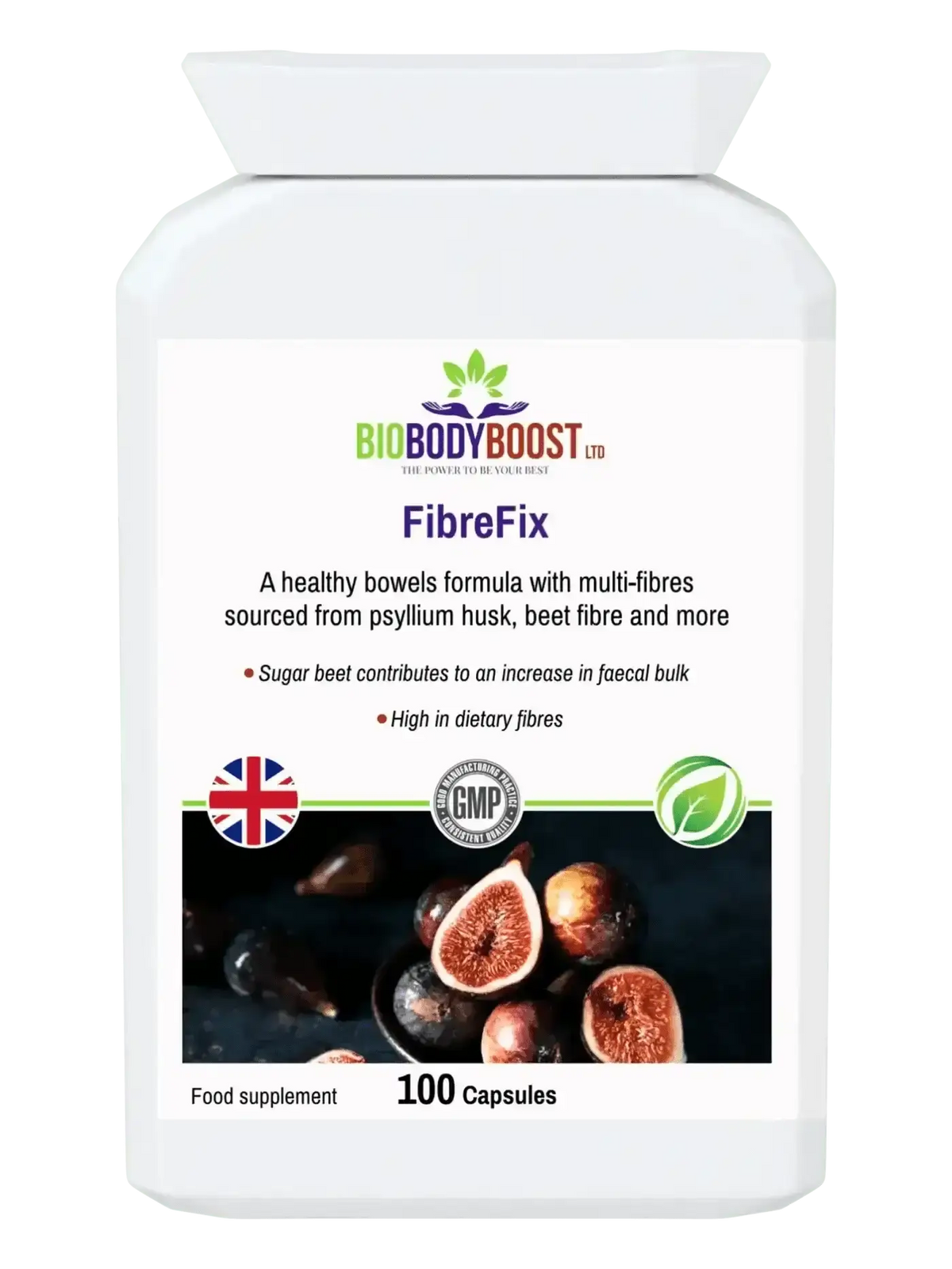
- FibreFix: at least 513mg of fibre per capsule from eleven fibre foods, led by psyllium husk. Sugar beet fibre contributes to an increase in faecal bulk. A convenient way to add fibre types without a powder.
- BioSlim: 3.5g of fibre per 5g serving from psyllium, glucomannan, sugar beet fibre and inulin. In the context of an energy-restricted diet, glucomannan contributes to weight loss, with the beneficial effect obtained from 3g per day in three 1g doses taken with 1–2 glasses of water before meals.
- BioGreenz and SuperBio: 35+ plant ingredients for variety rather than fibre grams.
- BioTic 20 Billion: live cultures to pair with fibre. See Can you take prebiotics and probiotics together?
For dosing detail on individual fibres, read our psyllium husk guide and plant-based fibre guide.
Frequently asked questions
How much fibre should I eat a day in the UK?
The NHS and SACN recommend 30g a day for adults aged 16 and over. Most UK adults eat around 17–20g.
Can you eat too much fibre?
There's no official upper limit, but jumping too fast causes bloating and wind, and very high intakes without enough water can cause discomfort. There's no benefit in chasing numbers far above 30g. Increase gradually over a few weeks.
Do fibre supplements count towards 30g?
Yes, but modestly. A capsule gives around 0.5g and a powder serving a few grams. Food should provide most of your fibre.
Is psyllium husk halal?
Psyllium itself is a plant seed husk and is permissible. The capsule shell and any added ingredients determine the product's halal status, so check for HPMC capsules and halal approval.
When should I take fibre supplements?
With a full glass of water (at least 250ml), at least two hours apart from any medication. Many people find before meals or with breakfast easiest.
What's the difference between fibremaxxing and a detox?
Fibremaxxing is about meeting an evidence-based daily fibre target through food variety. It isn't a short-term cleanse, and it doesn't claim to remove toxins.
Close your fibre gap, the halal way.
Use code HALAL10 for 10% off your first order of halal-approved, vegan fibre and gut-health supplements. Shop FibreFix →
This article is for general information and isn't a substitute for medical advice. Food supplements should not be used as a substitute for a varied and balanced diet and a healthy lifestyle. If you have a digestive condition or take regular medication, speak to your GP or pharmacist before changing your fibre intake.