
Quick answer: for most people with constipation, psyllium husk (soluble gel-forming fibre) is the best-evidenced starting point — it softens stool and increases bulk without excessive gas. Start at half the stated dose with a full glass of water and build over 1–2 weeks. Prebiotic fibres (inulin, FOS) feed beneficial bacteria but can worsen gas and bloating if introduced too quickly. Magnesium citrate or oxide is a fast-acting osmotic laxative option for acute constipation.
Why the type of fibre matters
Fibre is not one ingredient — it is a family of plant compounds that behave very differently in the gut. Choosing the wrong type for your symptom pattern can make constipation worse, not better.
- Soluble gel-forming fibres (psyllium husk, glucomannan, beta-glucan): absorb water and form a viscous gel, softening stool and supporting easier passage. Best for hard, dry stools and people who strain. Least likely to cause gas.
- Insoluble fibres (wheat bran, cellulose, vegetable skin): add bulk and speed up transit time. Better for infrequent stools due to slow colonic transit. Can worsen bloating and pain in IBS-type constipation.
- Fermentable prebiotic fibres (inulin, FOS, GOS, resistant starch): feed gut bacteria. Over time improve microbiome diversity and stool regularity. Short-term: significant gas production as bacteria ferment the fibre. Not the right first-line choice for someone already bloated.
Psyllium husk: the most evidence-backed option
Psyllium husk (Plantago ovata seed husk) is the most extensively studied fibre supplement for constipation and broader bowel regularity. It is both soluble (gel-forming in the intestine) and partially insoluble, giving it the broadest functional range.
What research supports: A 2018 Cochrane review (Suares and Ford, 31 trials) found dietary fibre supplementation, with psyllium as the most studied form, significantly increased stool frequency in constipated adults and improved stool consistency. EFSA has authorised the claim that psyllium seed husk contributes to an increase in faecal bulk when at least 7g/day is consumed. A 2020 Cochrane review (Jovanovski et al., 35 RCTs) found psyllium significantly reduced fasting blood glucose and post-meal glucose — an additional benefit for people managing blood sugar alongside constipation.
Dose: 5–10g/day (1–2 level tablespoons of husk or equivalent capsules), taken with at least 200–300ml water. The water is critical — psyllium without adequate fluid can worsen constipation by forming a dry mass in the gut. Build up from 2.5–5g/day for the first week.
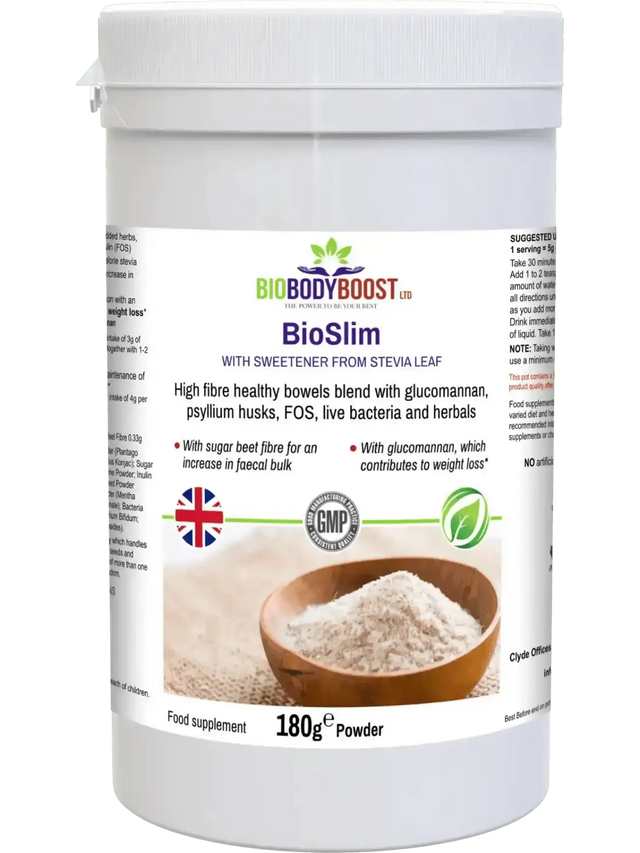
Our BioSlim combines psyllium husk and glucomannan in capsule form for measured, convenient dosing — halal certified, vegan.
Glucomannan: the most satiating soluble fibre
Glucomannan (from konjac root) is the most viscous dietary fibre known — it absorbs up to 50x its weight in water. EFSA authorises the claim that glucomannan contributes to the maintenance of normal blood cholesterol levels. It is effective for softening stool and supporting satiety.
Dose: 3–4g/day with large amounts of water (300ml minimum per dose). Must be taken well before meals — it expands rapidly and can cause choking if swallowed dry. Capsule format is the safest delivery method.
Magnesium: the fast-acting osmotic option
Magnesium citrate and magnesium oxide draw water into the large intestine osmotically, stimulating bowel movement. Onset is typically 30 minutes to 6 hours. This is the most practical option for acute constipation or when faster action is needed than dietary fibre provides.
Magnesium oxide, despite being poorly absorbed systemically (~4% bioavailability), is specifically effective as a laxative because it stays in the gut and draws water. A 2017 RCT in the European Journal of Clinical Nutrition found magnesium-supplemented sparkling water significantly improved stool frequency and consistency in constipated adults. For acute relief: magnesium citrate liquid 200–400ml; for daily gentle support: magnesium oxide 400–500mg elemental in the evening.
How to use fibre without causing more bloating
Start at half dose for week 1: if your current fibre intake is low, a full therapeutic dose immediately causes significant gas and cramping as gut bacteria rapidly ferment the new substrate. Start at half dose for 5–7 days before increasing. The microbiome adapts over 2–3 weeks — initial gas improves significantly.
Water is mandatory: psyllium and glucomannan require substantial fluid to function. Minimum 200–300ml water per dose, plus adequate daily fluid intake (1.5–2 litres/day). Taking fibre supplements without enough water can worsen constipation.
Separate from medications: fibre can bind medications and reduce their absorption. Leave at least 2 hours between fibre supplements and any oral medications, particularly thyroid medications, diabetes drugs and some antibiotics.
Add one at a time: if introducing a probiotic alongside fibre, stagger by 2–3 weeks so you can identify what is causing any adjustment symptoms.
When constipation needs a GP, not a supplement
Fibre and magnesium supplements address functional constipation — constipation without an underlying medical cause. See a GP if:
- Constipation is new and unexplained in someone over 50
- Blood in stool or on toilet paper
- Unexplained weight loss alongside constipation
- Severe abdominal pain
- Alternating constipation and diarrhoea
- Constipation in pregnancy — some fibre types and laxatives are not recommended
What is the best fibre supplement for constipation in the UK?
Psyllium husk is the best-evidenced starting point for most people with constipation — a 2018 Cochrane review (31 trials) confirmed it significantly increases stool frequency and improves consistency. It is gel-forming, produces less gas than fermentable fibres, and benefits both constipation and IBS-type irregular bowel patterns. Start at 5g/day with 200–300ml water and build to 7–10g/day over 1–2 weeks. For people who also want prebiotic benefits (microbiome support alongside regularity), add inulin or FOS after the first 2–3 weeks once bowel habits have stabilised.
Why does fibre cause bloating and gas?
Fermentable fibres (inulin, FOS, some prebiotics) and even soluble fibres reach the large intestine where gut bacteria ferment them, producing gas (hydrogen, methane, CO₂) as a byproduct. This is normal and beneficial long-term — fermentation produces short-chain fatty acids that support gut lining health. The gas production is most pronounced in the first 1–2 weeks as gut bacteria adapt to the increased substrate. Starting at half dose and increasing gradually over 1–2 weeks dramatically reduces the initial bloating. If bloating persists beyond 2 weeks without improvement, the fibre type may not suit your gut composition.
How much water should I drink when taking psyllium husk?
Minimum 200–300ml (a full glass) per dose, in addition to your normal daily fluid intake. Psyllium husk forms a gel by absorbing water — without adequate fluid, it cannot form the gel and instead creates a dry mass that can worsen constipation and, in rare cases, cause oesophageal blockage if swallowed without sufficient water. If you take psyllium before bed and tend to drink less in the evening, take it earlier in the day instead. Adequate daily hydration (1.5–2 litres) supports all fibre types to function correctly.