
Search "best supplements for bloating UK" and you'll get the same list everywhere: probiotics, digestive enzymes, peppermint oil, magnesium. What none of those lists do is tell you which one is for you — and taking all four at once, hoping one sticks, wastes money and tells you nothing about what actually caused the problem. Bloating has at least four distinct causes, and each one points to a different fix. For the full product-by-product breakdown once you know your cause, see our anti-bloating tablets guide.
Cause 1: Eating Too Fast or Heavy Meals
Swallowing air while eating quickly, plus asking your stomach to process a large or fatty meal in one go, is one of the most common and most overlooked causes of after-meal bloating. If your bloating shows up reliably 20-60 minutes after eating — especially rich or large meals — this is usually the culprit before anything more complex.
What helps: digestive enzymes taken with the meal. EnzymeXtreme combines betaine hydrochloride, lipase, amylase, protease, bromelain and papain with traditional carminative herbs (ginger, fennel, peppermint, chamomile) to support the breakdown of food into absorbable nutrients — the mechanical problem this cause actually is.
Cause 2: Specific Foods Trigger It
If bloating follows particular foods rather than meal size — dairy, wheat, certain vegetables, artificial sweeteners — the pattern points to a food sensitivity or intolerance rather than a general digestive issue. The single most useful (and free) tool here is a simple food and symptom diary kept for two weeks: write down what you eat and when bloating appears, and the pattern usually reveals itself faster than any supplement would.
What helps: once you've identified likely triggers, targeted support depends on what you find — often a probiotic to support the gut's tolerance, or simply removing the trigger. This is the one cause on this list where diagnosis matters more than any product.
Cause 3: Irregular Bowel Movements
Constipation is a major, under-discussed cause of bloating — when things move slowly, gas and stool both build up, and the bloating is really a backlog problem, not a digestion problem. If bloating tends to build across several days and eases after a bowel movement, this is your cause.
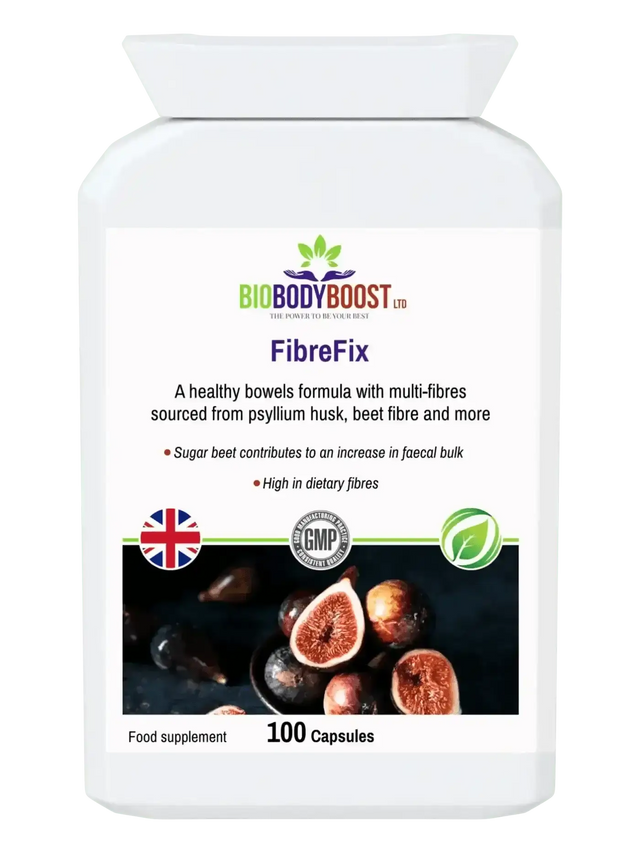
What helps: fibre first, always. FibreFix combines psyllium husk with 10 further fibre foods for daily regularity — taken consistently with plenty of water, not as a one-off rescue. If fibre alone isn't enough, our herb-free MagneBowel uses osmotic magnesium for overnight relief; full breakdown in our magnesium for constipation guide.
Cause 4: General Gut Bacteria Imbalance
If bloating doesn't follow a clear meal-size or food-specific pattern, and comes with other signs — irregular bowel habits, recent antibiotic use, general digestive unpredictability — the cause is more likely a broader imbalance in gut bacteria than any single trigger.
What helps: a multi-strain probiotic taken consistently over weeks, not days. BioTic 4 Billion provides 8 strains at a shelf-stable dose; after a course of antibiotics specifically, Saccharomytum's yeast-based probiotic isn't affected by the antibiotics the way bacterial strains are.
Why Generic Lists Don't Work
The standard "top 10 bloating supplements" article treats bloating as one condition needing one type of ingredient. It isn't. Probiotics won't fix bloating caused by eating too fast. Enzymes won't fix bloating caused by constipation. Matching the mechanism to the cause is the difference between a supplement that works in days and one that does nothing at all.
FAQs
What is the best supplement for bloating?
There isn't one — it depends entirely on the cause. Match your pattern to one of the four causes above before choosing a product.
How do I know what's causing my bloating?
Timing is the biggest clue: right after meals points to enzymes; days-long buildup points to constipation and fibre; food-specific patterns point to a trigger worth diarising; no clear pattern points to general gut imbalance and a probiotic.
Can I take more than one of these together?
Yes, if more than one cause applies — fibre and a probiotic combine well, for example. Start with the one matching your clearest pattern first, so you can tell what's actually working.
When should I see a GP instead of trying supplements?
If bloating is severe, persistent beyond a few weeks, accompanied by unexplained weight loss, blood in stool, or significant pain — these need medical assessment, not a supplement aisle.
Browse the full Gut Health UK collection, or see the full anti-bloating tablets guide for product-by-product detail.
Food supplements should not replace a varied diet. Consult your GP before use if pregnant, breastfeeding, taking medication, or managing a diagnosed condition. Persistent or severe bloating needs medical assessment.