Psyllium husk is a soluble fibre derived from the seeds of Plantago ovata, with EU-authorised health claims for maintaining normal cholesterol levels (at 10g daily) and contributing to normal bowel function. It is the only natural dietary fibre with the same EFSA-approved cholesterol-lowering claim as oat beta-glucan. In the GLP-1 drug era — where appetite regulation and blood glucose management are front-of-mind — psyllium husk is attracting renewed research interest for its satiety and glycaemic effects.
What Is Psyllium Husk?
Psyllium husk comes from the outer seed coat (husk) of Plantago ovata, cultivated primarily in India. It consists of approximately 70% soluble fibre — primarily arabinoxylan — that forms a viscous gel when mixed with water. This gel formation is responsible for most of psyllium’s documented effects, which occur in the gastrointestinal tract rather than through systemic absorption.
What Does Psyllium Husk Do?
The gel psyllium forms in the gut produces five documented effects:
- Cholesterol reduction — the gel binds bile acids in the small intestine, preventing their reabsorption. The liver must synthesise new bile acids from cholesterol, lowering circulating LDL. EU-authorised claim: 10g psyllium husk daily reduces blood LDL cholesterol.
- Blood glucose modulation — the viscous gel slows gastric emptying and carbohydrate absorption, blunting post-meal blood glucose spikes. Multiple trials confirm reduced glycaemic index of meals when psyllium is consumed before or during eating.
- Bowel regularity — psyllium absorbs water in the colon, increasing stool bulk and softening consistency. EU-authorised for normal bowel function. Effective for both constipation and loose stools — a bidirectional effect.
- Satiety and appetite — the gel distends the stomach and slows gastric emptying, prolonging the feeling of fullness. Multiple trials show reduced subsequent calorie intake when psyllium is taken before meals.
- Microbiome feeding — arabinoxylan in psyllium is fermented by gut bacteria, producing short-chain fatty acids (acetate, propionate, butyrate) that support colonocyte health.
Psyllium Husk in the GLP-1 Era
GLP-1 agonist drugs (semaglutide/Ozempic, liraglutide/Saxenda) produce dramatic weight loss partly through delayed gastric emptying and reduced appetite. Psyllium husk operates through a similar — though much weaker — mechanism via mechanical gastric distension and delayed glucose absorption. Research interest in psyllium as a natural, accessible adjunct to GLP-1 medications (and as a standalone intervention for appetite management) has increased significantly in 2025–2026.
How to Take Psyllium Husk Correctly
This matters more for psyllium than almost any supplement:
- Always take with large amounts of water — 200–300ml per 5g dose minimum. Psyllium taken without adequate water can swell in the oesophagus or form an impaction. This is the most important safety consideration.
- Start low — begin at 3–5g daily and increase gradually over 2 weeks to avoid bloating and gas as gut bacteria adapt
- Timing — before meals for appetite and glucose effects; evening for overnight bowel support
- Separate from medications — take any medications at least 1–2 hours before or after psyllium, as the gel can reduce absorption of some drugs
Psyllium vs Glucomannan: Which Is Better?
Both are soluble fibres with cholesterol and glucose benefits. Glucomannan has an EU-authorised claim specifically for weight management (contributing to weight loss in the context of an energy-restricted diet at 3g daily), which psyllium does not have. Psyllium has stronger evidence for cholesterol reduction. Combining both addresses different fibre types and gut bacteria populations simultaneously.
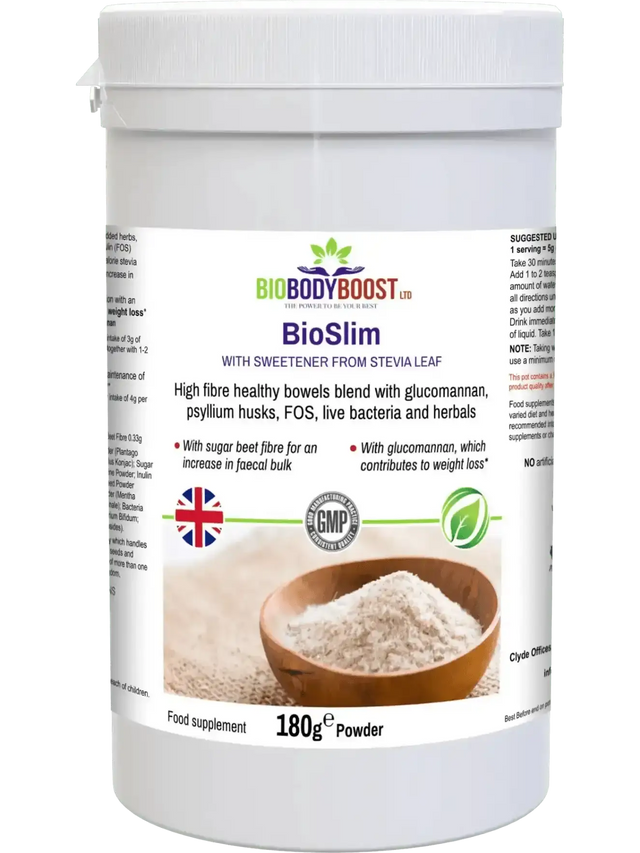
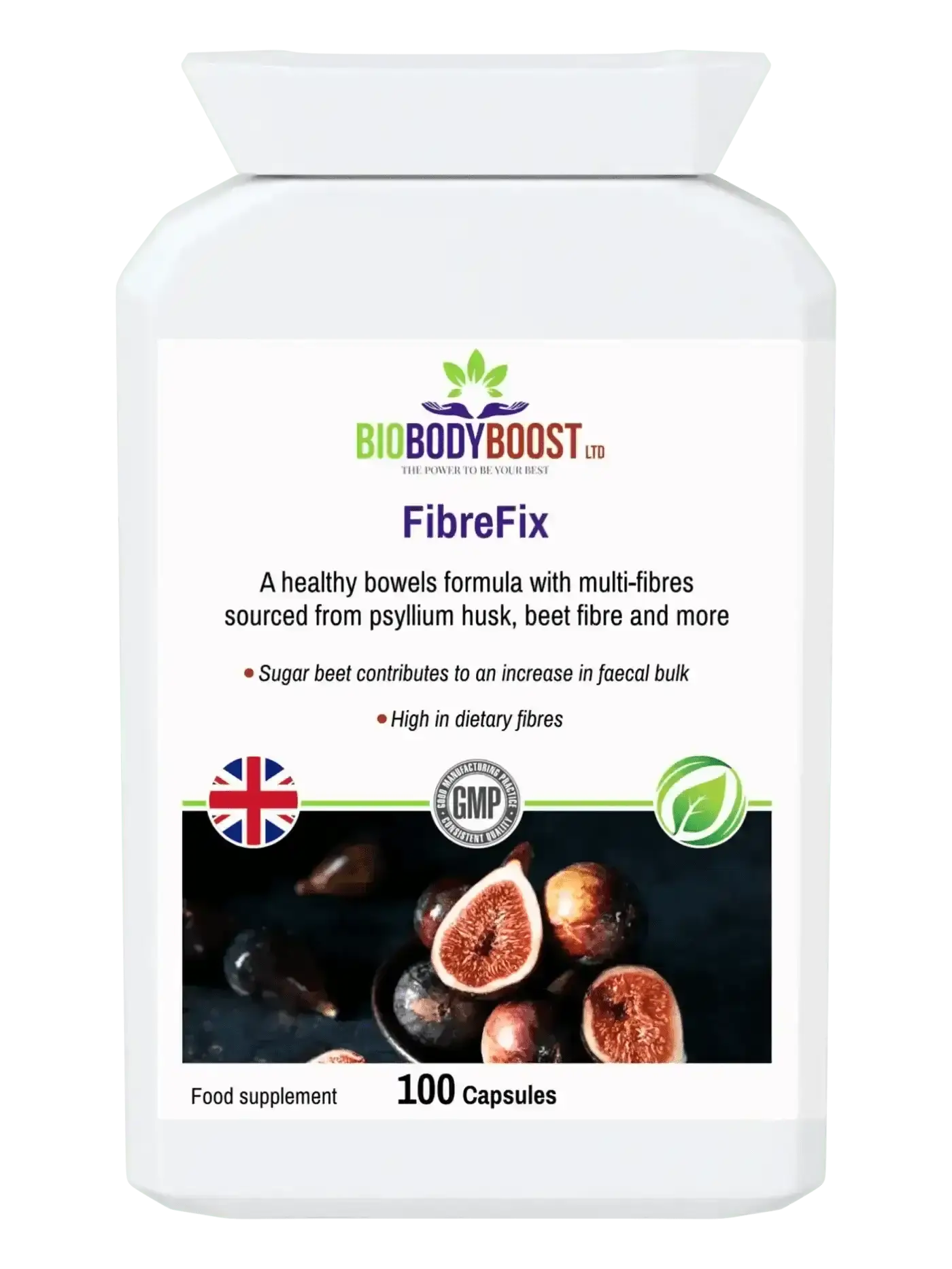
FibreFix by BioBodyBoost provides psyllium husk capsules — the most convenient format for consistent daily dosing. BioSlim combines psyllium husk with glucomannan for comprehensive fibre coverage. Both halal certified, vegan, UK GMP. Browse the gut health range.