This is the most comprehensive halal supplement guide for UK Muslims — organised by health goal, with evidence-based recommendations and certified products for each. Approximately 3.5 million Muslims live in the UK. The mainstream supplement industry was not built with this community in mind. Most commonly recommended supplements contain non-halal ingredients that are never clearly disclosed on labels.
The three most common non-halal sources in UK supplements
- Gelatine capsule shells: bovine or porcine gelatine is the default capsule material. Porcine is impermissible. Bovine requires halal-certified slaughter. Most UK supplement brands do not specify or certify their capsule source.
- Magnesium stearate and stearic acid: tablet lubricants that can be derived from pork or beef fat without disclosure. Present in the vast majority of capsules and tablets as processing aids.
- Vitamin D3 from lanolin: most vitamin D3 is derived from lanolin (sheep wool wax). Lichen-derived D3 is unambiguously halal. The label must specify the source.
Full verification guide: what halal supplement certification means and how to check any product.
Health Goal 1: Immunity and general wellbeing
Vitamin D3, vitamin C and zinc are the three most evidence-backed nutrients for normal immune function, each with explicit EU-authorised claims. For UK Muslims, vitamin D deficiency is a particular concern: darker skin tones require significantly more UV-B exposure to produce adequate D3, and UK latitudes cannot support skin synthesis from October to April regardless of skin tone. UK NDNS 2019 data shows approximately 1 in 5 UK adults are vitamin D deficient (<25 nmol/L).
- Lipovita D3+K2 — 4,000 IU lichen-derived D3 with MK-7 K2, liposomal, fully halal certified, vegan
- ImmuneBoost — vitamin C, D3, zinc, reishi, elderberry and probiotics in one HPMC capsule, halal certified
- Liposomal Vitamin C — 500mg high-absorption vitamin C liquid, soy-free, halal certified
Health Goal 2: Bone and joint health
Vitamin D3 with K2 (MK-7) is the evidence-based foundation for bone health — D3 increases calcium absorption; K2 routes it to bone via osteocalcin activation. Glucosamine presents a specific halal challenge: standard glucosamine is shellfish-derived (prawns, shrimp, crabs) and requires checking. Fermentation-derived vegan glucosamine HCl is chemically identical and inherently halal by source.
- Lipovita D3+K2 — bone and cardiovascular calcium routing
- Flexi-Time — vegan fermentation-derived glucosamine HCl with MSM and turmeric, non-shellfish, halal certified
- CurcuminBoost — 95% organic curcumin with piperine, halal certified
Health Goal 3: Gut health and digestive support
Multi-strain probiotics at 10–20 billion CFU daily for microbiome diversity. A 2012 Cochrane review (Allen et al., 63 RCTs) confirmed probiotics significantly reduce antibiotic-associated diarrhoea. Note: most probiotic capsules use gelatine shells — HPMC-capsule products are required for halal compliance.
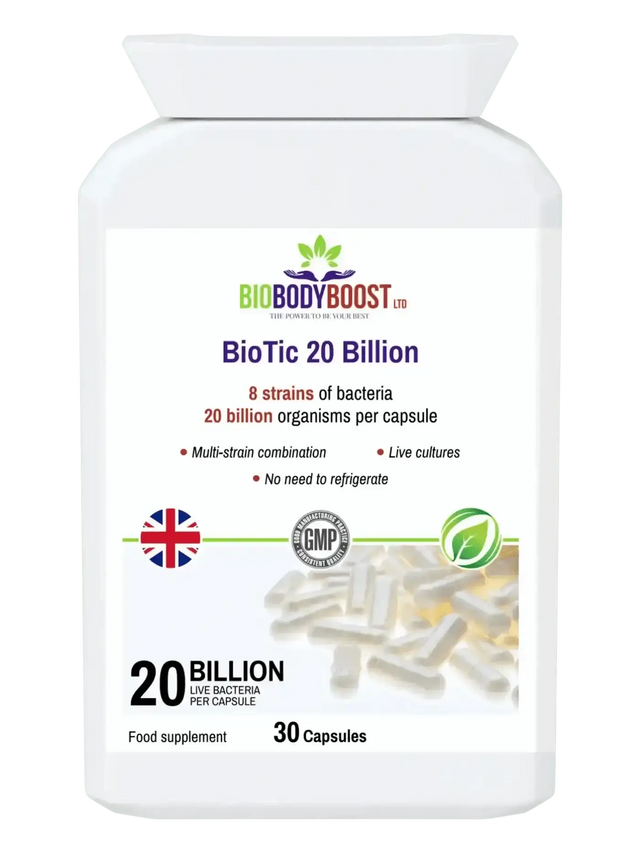
- BioTic 20 Billion — 20B CFU, 8 named strains, HPMC capsule, halal certified
- BioTic 4 Billion — daily maintenance dose, halal certified
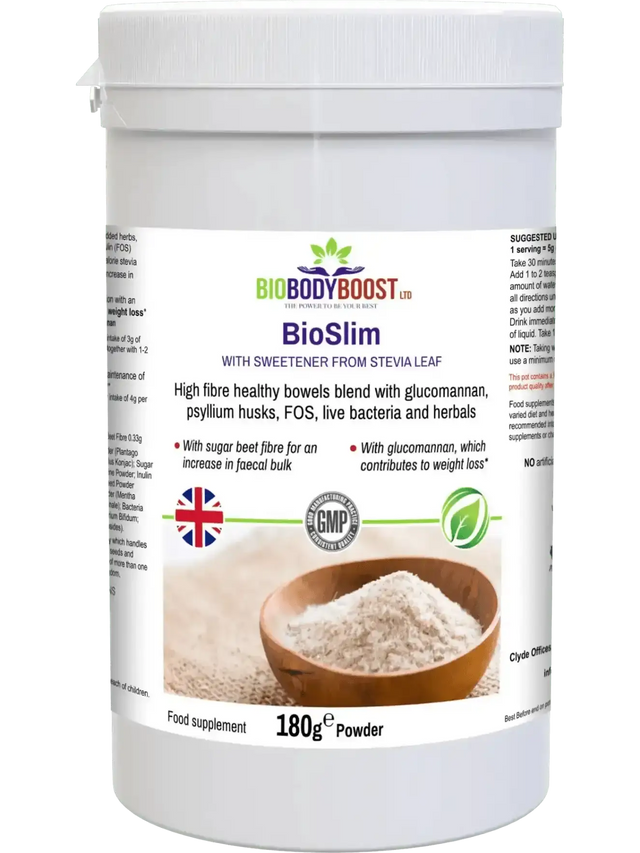
- BioSlim — psyllium husk and glucomannan prebiotic fibre, halal certified
Health Goal 4: Stress, sleep and mental clarity
Magnesium glycinate (GABA pathway and cortisol regulation), ashwagandha KSM-66® (HPA axis modulation — 23–27% cortisol reduction in RCTs), lion’s mane (nerve growth factor, cognition). All three are appropriate for daily use without dependency risk.
- Magnesium 3 Complex — glycinate + malate + taurate, zinc + B6, halal certified
- ZenBlend Ashwagandha — 5 adaptogens including KSM-66®, halal certified
- BioSnooze — ashwagandha, magnesium, chamomile, passionflower, lemon balm, tart cherry, L-theanine, halal certified
- BioBrain — bacopa, lion’s mane, ginkgo, L-theanine, ashwagandha, B12, halal certified
Health Goal 5: Women’s health
UK Muslim women face specific risk factors: higher vitamin D deficiency rates, limited halal collagen options, and significant gaps in the menopause supplement market for halal-compliant products. Collagen production declines approximately 1% per year from the mid-20s, accelerating in perimenopause — and most collagen supplements on the market are bovine or porcine without halal certification.
- Marine Collagen Nourish — 9g hydrolysed Type I marine collagen, halal certified, no bovine or porcine
- BioFem — 8 botanicals for perimenopause and menopause, halal certified
- Essential Uro-Support — D-mannose + cranberry PAC for UTI prevention, halal certified
- Fluid Balance — magnesium + 9 botanicals for hormonal bloating and water retention, halal certified
Health Goal 6: Sports and active lifestyle
Creatine monohydrate is the most evidence-backed sports supplement — a 2017 JISSN meta-analysis (300+ studies) confirmed it as the most effective ergogenic nutritional supplement available. Standard synthetic creatine is inherently halal by source. BCAAs are relevant for fasted training; for most people eating adequate protein, they are redundant outside of Ramadan training protocols.
- Creatine Monohydrate — 100% pure, halal certified, no fillers
- BCAA Amino Acids Drink Mix — 2:1:1 ratio, L-citrulline, B6, halal certified
- Electro-Hidr8 — sodium, potassium, chloride electrolyte drink, halal certified
- Red Punch — beetroot nitrates + Montmorency cherry for performance and circulation, halal certified
Health Goal 7: Children and family
Children’s vitamins using gelatine gummies are widespread in UK pharmacies and supermarkets — finding halal-compliant children’s supplements is one of the most common requests from Muslim parents. PHE recommends vitamin D supplementation for all UK children from birth.
- Little BioGut Kids Probiotic — tasteless powder from birth, halal certified, no gelatine
- Multivitamin Gummies — gelatine-free chewable vitamins A, C, D, E and B12, halal certified
Quick reference: halal supplement checklist
- Does it carry a third-party halal certification logo (HFA, HMC, IFANCA)?
- Does the capsule say HPMC or plant cellulose — not gelatine?
- For vitamin D3 — lichen-derived or lanolin-derived?
- For omega-3 softgels — what is the capsule shell made from?
- For collagen — marine (not bovine or porcine) with certified halal sourcing?
Browse every BioBodyBoost product — all carry full third-party halal certification from source to shelf, HPMC plant-derived capsules throughout, no bovine or porcine ingredients, UK GMP manufactured, vegan-friendly across the entire range.
What makes a supplement genuinely halal in the UK?
Genuine halal compliance requires third-party certification from a recognised body (HFA, HMC, IFANCA) covering the entire supply chain — not just a brand’s own claim. Key checks: the active ingredients must be from permissible sources; the capsule shell must be HPMC (plant-derived) or halal-certified bovine gelatine; processing aids including magnesium stearate must have confirmed halal source; and the manufacturing facility must be inspected. The most common failure point is the capsule shell — porcine gelatine is the supplement industry standard and is rarely disclosed clearly on labels.
Is vitamin D3 halal?
It depends on the source. Most vitamin D3 in the UK is derived from lanolin — a waxy substance from sheep wool. Lanolin is a byproduct of wool processing and does not involve slaughter. The majority scholarly view is that lanolin-derived D3 is permissible since sheep are halal animals. However, some scholars take a more cautious position. Lichen-derived D3 (from a plant source) removes this uncertainty entirely and is unambiguously halal by all scholarly positions. Our Lipovita D3+K2 uses lichen-derived D3 specifically for this reason.
Is marine collagen halal?
Marine collagen derived from fish (typically tilapia, cod or salmon skin and scales) is halal if: the fish species is permissible (Hanafi school permits fish generally; other schools agree); and the manufacturing process introduces no haram substances. Most marine collagen does not require halal slaughter certification since fish do not have the same slaughter requirements as land animals in most schools of Islamic jurisprudence. The key checks are the manufacturing environment and any additional ingredients. Our Marine Collagen Nourish carries full halal certification. Full guide: is marine collagen halal.
Are probiotics halal?
Probiotic bacteria themselves (Lactobacillus, Bifidobacterium species) are halal. The concerns are: the capsule shell (standard gelatine is often porcine — HPMC is required); the fermentation growth medium (probiotic strains are grown on culture media that must not contain pork-derived ingredients); and any additives in the formula. A probiotic with halal certification of the finished product confirms all of these have been checked. Our BioTic range uses HPMC capsules and is halal certified from strain source to finished product.
Can I take supplements during Ramadan?
Yes — with the majority scholarly position being that supplements taken for health maintenance (not nutrition) do not break the fast. The widely practised and most cautious approach is to take all supplements at Suhoor (before dawn) or Iftar (breaking fast), removing any question of fast-breaking. Most supplements can be redistributed to these two windows without affecting their effectiveness. Full guide: supplements during Ramadan UK guide.