Written by the BioBodyBoost Team · Updated May 2026 · Editorial standards →
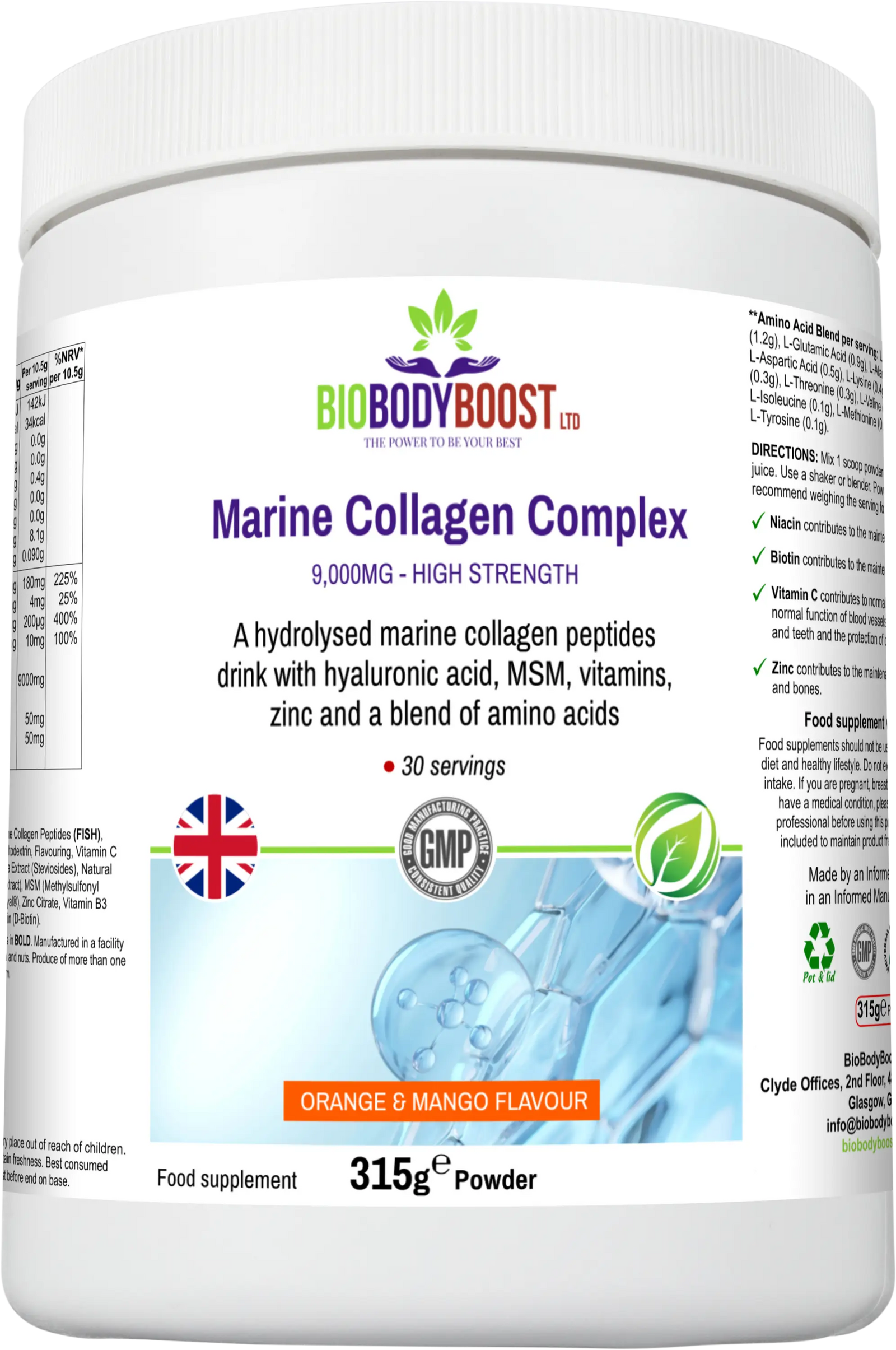
Marine collagen is one of the most popular supplements in the UK right now. But if you need a halal certified option, the market is far narrower than the marketing suggests. Most brands simply don’t address it — and even fewer carry genuine third-party halal certification.
Which? magazine noted in their 2026 collagen review: “Unless stated, one cannot assume that collagen supplements are halal or kosher.” That’s the starting point for this guide.
Why Marine Collagen Isn’t Automatically Halal
Marine collagen is derived from fish — typically the skin and scales of tilapia, cod or snapper. In principle, fish collagen is permissible under Islamic dietary law. But halal compliance for a supplement goes beyond the source species alone. The hydrolysis process can use enzymes from non-halal animal sources. Capsule shells may use porcine or non-halal bovine gelatin. Co-ingredients including vitamin C, biotin, zinc and flavourings all require verification. Manufacturing facilities that process porcine gelatin require halal-compliant separation. A product is only genuinely halal certified when a recognised certification body has audited and approved the entire supply chain.
The Halal Certification Checklist
| Certification requirement | BioBodyBoost Marine Collagen Nourish |
Vital Proteins | Ancient + Brave | Kollo Health |
|---|---|---|---|---|
| Permissible fish source species | ✓ Verified | Unconfirmed | Unconfirmed | Unconfirmed |
| Halal-approved processing enzymes | ✓ Verified | Not stated | Not stated | Not stated |
| Co-ingredients halal verified | ✓ All verified | Not certified | Not certified | Not certified |
| GMP facility halal audit | ✓ Certified | No | No | No |
| Third-party certification body | ✓ Named certifier | None | None | None |
Based on publicly available product information. Always verify on manufacturer websites.
What to Look for on a Collagen Label
Given that most collagen brands don’t volunteer halal status, here’s what to check before buying:
Look for a named certification body. “Halal-friendly” is a marketing term with no standardised definition or verification requirement. A genuine halal certification will name the certifying organisation (e.g. Halal Food Authority, HMC, IFANCA) and often display a certification number. Self-declared claims carry no independent audit.
Check the capsule shell if buying capsules. The most common halal compliance failure in supplement capsules is the shell — most soft gel capsules and many hard capsules use gelatin from porcine or non-halal bovine sources. Look for HPMC (hypromellose), pullulan or vegetable cellulose capsules if the halal status of the shell is not confirmed.
Verify the collagen source species, not just “marine”. Some marine collagen products are sourced from shellfish (prawns, crabs) rather than fish — which carries both allergen and halal certification implications. The label should specify the species: tilapia, cod, snapper or similar.
Check co-ingredients individually. A collagen powder that includes vitamin C, biotin or zinc requires each of these to be from halal-approved sources. A supplement that lists “holistic natural flavouring” without halal certification of the flavour compound carries an open question.
Frequently Asked Questions
Is bovine collagen more likely to be halal than marine collagen?
Not necessarily. Bovine collagen can be halal if sourced from animals slaughtered according to Islamic rites — but the same full certification requirements apply. Marine collagen from permissible fish species with full supply chain halal certification is equally valid.
Is vegan collagen an alternative for Muslims?
There is no plant-derived collagen. “Vegan collagen boosters” provide vitamin C, zinc and amino acid precursors that support the body’s own collagen production. They do not provide collagen peptides directly and are not a like-for-like alternative.
What does ‘halal-friendly’ mean on a supplement label?
Nothing verifiable. Always look for a named third-party halal certification body and a certification number or logo.
Explore the full Halal Vitamins UK and Hair, Skin & Beauty UK collections.
Food supplements should not replace a varied diet or healthy lifestyle. Contains fish. Not suitable for vegans or those with fish allergies. Consult your GP before use if pregnant or breastfeeding.