Quick answer: the vitamins and minerals in a multivitamin are not the problem. Vitamin C, the B vitamins, zinc and iron are made by fermentation, synthesis or from minerals, and none of them comes from pork or alcohol. What can make a multivitamin non-halal is everything around them: a gelatine capsule or gummy, vitamin D3 from sheep's wool, vitamins A and D supplied in gelatine-coated beadlets, insect-derived colours and glazes, and flavourings carried in alcohol. A multivitamin with halal approval of the finished product answers all of those at once.
A single-nutrient supplement has maybe five ingredients. A multivitamin can have thirty, which is why it is one of the harder products to check on your own. Here is what to look for.
The 5 things that decide whether a multivitamin is halal
1. The capsule, tablet or gummy
This is the most common failure. Standard soft capsules and many hard capsules are made from gelatine, which is usually from pork or non-halal beef unless the label says otherwise. Plant capsules are listed as HPMC (hydroxypropyl methylcellulose) or "vegetable cellulose" and avoid the question completely. Tablets are usually fine, but check the coating (see point 4). For a full breakdown, see our guide to gelatine capsules vs HPMC.

2. Where the vitamin D3 comes from
Most vitamin D3 (cholecalciferol) is made from lanolin, the grease from sheep's wool. Scholars and certifiers take different views on lanolin, depending on how the wool was obtained and how far the substance is changed during processing. Vegan D3 from lichen avoids the debate, and vitamin D2 is always plant or fungal in origin. If the label just says "vitamin D3" with no source, ask the brand, or rely on halal approval. More detail is in our guide to whether vitamin D3 is halal.
3. Hidden gelatine in vitamin A and D "beadlets"
This one rarely appears on the front of the label. Fat-soluble vitamins (A, D and E) are often supplied to manufacturers as tiny coated beadlets, and the coating can be gelatine. It may be listed in the full ingredients as "gelatine", "bovine gelatine" or "fish gelatine", or not at all if it counts as a carrier. It is the main reason a multivitamin can be vegetarian-looking on the front and still not halal. Halal approval of the finished product is the only practical way to know the beadlets were checked.
4. Colours, glazes and coatings
Two insect-derived ingredients turn up in multivitamins:
- Carmine (E120): a red colour from cochineal insects, common in gummies and coloured tablets.
- Shellac (E904): a glaze from lac insect resin, used to coat tablets.
Scholars and certifiers differ on both. Some permit them, others do not. If you prefer to avoid them, check for the E-numbers, or choose a plain capsule. Our E-numbers guide covers the full list. Magnesium stearate, a common flow agent, is usually plant-derived; see is magnesium stearate halal.
5. Flavourings and liquids
Chewables, gummies and liquid multivitamins can contain flavourings carried in alcohol (ethanol). Liquid drops may use alcohol as a preservative. Capsules and plain tablets rarely have this issue.
"Vegetarian" is not the same as halal
A vegetarian multivitamin rules out gelatine and meat, but not alcohol-carried flavourings or, in some cases, insect-derived colours. A vegan one still says nothing about alcohol. And a gummy can be halal approved while containing gelatine from a halal source, so "not vegetarian" does not automatically mean "not halal" either. The label claim that settles it is halal approval of the finished product by a recognised body. Our guide on what halal certification means and how to check it explains what to look for.
What to look for if you are a woman, pregnant, or buying for children
- Women of childbearing age: the NHS advises 400 micrograms of folic acid a day before pregnancy and until 12 weeks. Many general multivitamins provide less, so check the folic acid figure. Iron is also worth checking if you have heavy periods.
- Pregnancy: the NHS advises avoiding supplements containing vitamin A (retinol) in pregnancy. Choose a pregnancy-specific product; see our halal prenatal vitamins guide.
- Children: adult multivitamins are not designed for children, and iron-containing products are dangerous if a child takes too many. See our halal children's vitamins guide.
- If you cover most of your skin outdoors: the NHS advises 10 micrograms of vitamin D a day all year round, not just in winter. More in our guide to vitamin D and wearing the hijab.
Does a multivitamin give you enough vitamin D for winter?
Often not. The NHS suggests everyone considers 10 micrograms of vitamin D a day during autumn and winter. Many multivitamins provide 2.5 to 5 micrograms. Check the figure on the label. If it is below 10 micrograms, you can add a separate vitamin D, as long as your total from all supplements stays within the recommended amount.
Our two halal approved multivitamins
To be straight with you about which suits whom:
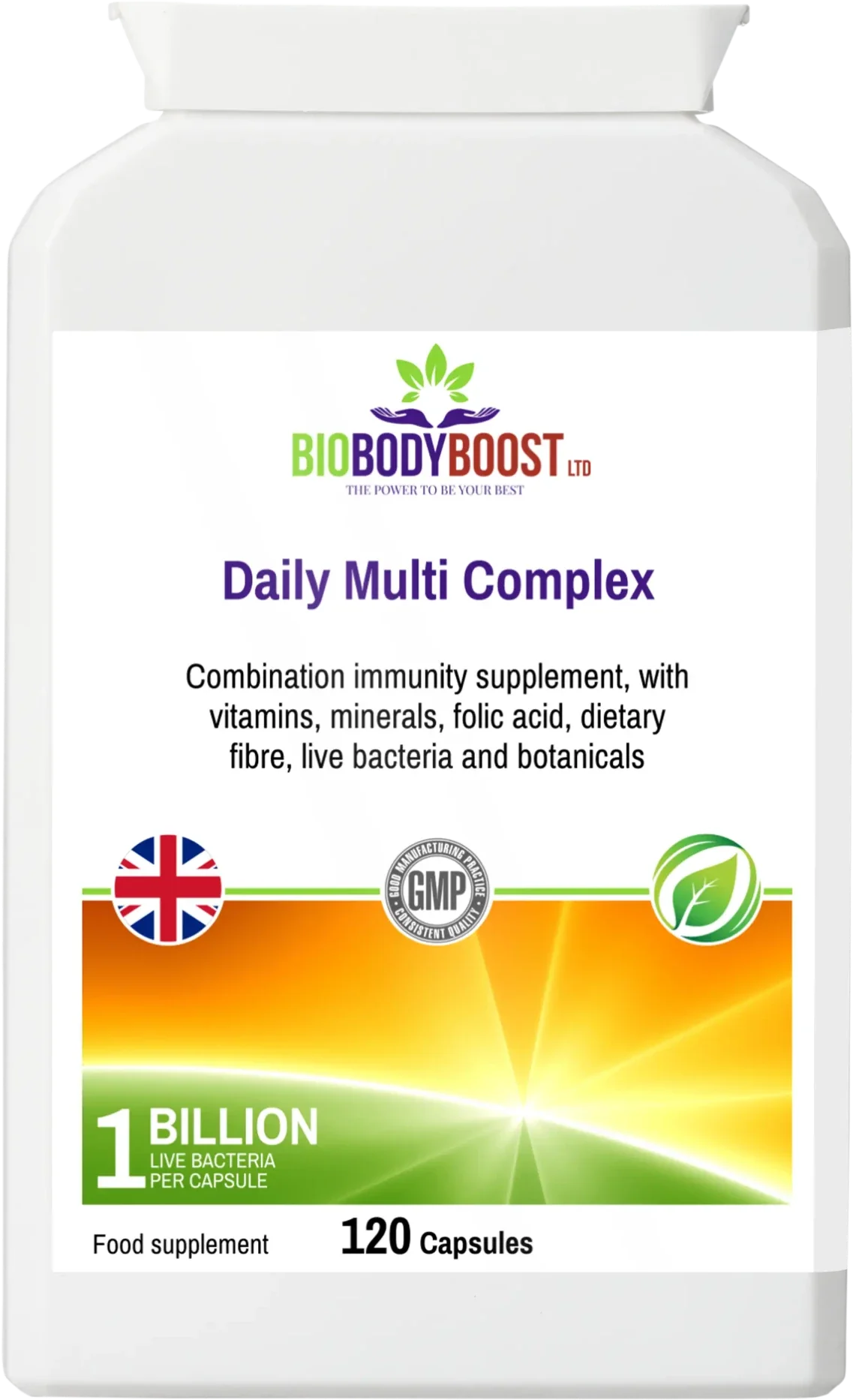
- Daily Multi Complex is a capsule: 17 vitamins and minerals per capsule, including iron 7mg (50% NRV), folic acid 200µg, vitamin B12 2.5µg (100% NRV) and vitamin D3 2.5µg (50% NRV), plus 1 billion CFU live cultures, psyllium husk and sugar beet fibre. HPMC plant capsule, suitable for vegetarians, halal approved. It contains iron, so keep it away from children.
- Multivitamin Gummies are for adults who struggle with capsules: 12 nutrients with vitamin D at 5µg (100% NRV) per gummy, strawberry flavour, halal approved. They contain gelatine and carmine, so they are not suitable for vegetarians or vegans, and if you avoid carmine, choose the capsule instead. They contain vitamin A (retinol), so they are not for pregnancy.

17 vitamins and minerals with live cultures and fibre. HPMC capsule, vegetarian, halal approved. 120 capsules, £16.99.
Vitamin B12 contributes to the reduction of tiredness and fatigue.

12 nutrients, vitamin D 100% NRV, strawberry flavour. Halal approved; contains gelatine and carmine. Adults only. 60 gummies, £15.99.
Vitamin D contributes to the normal function of the immune system.
Customers often pair a multivitamin with ImmuneBoost (vitamin C 512mg; vitamin C contributes to the normal function of the immune system) or Magnesium 3 Complex (magnesium contributes to a reduction of tiredness and fatigue). Both are vegan HPMC capsules, halal and kosher approved. Browse everything in our halal vitamins collection.
Food supplements should not replace a varied, balanced diet and a healthy lifestyle. You can check any health claim on the GB nutrition and health claims register. If you are pregnant, breastfeeding, taking medication or under medical supervision, speak to your GP or pharmacist first.
Are multivitamins halal?
The vitamins and minerals themselves are not the issue. A multivitamin can fail on a gelatine capsule or gummy, lanolin-derived vitamin D3, gelatine-coated vitamin beadlets, insect-derived colours or glazes, or alcohol in flavourings. Halal approval of the finished product is the simplest check.
Are vegetarian multivitamins automatically halal?
No. Vegetarian rules out gelatine, but not alcohol-based flavourings, and some vegetarian products contain carmine or shellac. Look for halal approval rather than relying on a vegetarian or vegan label.
Are multivitamin gummies halal?
Only if the gelatine is from a halal source, or they use pectin instead, and the product is halal approved. Many gummies use pork gelatine. Our gummies are halal approved but contain gelatine and carmine, so they are not vegetarian.
Is vitamin D3 in multivitamins halal?
Most D3 comes from lanolin (sheep's wool), and scholars differ on it. Vegan D3 from lichen, or vitamin D2, avoids the question. If the source is not stated, rely on halal approval of the product.
Can I take a multivitamin and a separate vitamin D?
Yes, if your multivitamin provides less than the 10 micrograms the NHS suggests in autumn and winter. Add up the vitamin D from every product you take, and do not exceed the stated doses. Ask your pharmacist if you are unsure.
Is the Daily Multi Complex vegan?
It is suitable for vegetarians and uses a vegan HPMC capsule shell. The supplier lists it as vegetarian rather than vegan, so if you follow a strict vegan diet, contact us before ordering and we will confirm the current specification.
BioBodyBoost — Halal Approved UK Supplements
Use code HALAL10 for 10% off your first order — halal approved under UHA Certificate Ref. 24623, UK made. Shop halal vitamins →


