Short answer
Yes. Hemp protein made from hemp seeds is widely considered halal. The seeds are not intoxicating: THC, the compound that makes cannabis haram, is concentrated in the flowers and leaves, not the seed. Scholars who have ruled on hemp seed products generally permit them. CBD oils and anything made from the flower are a different question.
Updated October 2026.
Hemp protein is one of the few plant proteins that is complete on its own, so it is increasingly popular with Muslim gym-goers, vegans and anyone avoiding dairy. But the word hemp makes many people hesitate, because hemp and cannabis are the same plant. This guide answers the halal question clearly, explains where THC traces come from, and shows what to check on the label.
What is hemp protein made from?
Hemp protein is made from the seeds of the hemp plant (Cannabis sativa). The seeds are pressed to remove most of the oil, and the remaining seed cake is milled into a protein powder. Nothing from the flower or leaf is used.
That matters because the plant's cannabinoids, including THC (the intoxicating compound) and CBD, are concentrated in the flowers and leaves. Any THC found in hemp seeds is a trace picked up from contact with the flowers during harvesting, which the European Industrial Hemp Association describes as natural contamination (Nutrition Insight). Seeds are cleaned and hulled before processing to keep these traces very low.
Is hemp protein halal? What scholars say
The Islamic prohibition on cannabis rests on intoxication. Hemp seeds and the protein made from them do not intoxicate, which is why scholars who have addressed them generally permit them:
- A Hanafi ruling approved by Mufti Ebrahim Desai on Askimam (IslamQA) states that hemp seeds sold as nutritional products are permissible, because they are not intoxicating.
- The I.M.A.M. Q&A service also states that hemp seeds are permissible in themselves.
As with any food, the rest of the product still has to be halal: the flavourings, sweeteners, capsules and processing aids. That is why independent halal approval of the whole product is the safest check.
Hemp products compared: which are halal?
| Product | Made from | Intoxicating? | Common halal view |
|---|---|---|---|
| Hemp protein powder | Seed | No | Widely permitted |
| Hulled hemp seeds (hemp hearts) | Seed | No | Widely permitted |
| Hemp seed oil (cooking oil) | Seed | No | Widely permitted |
| CBD oil | Flower and leaf extract | CBD itself is not, but some products contain THC | Scholars differ; ask a scholar you trust |
| Cannabis (marijuana) | Flower, high THC | Yes | Haram |
Is hemp protein legal in the UK?
Yes. Foods made from hemp seeds, such as hemp protein, hulled seeds and hemp seed oil, are sold as ordinary foods in the UK. CBD extracts are treated differently: the Food Standards Agency regulates CBD as a novel food with its own rules (FSA guidance on CBD). Hemp protein is not a CBD product.
Can hemp protein make you fail a drug test?
It is very unlikely. Hemp seed protein from a reputable supplier contains, at most, tiny traces of THC from the harvesting process, far below anything that causes an effect. If you are tested for work or sport, stick to brands that make seed-only products and publish their ingredients.

What to check on a hemp protein label
- It says hemp seed protein. The ingredient should be the seed, not hemp extract, full-spectrum hemp or CBD.
- No CBD added. Some trendy blends add CBD or hemp extract. That turns a simple food into a product scholars disagree on.
- Independent halal approval of the whole product, covering flavourings and processing.
- No alcohol-based flavourings and no gelatine if it comes in capsules.
- How it was extracted. Hexane is a solvent used for many cheap plant proteins. Water and mechanical extraction avoid it.
How hemp protein compares with other proteins
| Protein (BioBodyBoost range) | Protein per 100g | Best for |
|---|---|---|
| HyperHemp (hemp) | 45.2g | Complete protein plus 16.2g fibre and 14 whole foods |
| RicePro (brown rice) | 67.7g | Higher protein, low salt |
| PeaPro (pea) | 72.2g | Most protein per scoop from plants |
| WheyPro (whey) | 77.0g | Most protein per scoop, not vegan |
Hemp is lower in protein per gram because it keeps the seed's fibre and natural fats. In return, it is complete on its own: it contains all nine essential amino acids, so it does not need blending like pea or rice. For the full nutrition comparison, see our hemp protein guide.
A halal approved hemp protein
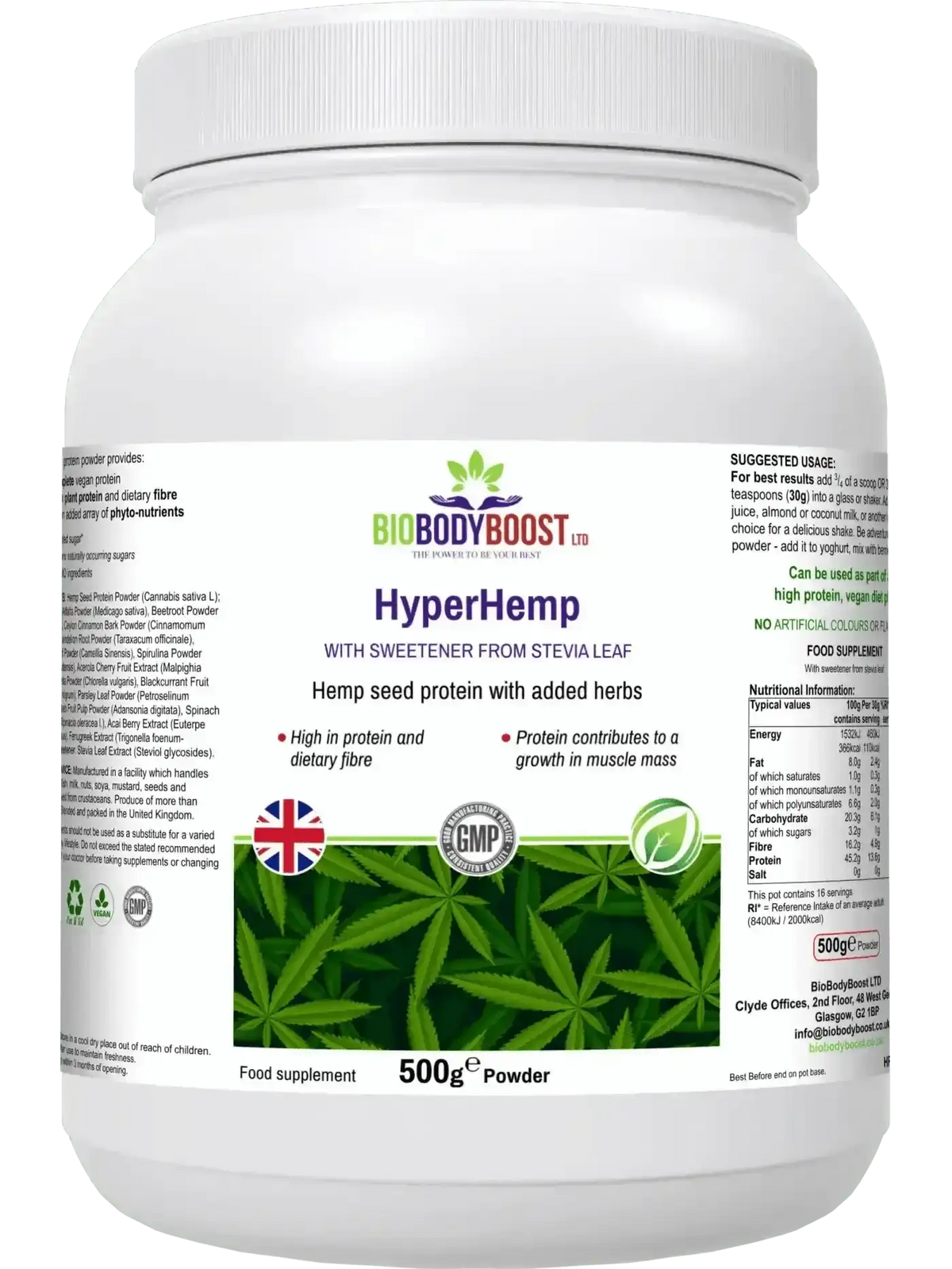
HyperHemp is made from hemp seed protein only, extracted with water and pressure rather than hexane, and blended with 14 whole foods and herbs including spirulina, chlorella, spinach and acai. It provides 13.6g of complete protein per 30g serving, is halal approved, vegan and contains no CBD or THC. Protein contributes to a growth in muscle mass and to the maintenance of muscle mass and normal bones.

Try HyperHemp with 10% off your first order
Use code HALAL10 at checkout (one use per customer). Halal approved, vegan, hexane-free. Shop HyperHemp
Questions people ask
Can Muslims eat hemp seeds?
Yes, according to the scholars who have addressed it. Hemp seeds do not intoxicate, so rulings such as the one approved by Mufti Ebrahim Desai treat them as permissible.
Does hemp protein contain THC?
Hemp seeds do not produce THC. At most, tiny traces can be picked up from the flowers during harvest. Quality seed protein contains no meaningful amount and cannot intoxicate.
Is hemp seed oil halal?
Hemp seed oil used for cooking is pressed from the seed, so it is generally treated the same way as hemp protein: permissible. It is not the same as CBD oil.
Is CBD oil halal?
Scholars differ. CBD itself is not intoxicating, but CBD oils are extracted from the flower and some contain THC. If you are considering CBD, ask a scholar you trust and choose a product that discloses its THC content.
Is HyperHemp halal?
Yes. HyperHemp is halal approved, vegan, made from hemp seed protein only and contains no CBD or THC.
This article is general information, not a religious ruling. For a personal ruling, consult a scholar you trust. Food supplements should not replace a varied diet and healthy lifestyle.