If you follow a halal diet and you have ever turned a vitamin D bottle over in your hand trying to work out whether you can take it, you are not being fussy. Vitamin D3 is one of the most debated ingredients in the supplement aisle, and the reason is simple: most of it starts life in sheep's wool.
This guide explains where vitamin D3 actually comes from, why scholars disagree, and exactly what to look for on a UK label.
- Most vitamin D3 comes from lanolin — sheep's wool grease
- Most scholars permit it, because shearing does not harm or kill the animal
- The capsule shell is usually the bigger problem — softgels are gelatine, and gelatine is porcine by default
- Algae-sourced D3 removes the question entirely
Why vitamin D3 raises a halal question at all
Two forms of vitamin D are sold as supplements. Vitamin D2 (ergocalciferol) comes from yeast or fungi. Vitamin D3 (cholecalciferol) is the form most commonly used, and it is usually made from lanolin — the waxy substance secreted by sheep's skin and recovered from shorn wool.
That single sourcing fact is where the debate begins.
The scholarly position on lanolin
Lanolin is not a slaughter byproduct. Wool is collected by shearing a living animal, and the sheep is unharmed. On that basis, many scholars treat lanolin as permissible.
Muslim Medical Association guidance notes that sheep wool is considered pure, and that products derived from it are therefore permissible to use and consume. It also points out that producing vitamin D from lanolin involves multiple chemical transformations plus ultraviolet irradiation, which is a further argument for permissibility.
Hanafi rulings published on IslamQA reach a similar conclusion: lanolin from sheep wool falls under derivatives of an animal that is consumable by Muslims, and is therefore halal even where the animal was not slaughtered in the shar'i manner.
Why some people still avoid lanolin D3
Not everyone is satisfied by that reasoning. Some scholars classify lanolin-derived D3 as mashbooh — doubtful — on the grounds that the source animal's status cannot be verified, and that processing and cross-contamination are invisible to the consumer.
There is a second, more practical issue. Even if you accept lanolin D3, the D3 is rarely the only animal-derived thing in the bottle.
The capsule is often the bigger problem
Vitamin D is fat-soluble, so it is commonly sold in softgels. A softgel shell is made from gelatine, and gelatine is porcine by default across most of the supplement industry, because pigskin is the cheapest raw material available.
The scholarly position on gelatine is much clearer than on lanolin:
| Gelatine source | General position |
|---|---|
| Any part of the pig | Never halal |
| Bones of permitted animals | Generally halal — zabiha slaughter not a condition |
| Hide or skin of permitted animals | Requires correct slaughter |
| Label just says "gelatine" | Cannot be assessed at all |
This is why a product can contain a D3 that most scholars would accept, inside a shell that most scholars would not.
Liquids: check for ethanol
Liquid vitamin D drops avoid the gelatine problem entirely, which is why many halal-conscious buyers prefer them. But liquids introduce their own question.
Fat-soluble vitamins need a carrier. Some liquid formulas use ethanol as a solvent, and any ethanol content puts the product outside a halal diet for most consumers. Others use glycerol, glycerine, or a water-based carrier. The ingredient list will tell you plainly — it is worth reading.
The source that removes the debate: algae
There is a third option that sidesteps the argument altogether.
Vitamin D3 can be produced from algae or lichen rather than from sheep's wool. Because the source is a plant-type organism, there is no animal anywhere in the supply chain — no lanolin, no slaughter question, no source-animal verification issue.
Algae-sourced D3 is genuinely vegan, which makes it unambiguously suitable for a halal diet on the sourcing question. If you have been avoiding vitamin D3 because you were not comfortable with the lanolin position, this is the form to look for.

How to read a UK vitamin D label
Four checks, in order:
- Find the D3 source. The label should say lanolin, fish, or algae/lichen. If it only says "cholecalciferol" with no source, you cannot assess it — ask the brand.
- Check the delivery format. Softgel means gelatine unless stated otherwise. Hard capsules may be gelatine or HPMC (a plant-based cellulose shell). Liquids and sprays avoid the shell question.
- If it is a liquid, scan for ethanol or alcohol. Glycerol, glycerine or purified water as the carrier is what you want to see.
- Look for a stated halal approval, and note that "suitable for vegans" is a strong signal in its own right — a vegan product cannot contain lanolin D3, gelatine, or animal-derived processing aids.
Where our own vitamin D sits
Brands should be specific rather than vague, so here is exactly what is in ours.
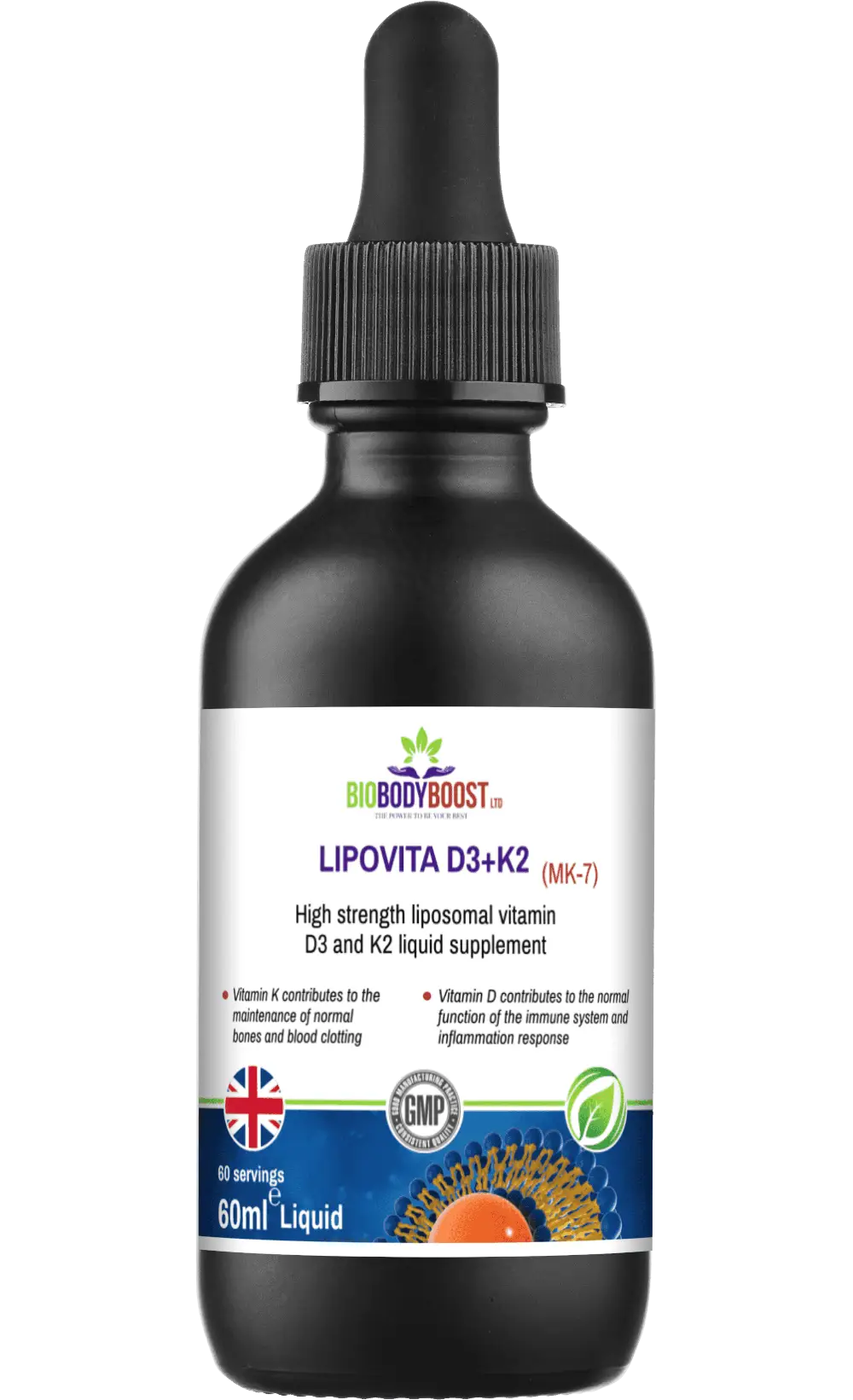
Our Lipovita Liposomal Vitamin D3 + K2 Drops use vitamin D3 as cholecalciferol sourced from algae, not lanolin. It is a liquid dropper, so there is no capsule shell. The carrier is ultra-purified water with sunflower-derived phospholipids and glycerol — there is no ethanol in the formula.

| Per 1ml serving | Amount | %NRV |
|---|---|---|
| Vitamin D3 (algae-sourced) | 100µg (4000 IU) | 2000% |
| Vitamin K2 (MK-7) | 100µg | 133.3% |
It is halal approved, kosher approved, and suitable for vegetarians and vegans, with 60 servings in the 60ml bottle.
On the authorised claims: vitamin D contributes to the normal function of the immune system, the normal absorption and utilisation of calcium and phosphorus, normal blood calcium levels, and the maintenance of normal bones, muscle function and teeth. Vitamin K contributes to normal blood clotting and to the maintenance of normal bones.
The short answer
Most vitamin D3 on UK shelves comes from lanolin, and most scholarly opinion treats lanolin as permissible because it comes from shearing rather than slaughter. If you are comfortable with that position, the more important thing to check is the capsule shell — a gelatine softgel is a clearer problem than the D3 inside it.
If you would rather not weigh the lanolin question at all, algae-sourced D3 in a liquid format removes every animal-derived element from the equation.
Food supplements should not be used as a substitute for a varied diet and healthy lifestyle. Do not exceed the recommended intake. If you are pregnant, breastfeeding, taking medication — including anticoagulant medication — or under medical supervision, consult your healthcare professional before use. This article is general information about ingredient sourcing and is not medical advice. Halal rulings vary between scholars and schools of thought; where a ruling matters to you personally, consult a scholar you trust.