Male hair loss has two fundamentally different causes that require completely different approaches: androgenetic alopecia (genetic pattern baldness driven by DHT) and nutrient-deficiency or stress-related hair loss (telogen effluvium, diffuse thinning). No supplement will reverse established androgenetic alopecia — that requires pharmaceutical DHT blockers (finasteride) or surgical hair restoration. But supplements can slow DHT-mediated progression and completely reverse nutrient-deficiency hair loss when the deficiency is correctly identified.
The Two Types of Male Hair Loss — Why the Distinction Matters
Androgenetic alopecia (pattern baldness) — genetic, DHT-driven
The most common form. Caused by dihydrotestosterone (DHT) binding to androgen receptors in hair follicles genetically predisposed to miniaturisation. DHT is converted from testosterone by 5-alpha-reductase enzymes in the scalp. Progression is genetic and largely irreversible once follicles are miniaturised. Supplements cannot restore miniaturised follicles — pharmaceutical finasteride (5-alpha-reductase inhibitor) is the only well-evidenced treatment for slowing progression.
Nutrient-deficiency and stress hair loss — reversible
Diffuse thinning across the scalp (rather than a defined recession pattern) is frequently caused by nutrient deficiencies or telogen effluvium (stress-triggered shedding). This type of hair loss is fully reversible with correction of the underlying cause. The most common reversible causes in UK men:
- Iron deficiency (less common in men than women but occurs)
- Zinc deficiency (very common in vegans and vegetarians)
- Protein deficiency (relevant for very low-calorie or restrictive diets)
- Vitamin D deficiency (extremely common in UK)
- Thyroid dysfunction (causes diffuse thinning)
What Supplements Can Do for Male Hair Loss
Saw palmetto — evidence for slowing DHT-mediated progression
Evidence: Moderate — weaker than finasteride but meaningful
Saw palmetto (Serenoa repens) inhibits 5-alpha-reductase — the same enzyme targeted by finasteride, though less potently. Multiple trials show saw palmetto supplementation slows hair loss progression and in some studies increases hair density versus placebo in androgenetic alopecia. A 2012 study found saw palmetto at 320mg daily produced significant improvements in hair count versus placebo over 24 weeks. It is not a replacement for finasteride in severe cases but is meaningful as a gentler, side-effect-free alternative for early-stage progression. Dose: 320mg standardised extract daily.
Zinc — for deficiency-related shedding
Evidence: Strong for zinc-deficient individuals
Zinc deficiency causes diffuse hair shedding because zinc is required for DNA synthesis in rapidly dividing hair follicle cells. Testing serum zinc (or proxy markers like white spots on nails, frequent infections) is worthwhile before supplementing. Zinc also inhibits 5-alpha-reductase activity — making it relevant for androgenetic alopecia too. Dose: 15–25mg elemental zinc daily (chelated form — glycinate or picolinate).
Marine collagen — hair shaft quality
Evidence: Moderate — improves hair thickness and shaft quality
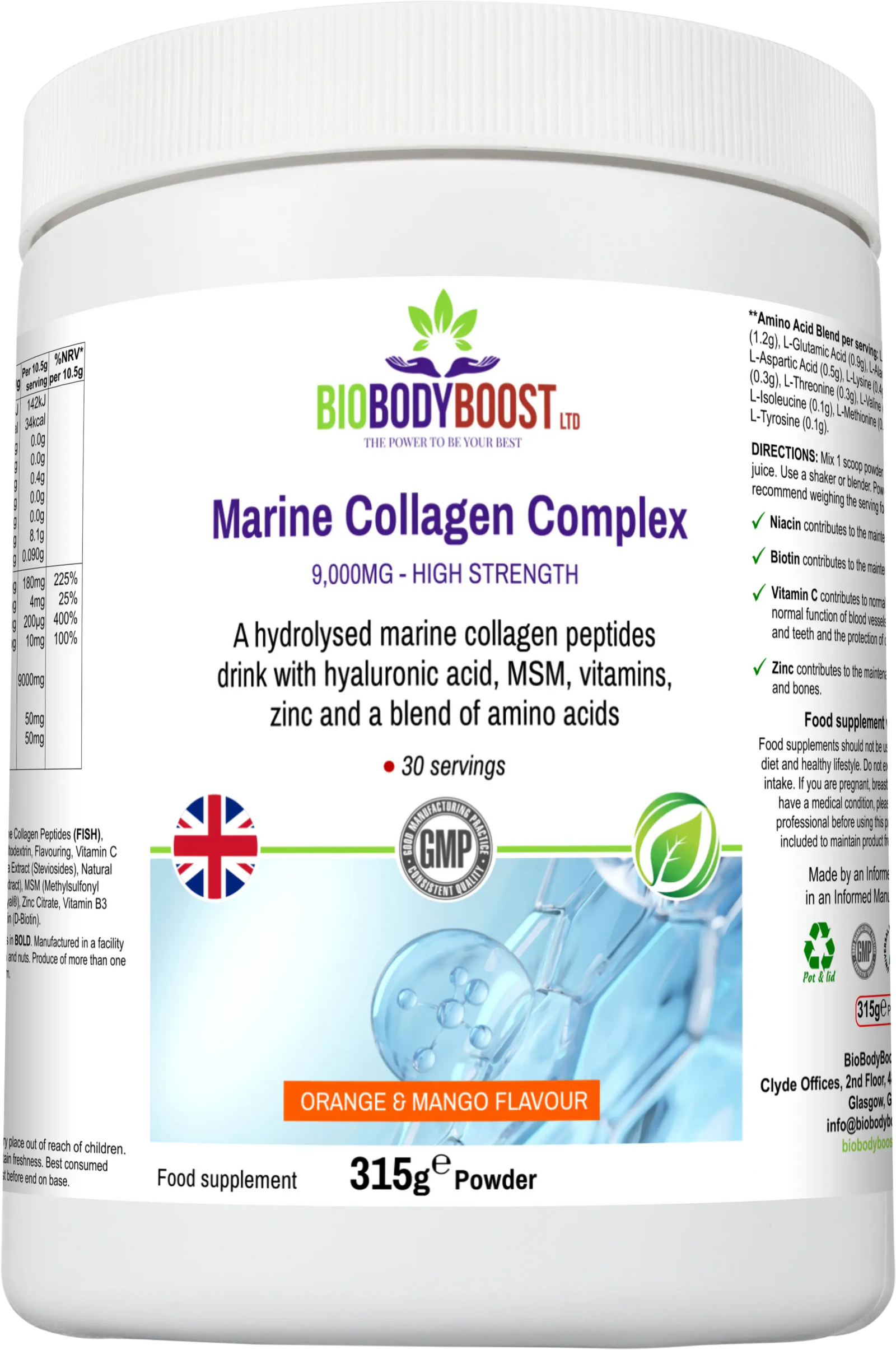
Collagen provides the structural proteins of the dermal papilla surrounding hair follicles. Hydrolysed collagen peptides stimulate dermal papilla cells to increase keratin production. Multiple trials show improvements in hair shaft thickness and tensile strength. Does not regenerate lost follicles but improves the quality and density of existing hair. Dose: 5–10g hydrolysed marine collagen daily.
Biotin — only if deficient (rare)
As discussed in detail in our biotin guide, biotin supplementation only improves hair if you have biotin deficiency — which is uncommon. Most UK men taking biotin for hair will not see results because they are not deficient.
Vitamin D — follicle cycle regulation
Evidence: Moderate — links to alopecia areata and follicle cycling
Vitamin D receptors in hair follicles regulate the anagen (growth) phase of the hair cycle. Low vitamin D is associated with alopecia areata and telogen effluvium. Given that 1 in 5 UK men are vitamin D deficient, optimising D status is a reasonable baseline intervention for any unexplained hair shedding.
What Does Not Work for Male Hair Loss
- High-dose biotin — not effective unless genuinely deficient (rare)
- Collagen for pattern baldness — improves hair quality but cannot reverse follicle miniaturisation
- Any supplement for established bald areas — miniaturised or absent follicles cannot be restored by supplements
Magnesium 3 Complex provides zinc (alongside magnesium and B6) for deficiency-related hair support. Marine Collagen Nourish — 9g hydrolysed Type I marine collagen for hair shaft quality and dermal papilla support. Lipovita D3+K2 for vitamin D deficiency. All halal certified, vegan, UK GMP. Browse the range.