A busy diary can expose the weak points in any wellness plan. For this vegan immunity routine case study, we followed a realistic eight-week reset built for a plant-based professional: early starts, a couple of gym sessions each week, meals often eaten between meetings and the familiar temptation to rely on coffee when energy dips.
This is a composite case study, not a clinical trial or a promise to prevent illness. The aim was simpler and more useful: create a repeatable routine that supports normal immune function without complicated food rules, gut disruption or a cupboard full of supplements.
The starting point: good intentions, inconsistent basics
Our participant, “Maya”, is a 34-year-old London-based marketing manager who has eaten fully vegan for four years. Her meals were generally colourful and nourishing, but her routine had gaps. Breakfast was often toast or skipped altogether, lunches varied wildly, and she was taking supplements only when she remembered.
Her main goal was to feel more consistent through the colder months. She described afternoon slumps, restless sleep during high-pressure weeks and a tendency to let training, meal prep and recovery slide when work became intense. None of these signs diagnose an immune problem. They did show that the foundations supporting daily performance needed attention.
The first lesson was that immunity is not a switch to flip. It is an ongoing system influenced by nutrition, sleep, stress, movement and the health of the gut. A high-dose supplement taken occasionally cannot reliably compensate for a week of short nights, low food variety and skipped meals.
The vegan immunity routine: fewer moving parts, better follow-through
Rather than adding everything at once, Maya used three daily anchors: breakfast, lunch and bedtime. This reduced decision fatigue and made each part of the plan easier to keep.
Breakfast: build in protein and key nutrients
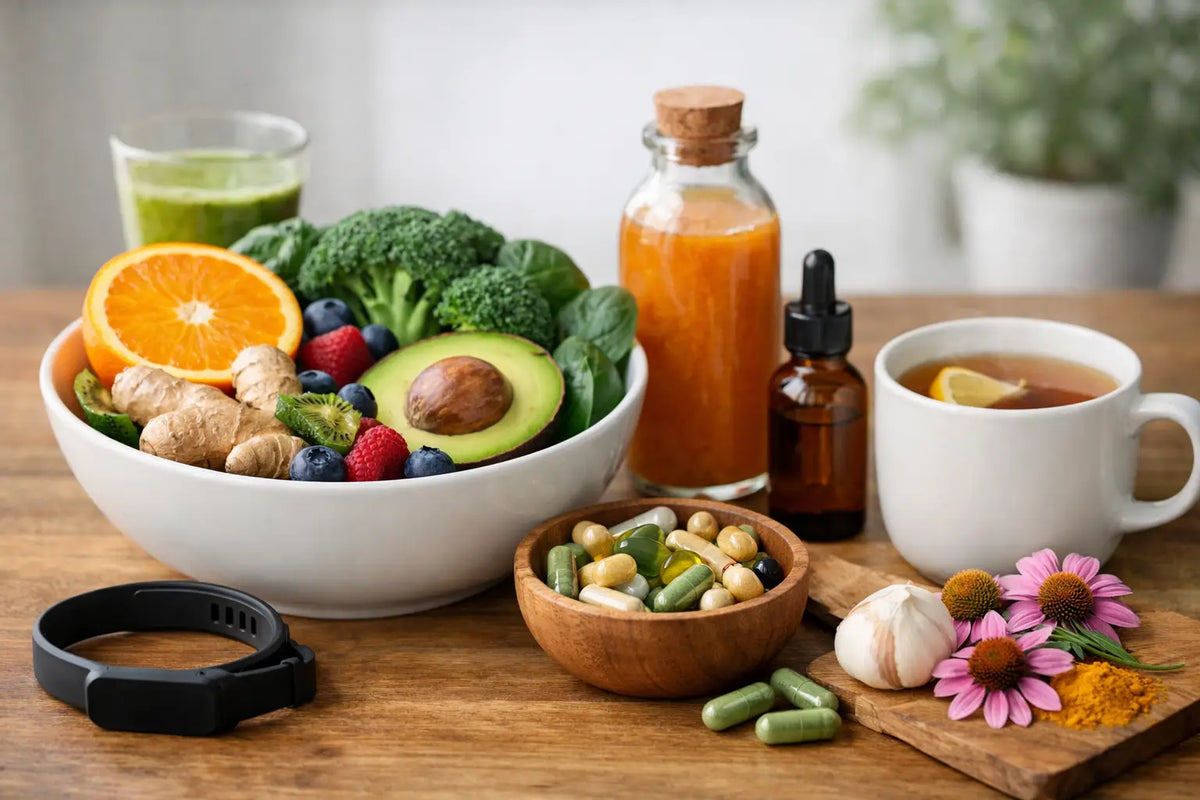
Breakfast became overnight oats with fortified plant milk, chia seeds, berries and peanut butter, or tofu scramble with wholegrain toast and greens. The priority was not perfection. It was getting protein, fibre and a range of vitamins and minerals into the day before the first work call.
Fortified foods matter on a vegan diet, especially for nutrients that may be harder to obtain consistently from unfortified plant foods. Maya checked labels for vitamin B12, iodine, vitamin D and calcium rather than assuming every oat drink or yoghurt alternative provided the same nutritional value.
She also moved her daily vegan B12 supplement beside the coffee jar. B12 is essential for vegan diets, but it is easy to forget when a routine is rushed. Taking it consistently was more valuable than endlessly changing format or chasing novelty.
Lunch: make variety the practical target
At lunch, Maya aimed for a plant protein, a wholegrain, vegetables and a source of healthy fat. Think lentil and quinoa bowls, chickpea wraps with salad and tahini, or leftover bean chilli with brown rice. These meals supplied fibre to support gut balance, alongside zinc, iron, selenium and other nutrients involved in normal body functions.
There was no need to count every gram or create a different meal every day. Across the week, the focus was on rotation: beans, lentils, tofu, tempeh, nuts, seeds, wholegrains, fruit and vegetables in different colours. That approach is more sustainable than treating one so-called superfood as the answer.
Bedtime: protect recovery before adding more
Maya set a 10.30 pm mobile phone reminder and aimed to be in bed at a similar time most nights. Her target was not a flawless eight hours. It was a reliable wind-down: dim lights, no laptop in bed and a short stretch after evening work.
Within two weeks, she reported fewer late-night snack raids and less dependence on a second afternoon coffee. This does not prove that sleep alone changed her immune health. It does show why recovery deserves a place in any daily defence routine. Sleep is when a busy body gets its chance to reset.
Where supplements fitted in
Supplements were used to fill likely nutritional gaps, not replace a varied vegan diet. Maya stayed with a straightforward vegan B12 routine and added vitamin D during the lower-sunlight months, following UK public health guidance and checking suitability with a pharmacist when needed.
She also chose a clean-label vegan immune-support blend containing vitamin C, zinc and selenium. These nutrients contribute to the normal function of the immune system, but dose matters. More is not automatically better, particularly with zinc and selenium. A third-party tested formula with clear amounts per serving makes it easier to avoid stacking similar products without realising it.
The timing was deliberately uncomplicated. Her supplement was taken with breakfast, where it was visible and less likely to be forgotten. If a product caused nausea or digestive discomfort, the plan was to stop, review the ingredients and seek professional advice rather than push through it.
For people who are pregnant, breastfeeding, have a health condition, take prescription medicines or have been advised to manage nutrient intake, personal guidance is essential. A tailored dietary supplement plan can make sense when dietary restrictions, blood test results or individual needs are involved. It should never be a substitute for medical care.
What changed after eight weeks
By week four, the most noticeable shift was consistency. Maya had breakfast on five or six working days, was taking B12 and vitamin D reliably, and had made lunchtime meals less of an afterthought. She felt better prepared for demanding days and said her energy was “less up and down”.
By week eight, she had completed more planned workouts and was no longer trying to rescue every tired afternoon with caffeine and sugary snacks. She also noticed that her digestion felt steadier when meals included more beans, oats, vegetables and fermented foods such as live-culture plant yoghurt.
It would be misleading to credit a single nutrient or one supplement for these changes. The result came from the combined effect of adequate food intake, better sleep discipline, regular movement and supplement consistency. That is the real value of a vegan immunity routine: it gives healthy choices a place in the day, even when life gets busy.
What did not work perfectly
The plan had friction. On two work trips, Maya forgot her supplements. During one intense campaign week, bedtime drifted later and meal prep disappeared. Instead of labelling those moments as failure, she used a simple reset: buy a fortified plant yoghurt and fruit for breakfast, choose a bean-based lunch, drink water and return to the bedtime reminder.
This matters because strict routines often collapse under real life. A routine worth keeping needs a minimum version for hectic days. For Maya, that meant one nutrient-aware meal, her core supplements and a realistic bedtime, rather than trying to cook three perfect meals from scratch.
There were also trade-offs. A more elaborate stack might have felt proactive, but it would have cost more and made adherence harder. A simpler, research-backed approach left more room to notice what was actually helping. BioBodyBoost’s clean, vegan-first approach fits that mindset: support the basics with ingredients you can understand, not unnecessary complexity.
Build your version of this routine
Start by looking for the weakest link rather than changing everything. If breakfast is erratic, make that your anchor. If sleep is the issue, protect the final hour of the evening. If supplements are already in the cupboard but rarely taken, place them next to something you use every day.
For a vegan diet, give particular attention to B12 and vitamin D, then assess whether fortified foods and your usual meals provide enough nutritional coverage. If you are concerned about iron, iodine, vitamin D or B12 status, speak with a qualified healthcare professional about testing and appropriate support. Guesswork is not a long-term strategy.
The best routine is not the most dramatic one. It is the one you can return to after a late meeting, a weekend away or a week when your motivation is nowhere to be found. Give your body consistent plant-powered support, protect your recovery and let the small daily actions do their work.