UK South Asian communities — including British Pakistani, Bangladeshi, Indian and Sri Lankan populations — face a specific and well-documented pattern of nutritional deficiencies that differ from the general UK population. These are not deficiencies from poor eating habits. They are structural, driven by skin pigmentation, dietary patterns, outdoor behaviour, genetic factors and latitude. Understanding which deficiencies are most prevalent and why matters because it determines which supplements have the strongest evidence for this community specifically.
Vitamin D deficiency: the most prevalent and most consequential
Vitamin D deficiency is significantly more common in UK South Asian communities than in the white British population. Studies consistently find prevalence rates of 50–80% in British South Asian adults, compared to approximately 20% in the general UK adult population (NDNS 2019). Several compounding factors:
- Skin pigmentation: higher melanin content reduces UV-B penetration to dermal layers. Darker skin requires 3–10x more UV-B exposure than lighter skin to synthesise equivalent vitamin D. UK latitudes cannot support meaningful skin synthesis at any skin tone from October to March, but the deficit is far larger for darker skin tones year-round.
- Outdoor covering practices: many Muslim women cover skin outdoors for religious reasons, further reducing UV-B exposure independent of skin tone.
- Dietary patterns: traditional South Asian diets are often lower in vitamin D-containing foods (oily fish, eggs in non-vegetarian households). Vegetarian and predominantly vegetarian diets are common among Hindu and some Muslim South Asian households.
- Indoor occupations: population data shows South Asian workers are overrepresented in indoor occupational categories with limited daytime outdoor exposure.
Why it matters beyond bone health: vitamin D deficiency in South Asian UK communities contributes to elevated risk of type 2 diabetes (vitamin D receptors are expressed on pancreatic beta cells and insulin-sensitive muscle tissue), cardiovascular disease, tuberculosis susceptibility, and poorer pregnancy outcomes. A 2020 meta-analysis in Nutrients (28 RCTs) confirmed D3 supplementation significantly improved insulin resistance in deficient people with type 2 diabetes — making correction of vitamin D deficiency one of the most accessible metabolic interventions for South Asian UK adults with prediabetes or type 2 diabetes.
What to take: 1,000–2,000 IU vitamin D3 daily year-round (not just October to March) is appropriate for most UK South Asian adults. For confirmed deficiency below 25 nmol/L: 2,000–4,000 IU/day. PHE’s standard recommendation of 400 IU is insufficient to restore levels in deficient adults — the Autier 2011 AJCN meta-analysis confirmed 400 IU/day was inadequate for many with established deficiency.
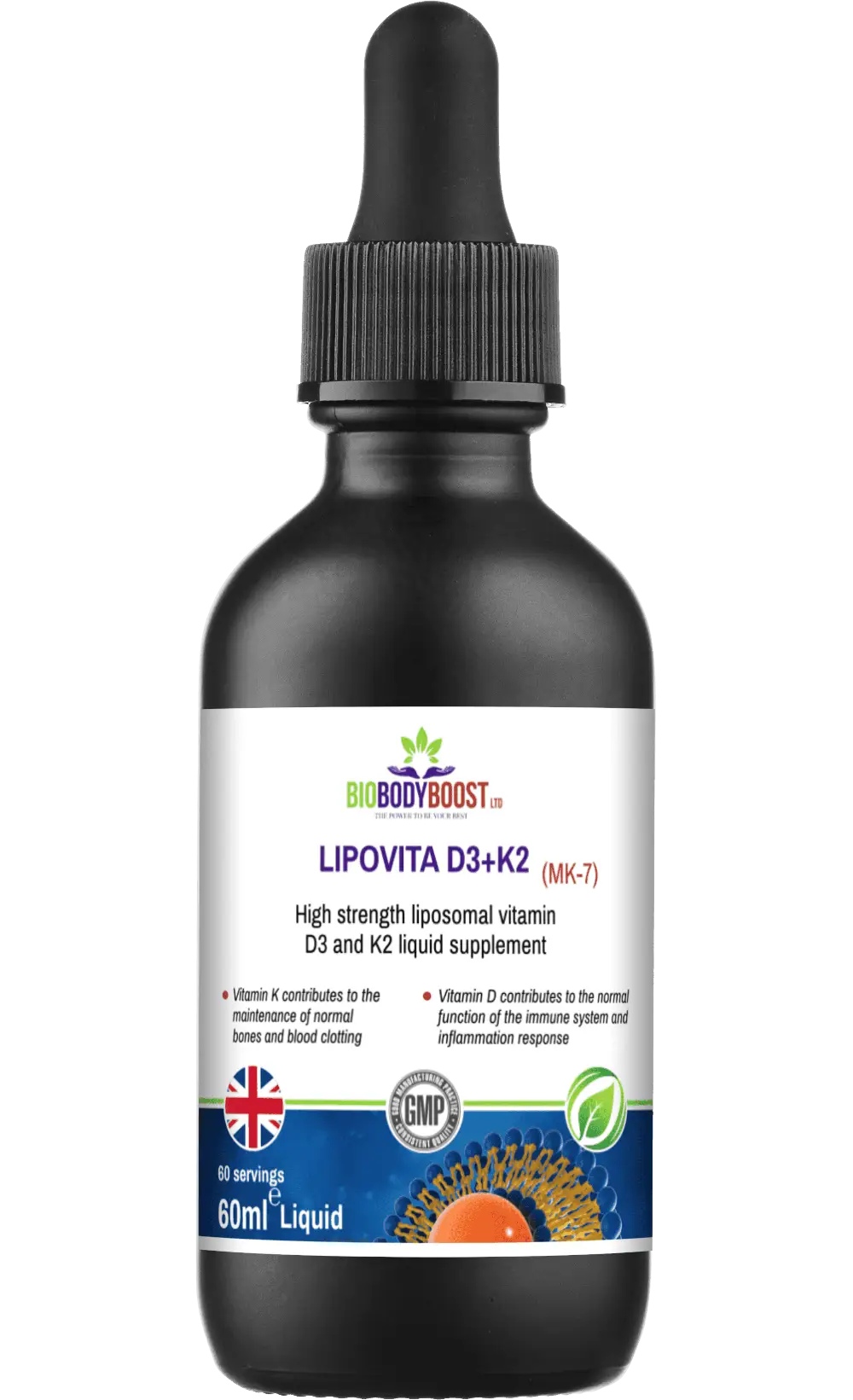
Halal compliance: most vitamin D3 is lanolin-derived (sheep wool). Lichen-derived D3 is unambiguously halal across all scholarly positions. BioBodyBoost Lipovita D3+K2 — 4,000 IU lichen-derived D3 + MK-7 K2, liposomal, halal certified.
Type 2 diabetes risk: why South Asian UK adults need to know this
UK South Asian adults develop type 2 diabetes at 3–5 times the rate of white British adults, at younger ages and at lower BMI thresholds. The mechanisms include:
- Higher visceral fat percentage at equivalent BMI (“thin fat” phenotype — metabolically active abdominal fat at normal weight)
- Lower baseline insulin sensitivity (genetic predisposition to insulin resistance)
- Higher rates of vitamin D deficiency (which independently predicts both insulin resistance and diabetes development)
- Dietary patterns including white rice and white flour as staples (high refined carbohydrate load)
The supplements with the strongest evidence for blood glucose management — berberine, magnesium, vitamin D3, psyllium husk and chromium — are all available in halal-certified formats. Never combine glucose-lowering supplements with diabetes medication without GP supervision; combined effects can cause hypoglycaemia. Full guide: supplements for type 2 diabetes UK.
Iron deficiency: highest in South Asian women
Iron deficiency is the most prevalent nutritional deficiency in UK women generally, affecting approximately 25% of premenopausal women. UK South Asian women face additional risk factors:
- Dietary patterns: vegetarian and vegan diets provide only non-haem iron (from plant sources), which is absorbed at 2–20% vs 15–35% for haem iron from meat. Phytates in dal, rice and chapati further reduce non-haem iron absorption.
- Calcium-rich diet: high dairy intake in South Asian diets (chaas, lassi, paneer, yoghurt) at the same meal as iron-rich foods reduces iron absorption by up to 49% (Hallberg 1991).
- Tea drinking culture: black tea at or near meals reduces iron absorption by 64% (AJCN 1983). This is one of the most significant and modifiable dietary iron absorption factors in South Asian communities.
Practical steps beyond supplementation: separate tea from iron-rich meals by at least 1 hour; add vitamin C to iron-rich plant meals (a squeeze of lemon over dal, a glass of orange juice with a plant-based meal increases non-haem iron absorption by up to 67%); separate dairy from iron-rich foods. These dietary changes can significantly improve iron status before supplementation is needed.
If supplementing iron: get ferritin and full blood count tested before starting. Ferrous bisglycinate is significantly better tolerated than ferrous sulphate at equivalent doses (2014 Journal of Nutrition comparative study). Full guide: how to take iron supplements without nausea.
Magnesium: 70% of UK adults are below RNI — South Asian risk is higher
UK NDNS data shows approximately 70% of adults consume below the magnesium RNI. South Asian adults face additional depletion pressure from insulin resistance (the insulin resistance mechanism chronically depletes magnesium, as with type 2 diabetes) and from higher rates of metformin prescription (metformin increases urinary magnesium excretion).
Magnesium is a cofactor in over 300 enzymatic reactions including ATP synthesis, insulin receptor function, serotonin production and cortisol regulation. Deficiency contributes to fatigue, poor sleep, muscle cramps, anxiety and worsened insulin sensitivity — all common complaints in South Asian adult health consultations.
What to take: 300–400mg elemental magnesium as glycinate or malate daily. Avoid magnesium oxide (~4% bioavailability). BioBodyBoost Magnesium 3 Complex — glycinate + malate + taurate, zinc and B6, HPMC capsule, halal certified.
A practical halal supplement stack for South Asian UK adults
- Vitamin D3+K2 (year-round, 2,000–4,000 IU lichen D3): the highest-priority intervention for the highest-prevalence deficiency
- Magnesium glycinate (300–400mg elemental, evening): addresses insulin sensitivity, sleep, fatigue and cortisol
- Iron (only if ferritin confirmed low via blood test): ferrous bisglycinate with vitamin C, away from tea and dairy
- Omega-3 EPA+DHA (1–2g/day with food): lower oily fish consumption in many South Asian diets makes supplementation more likely to address a genuine gap
- Probiotics (4–20 billion CFU named strains): gut microbiome diversity supports metabolic health, immunity and the gut-brain axis
Browse the full Halal Vitamins UK collection. All 60+ products are third-party halal certified, HPMC capsules throughout, UK GMP manufactured.
Why is vitamin D deficiency so common in British South Asian communities?
Multiple compounding factors: melanin (skin pigment) reduces UV-B penetration to the layer where vitamin D is synthesised, requiring 3–10x more sun exposure than lighter skin for equivalent vitamin D production; UK latitudes cannot support adequate skin synthesis at any skin tone from October to March; outdoor covering practices further reduce UV-B exposure year-round; and dietary vitamin D is limited in South Asian dietary patterns where oily fish is consumed less frequently. The combined effect is vitamin D deficiency rates of 50–80% in UK South Asian adults, compared to approximately 20% in the general UK adult population. Year-round supplementation at 1,000–2,000 IU D3/day (not just the standard October to March advice) is appropriate for most British South Asian adults.
Does tea affect iron absorption?
Yes — significantly. A 1983 study in the American Journal of Clinical Nutrition found one cup of black tea consumed with an iron-containing meal reduced iron absorption by 64%. Coffee reduced it by 39%. The polyphenols in tea (particularly tannins) bind iron in the gut and prevent absorption. This is one of the most clinically significant dietary iron interactions and is particularly relevant in South Asian communities where black tea is commonly consumed at mealtimes. The practical fix: leave at least 1 hour between iron-rich meals or iron supplementation and tea or coffee. Pairing iron-rich plant foods with vitamin C (lemon juice, orange juice) at the same meal significantly offsets this, increasing non-haem iron absorption by up to 67%.
Are the supplements recommended here halal?
Yes — all BioBodyBoost products referenced carry third-party halal certification covering active ingredients, capsule shells (HPMC plant-derived throughout), processing aids and manufacturing environment. Vitamin D3 is lichen-derived (unambiguously halal across all scholarly positions). Collagen where used is marine-sourced with full halal certification. No product in the BioBodyBoost range uses porcine gelatine capsules or porcine-derived ingredients.