
Quick answer: stress and cortisol regulation get discussed as a generic, one-size-fits-all topic, but two specific life stages create distinct, well-documented cortisol disruption in women: the postpartum period and perimenopause. Both involve genuine hormonal mechanisms, not just "being busier" or "getting older" — and both are periods where the evidence behind adaptogens like ashwagandha is particularly relevant, since cortisol dysregulation is the actual mechanism being targeted, not stress in the abstract.
Postpartum: the cortisol crash nobody prepares you for
During pregnancy, cortisol levels rise progressively, reaching roughly two to three times normal by the third trimester — a genuine, necessary physiological adaptation supporting foetal development. Immediately after birth, this elevated cortisol drops sharply, alongside the equally dramatic fall in oestrogen and progesterone that occurs once the placenta is delivered. This rapid multi-hormone crash is a leading proposed mechanism behind the mood disruption common in the first weeks postpartum, distinct from (though sometimes overlapping with) postnatal depression, which requires clinical assessment and treatment in its own right.
The practical relevance: a new mother's HPA axis (the hypothalamic-pituitary-adrenal system that regulates cortisol) is recalibrating during a period of severe sleep deprivation, which independently elevates cortisol and impairs the body's ability to regulate it. These two things compounding — hormonal crash plus sleep-deprivation-driven cortisol elevation — is a genuinely difficult physiological combination, not a personal failing to "cope better."
Perimenopause: cortisol and oestrogen decline together
Oestrogen has a modulating effect on cortisol regulation, partly by supporting serotonin and GABA pathways that buffer stress response. As oestrogen becomes erratic during perimenopause — fluctuating unpredictably rather than declining smoothly — this buffering effect becomes less consistent, which is proposed as one mechanism behind the increased anxiety, irritability and stress sensitivity many women report during this transition, independent of any change in actual life circumstances.
This is a distinct mechanism from the vasomotor symptoms (hot flushes, night sweats) more commonly discussed with perimenopause — the cortisol and mood-regulation angle is a separate, less-discussed piece of the same hormonal transition.
What the evidence shows for ashwagandha specifically
KSM-66 ashwagandha, a standardised root extract, has the most substantial clinical evidence base among adaptogens for cortisol reduction specifically. A randomised controlled trial (Chandrasekhar et al., 2012) found 600mg daily significantly reduced serum cortisol by approximately 27.9% over 60 days compared to placebo, alongside improvements in perceived stress scores. This is a direct cortisol biomarker result, not just a subjective stress-reduction claim.
The mechanism relevance to both postpartum and perimenopause is the same: both involve genuine cortisol dysregulation with an identifiable hormonal driver, which is the specific target ashwagandha's evidence base addresses, rather than stress reduction in a vague, general sense.
An honest limitation worth stating
The ashwagandha-cortisol trials were conducted in general adult populations experiencing chronic stress, not specifically in postpartum or perimenopausal women. The mechanism (HPA axis modulation, cortisol reduction) is directly relevant to what's happening physiologically in both life stages, but dedicated trials in these specific populations are limited. This is a reasonable evidence-based extrapolation, not a population-specific guarantee.
Our formula

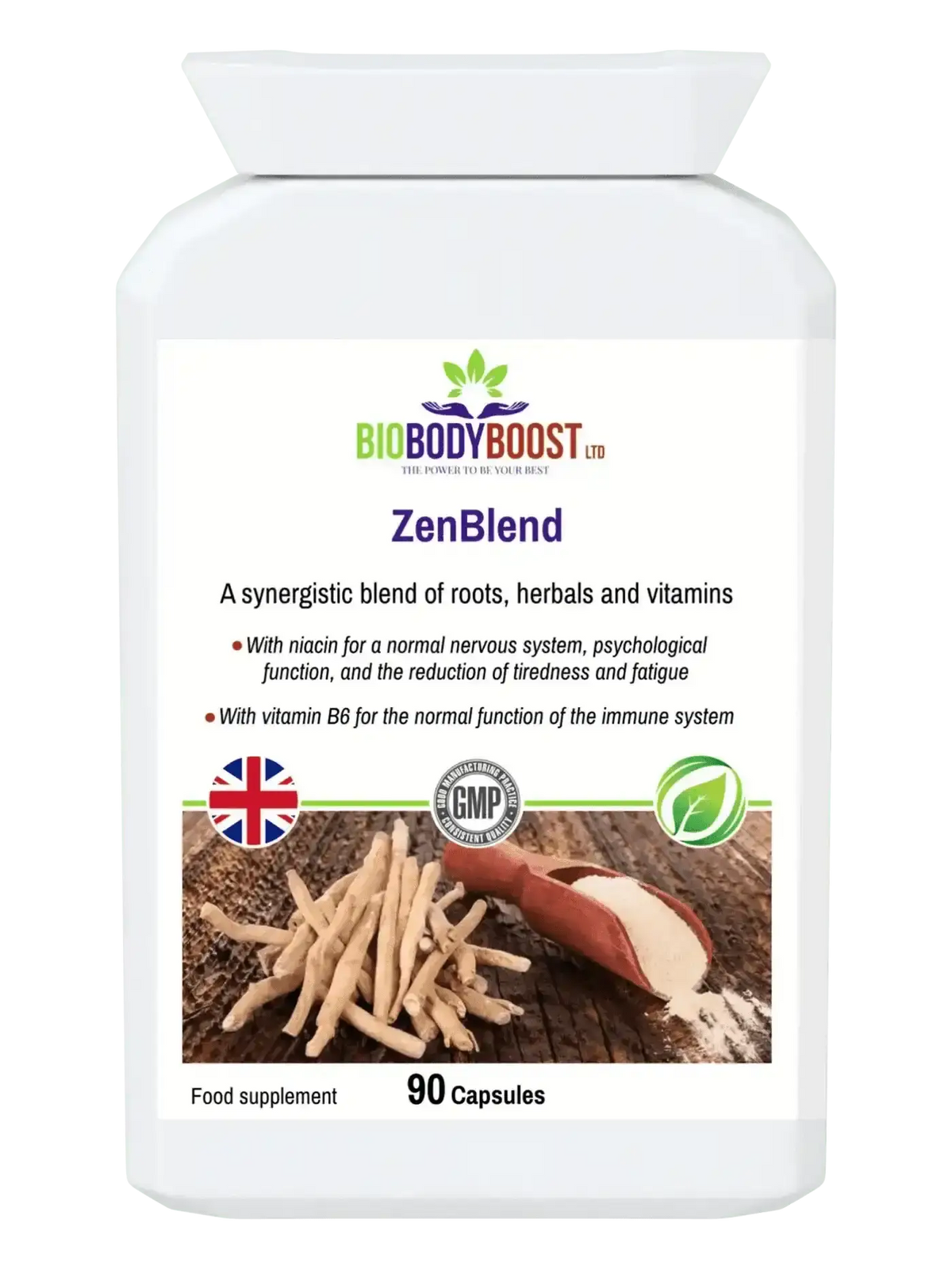
KSM-66 ashwagandha at the clinically studied dose, alongside rhodiola and B vitamins for energy metabolism.
ZenBlend provides KSM-66 ashwagandha alongside rhodiola and B vitamins (which have an EU-authorised claim for contribution to normal psychological function and reduction of tiredness and fatigue). Halal and kosher certified, vegan, HPMC capsule. If postpartum mood symptoms feel severe, persistent, or beyond typical adjustment difficulty, please speak to your GP or health visitor — adaptogens support general stress physiology and are not a substitute for clinical assessment of postnatal depression.
Frequently Asked Questions
Is it safe to take ashwagandha while breastfeeding?
Safety data specifically in breastfeeding women is limited, which is the honest answer rather than a guess in either direction. Speak to your GP or health visitor before starting any new supplement while breastfeeding.
Why does cortisol drop so suddenly after giving birth?
Cortisol rises progressively through pregnancy, reaching two to three times normal levels by the third trimester as part of normal physiological adaptation. Delivery of the placenta causes an abrupt drop in cortisol alongside oestrogen and progesterone, a rapid multi-hormone shift proposed as a contributing mechanism to postpartum mood changes, compounded by sleep-deprivation-driven cortisol elevation in the same period.
Does perimenopause affect anxiety even without hot flushes?
Yes — the cortisol and mood-regulation effects of fluctuating oestrogen during perimenopause are a separate mechanism from vasomotor symptoms like hot flushes, and can occur independently or alongside them. Erratic oestrogen affects the serotonin and GABA pathways that normally buffer stress response.
This article is for general information and does not constitute medical advice. If you are experiencing persistent low mood, anxiety or symptoms of postnatal depression, please speak to your GP or health visitor. Speak to a healthcare professional before starting any new supplement, particularly if pregnant, breastfeeding, or taking prescription medication.
BioBodyBoost — Halal Certified UK Supplements
Use code HALAL10 for 10% off your first order — halal approved under UHA Certificate Ref. 24623, vegan, UK made. Shop Women's Wellness UK →