Written by the BioBodyBoost Team · May 2026

Omega-3 fatty acids are the most extensively researched nutritional supplement in history, with over 10,000 published clinical studies. They occupy a unique position in the supplement market: they are both a dietary essential (the body cannot synthesise them) and consistently under-consumed in the modern British diet. Understanding what they actually do, which forms matter and what dose works is more important than ever given the enormous variation in product quality across the UK market.
EPA vs DHA: why the distinction matters
Omega-3s are a family of fatty acids, not a single compound. The two most clinically relevant are EPA (eicosapentaenoic acid) and DHA (docosahexaenoic acid), both found in marine sources. A third, ALA (alpha-linolenic acid), is found in plant sources like flaxseed and chia. The problem with ALA is that the human body converts it to EPA and DHA at very low efficiency — typically less than 5% — meaning plant-only omega-3 sources do not reliably meet the body’s EPA and DHA requirements.
EPA and DHA have distinct primary actions. EPA is the primary anti-inflammatory omega-3, modulating the eicosanoid pathway to reduce systemic inflammation. DHA is the structural fatty acid of brain and eye tissue, comprising around 15-20% of the total fatty acid content of the cerebral cortex and approximately 50% of retinal photoreceptor membranes.
What the clinical evidence actually supports
Heart health
The NHS notes that DHA contributes to normal triglyceride levels in the blood (an EU-authorised health claim), and EPA+DHA are among the few supplements with strong cardiovascular evidence. The REDUCE-IT trial found high-dose EPA supplementation reduced major cardiovascular events by 25% in high-risk patients — one of the largest effect sizes ever seen in a cardiovascular supplement trial. For the full cardiovascular picture, see our heart health supplements evidence guide.
Brain function and mental health
DHA is essential for neuronal membrane fluidity and synaptic signalling. A meta-analysis in Translational Psychiatry found omega-3 supplementation — particularly EPA-dominant formulas — produced significant improvements in depression symptoms. Omega-3 depletion in the UK population is increasingly linked to cognitive decline, ADHD and mood disorders.
Joint health and inflammation
EPA reduces the production of pro-inflammatory prostaglandins and leukotrienes — the molecules responsible for inflammatory joint pain. Multiple studies demonstrate reduced morning stiffness and joint tenderness in rheumatoid arthritis patients taking omega-3 supplements, often allowing reduced NSAID use.
Is fish oil halal? The omega-3 question most guides skip
Direct answer: fish oil itself is generally considered halal, but most fish oil capsules are not — because the softgel shell is typically made from bovine gelatine without halal certification. The oil and the capsule have to be assessed separately.
Fish-derived gelatine capsules are halal but require specific certification, not just assumption. Vegan softgels (using seaweed-derived carrageenan) are halal by definition but are less common and typically more expensive. Additionally, the fish oil source itself can affect halal status depending on the fish species and processing conditions. A genuinely halal omega-3 product requires certification of both the oil source and the capsule shell — not just a label claim. Our guide to halal vs kosher certification explains what a credible certificate covers, and if you’re weighing sources, the omega-3 vs krill oil vs algae oil comparison covers all three.
Omega-6 and omega-9: do you need them?
Omega-6 (linoleic acid) and omega-9 (oleic acid) are also essential fatty acids, though the modern Western diet typically provides omega-6 in excess rather than deficiency. The optimal ratio of omega-6 to omega-3 is approximately 4:1; the average UK diet provides closer to 15:1, heavily skewed toward omega-6 from vegetable oils. The primary value of supplementing omega-9 is cardiovascular — oleic acid (the main fatty acid in olive oil) is associated with improved HDL:LDL cholesterol ratios. A balanced 3-6-9 formula provides complete fatty acid coverage rather than overloading a single type.
How much omega-3 to take
| Goal | Recommended daily EPA+DHA |
|---|---|
| General maintenance | 250–500mg |
| Cardiovascular support | 1,000mg (under GP guidance at higher doses) |
| Anti-inflammatory / joint | 1,000–2,000mg EPA-dominant |
| Cognitive / brain support | 500–1,000mg DHA-dominant |
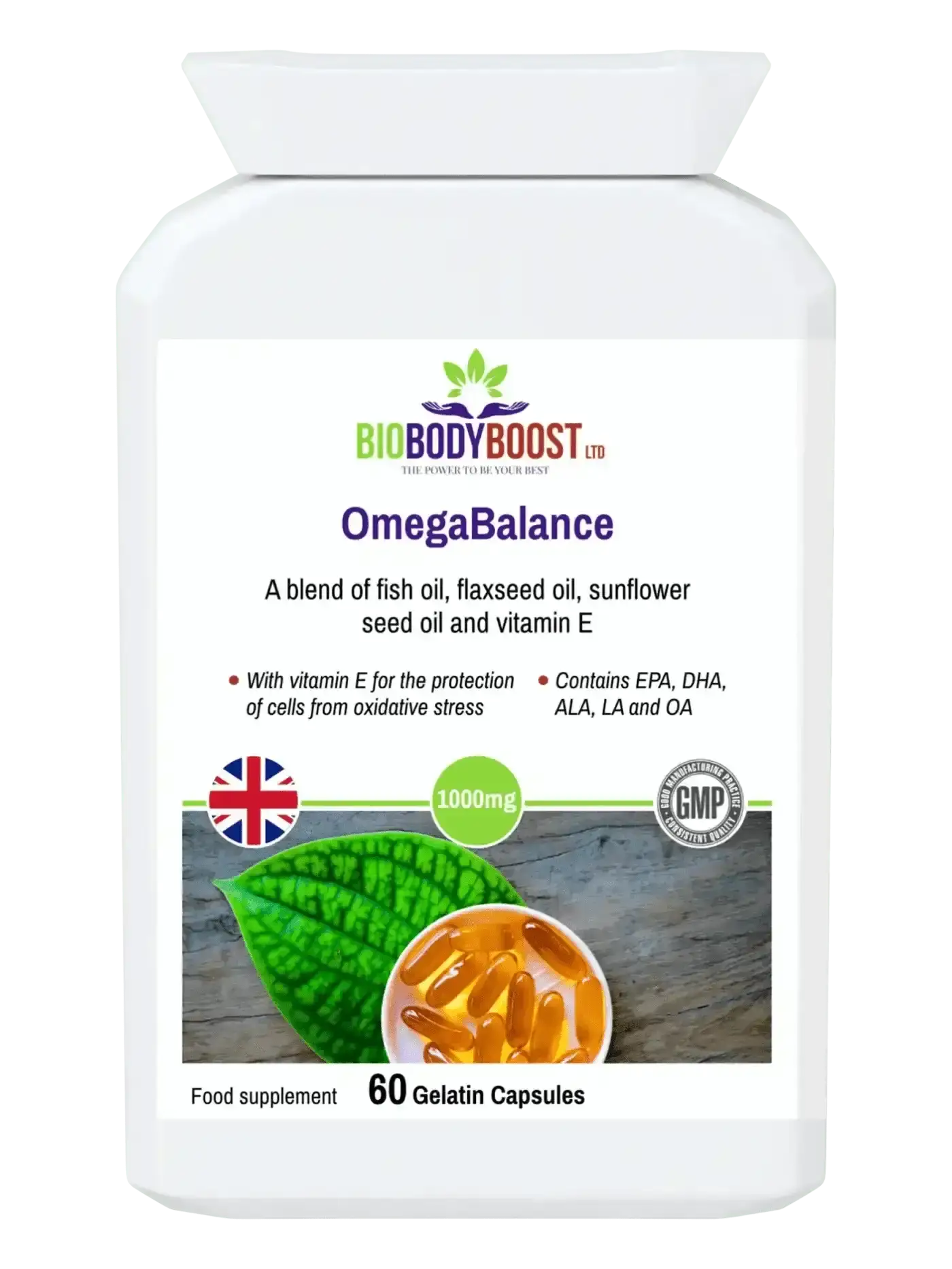
The BioBodyBoost OmegaBalance provides omega 3-6-9 from fish oil and organic flaxseed, with DHA contributing to normal brain function and vision under EU-authorised claims. Halal certified, no bovine gelatine. Explore also the Joints & Bones UK collection for complete musculoskeletal support.
Food supplements should not replace a varied diet. Those taking anticoagulant medication (blood thinners) should consult their GP before taking omega-3 supplements above 1g daily. Not suitable for those with fish allergies.