Quick answer: postbiotics are the third and newest category in the gut health supplement space, after prebiotics (fibre that feeds bacteria) and probiotics (live bacteria). Postbiotics are defined as “inanimate microorganisms and/or their components that confer a health benefit on the host” — the metabolic byproducts and structural components that bacteria produce or leave behind. The most clinically important postbiotics are short-chain fatty acids (SCFAs) — specifically butyrate, propionate and acetate — produced when gut bacteria ferment prebiotic fibre. Postbiotics are inherently halal: they are metabolic products of bacterial fermentation, with no animal involvement and no living organism content.
The gut health three-tier system
- Prebiotics (first tier): non-digestible fibres (inulin, FOS, psyllium, glucomannan) that selectively feed beneficial bacteria. They are the food supply for the gut microbiome.
- Probiotics (second tier): live beneficial bacteria (Lactobacillus, Bifidobacterium, Saccharomyces boulardii) that colonise the gut and produce health-relevant metabolites when given prebiotic substrate.
- Postbiotics (third tier): the metabolic products of bacterial activity — what the bacteria produce when they work. Short-chain fatty acids (butyrate, propionate, acetate), bacteriocins (natural antibacterials), enzymes, cell wall fragments (peptidoglycans, lipoteichoic acid) and bioactive peptides.
Why postbiotics are clinically important
Butyrate — the colon’s primary fuel
Butyrate (a short-chain fatty acid produced when Bifidobacteria and Clostridia ferment inulin and other fibres) is the primary energy source for colonocytes — the cells lining the colon. Colonocyte health directly determines gut barrier integrity. When butyrate is abundant: tight junction proteins (claudin, occludin, zonulin) are upregulated, maintaining the impermeable gut barrier. When butyrate is low (from inadequate fibre and depleted Bifidobacteria): tight junction expression falls, gut permeability increases (“leaky gut”) and bacterial products translocate across the gut wall, driving systemic inflammation.
Hamer et al. (2008, Alimentary Pharmacology and Therapeutics, review) confirmed butyrate’s central role in colonocyte energy metabolism and gut barrier maintenance, with evidence that butyrate supplementation significantly reduces inflammatory markers and improves gut permeability in human trials. Butyrate is also a histone deacetylase (HDAC) inhibitor — meaning it regulates gene expression in colonocytes and immune cells, with anti-inflammatory and potentially anti-cancer implications.
Propionate — liver and appetite signalling
Propionate is transported to the liver via the portal vein, where it inhibits cholesterol synthesis and regulates gluconeogenesis. It also signals satiety via free fatty acid receptors (FFAR2, FFAR3) in the gut wall, influencing appetite hormones GLP-1 and PYY. This is the mechanistic link between high-fibre diets and better blood glucose control and appetite regulation.
Acetate — systemic energy and immune
Acetate is the most abundant SCFA, absorbed rapidly from the colon into systemic circulation. It serves as an energy substrate for peripheral tissues, modulates immune cell function and crosses the blood-brain barrier to influence hypothalamic appetite regulation.
The ISAPP 2021 postbiotic definition
The International Scientific Association for Probiotics and Prebiotics (ISAPP) published the consensus definition of postbiotics in 2021: “preparation of inanimate microorganisms and/or their components that confers a health benefit on the host.” This definition includes heat-killed bacteria (which retain bioactive cell wall components), bacterial metabolites (SCFAs, bacteriocins) and bacterial structural components (peptidoglycans, lipoteichoic acid). Postbiotics are distinguished from probiotics by not containing live organisms — which makes them more shelf-stable, easier to standardise and potentially safer for immunocompromised individuals.
How BBB products generate postbiotics
BioBodyBoost does not sell postbiotics as standalone products. However, the BBB gut health stack creates postbiotic production in the gut:
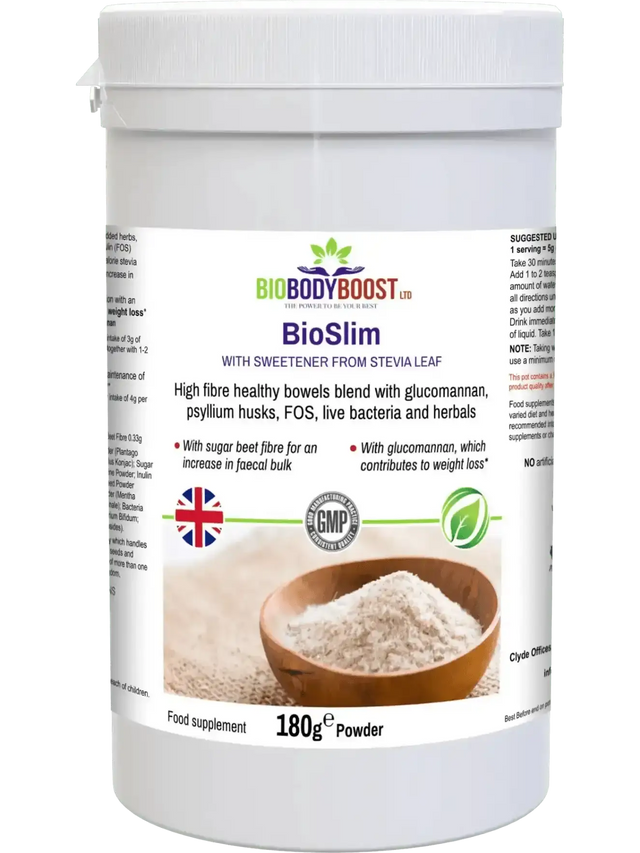
Step 1 — Prebiotics (BioSlim): BioSlim provides inulin (FOS), glucomannan, psyllium and sugar beet fibre — the prebiotic substrate that Bifidobacteria and other beneficial bacteria ferment to produce SCFAs. Without adequate prebiotic fibre, probiotics have limited substrate to produce postbiotics.
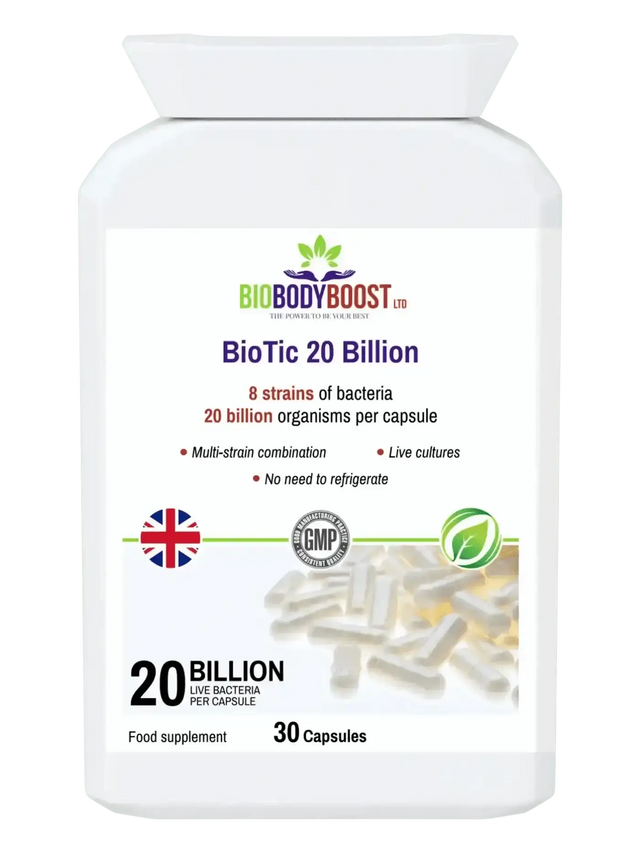
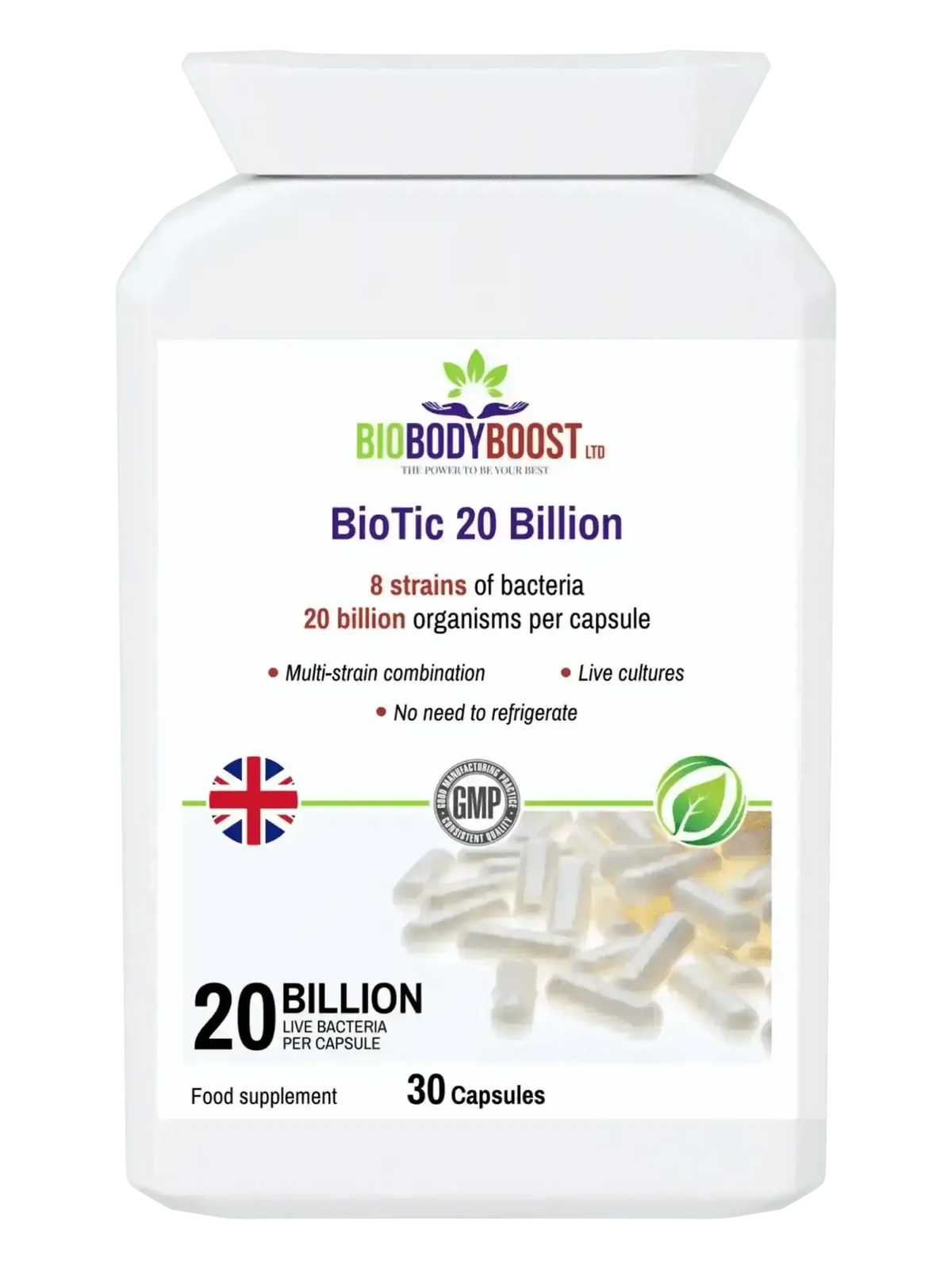
Step 2 — Probiotics (BioTic 20B): BioTic 20 Billion — 20 billion CFU, 8 strains including Lactobacillus acidophilus, Bifidobacterium lactis, L. rhamnosus. These strains are the bacteria that ferment prebiotic fibre into SCFAs (butyrate, propionate, acetate) — the clinically important postbiotics.
Step 3 — Postbiotic production: when probiotic bacteria have adequate prebiotic substrate, they produce SCFAs locally in the colon. This is the most physiologically appropriate postbiotic delivery — produced in situ rather than supplemented exogenously. The prebiotic + probiotic stack is the foundation of postbiotic generation. Halal certified, vegan.
Browse the Gut Health UK collection.
What are postbiotics?
Postbiotics are “preparations of inanimate microorganisms and/or their components that confer a health benefit” (ISAPP 2021 consensus definition). The most clinically important postbiotics are short-chain fatty acids (SCFAs): butyrate (primary colonocyte fuel, gut barrier integrity, HDAC inhibition), propionate (liver cholesterol regulation, appetite signalling via GLP-1) and acetate (peripheral energy substrate, immune modulation). They are produced in the gut when probiotic bacteria ferment prebiotic fibre. They can also be supplemented directly as heat-killed bacteria or isolated metabolites — though in-gut production via prebiotic + probiotic is the most physiological approach.
Are postbiotics halal?
Yes — postbiotics are metabolic products of bacterial fermentation (short-chain fatty acids, enzymes, cell wall components) with no animal involvement. Butyrate supplements are typically produced by bacterial fermentation of plant substrates; heat-killed bacterial postbiotic products use the same fermentation strains as probiotics. The halal compliance check for postbiotic supplements is the growth media of the bacteria used (must be halal-certified, not using porcine peptone), the capsule shell (HPMC not gelatine) and any excipients.
Are postbiotics better than probiotics?
They serve different functions rather than one being better. Probiotics (live bacteria) colonise the gut and, given adequate prebiotic substrate, produce postbiotics in situ — the physiological approach. Postbiotic supplements provide the metabolic end-products directly, bypassing the colonisation step. Postbiotics have advantages: more shelf-stable (no live organism viability concerns), standardisable dosing, potentially safer for immunocompromised individuals (no risk of bacterial translocation). The most effective approach for most people: prebiotic fibre (BioSlim) + multi-strain probiotic (BioTic 20B) to generate endogenous postbiotic SCFAs, rather than exogenous postbiotic supplementation.