
Omega-3 fish oil, krill oil and algae oil all deliver the two most important omega-3 fatty acids — EPA (eicosapentaenoic acid) and DHA (docosahexaenoic acid) — but through different forms, different absorption mechanisms, at different cost points and with different dietary compliance implications. The best choice depends on your absorption priorities, dietary requirements and budget.
What Are EPA and DHA and Why Do You Need Them?
EPA and DHA are long-chain omega-3 polyunsaturated fatty acids essential for three critical biological systems: the brain (DHA makes up 60% of brain fat and 40% of retinal fat), the cardiovascular system (EPA modulates inflammatory prostaglandins and supports vascular function), and the inflammatory response (EPA directly reduces pro-inflammatory eicosanoid production). The body can synthesise EPA and DHA from ALA (found in flaxseed and walnuts) but the conversion rate is poor — typically under 5–10%. For most people, direct supplementation is the practical approach to adequate omega-3 intake.
What Is the Difference Between Omega-3 Fish Oil, Krill Oil and Algae Oil?
Standard fish oil (triglyceride form)
Fish oil is extracted from oily fish — typically anchovies, sardines and mackerel. EPA and DHA are delivered as triglycerides — the same form as in food. Absorption requires dietary fat (fat-soluble). Triglyceride form fish oil is the most extensively studied format with hundreds of clinical trials. High EPA+DHA per capsule. Typically the most cost-effective format per gram of EPA+DHA. Halal compliance depends on the capsule shell — most standard fish oil uses bovine or porcine gelatine softgels.
Krill oil (phospholipid form)
Krill oil is extracted from Antarctic krill (Euphausia superba), tiny crustaceans. EPA and DHA are delivered as phospholipids rather than triglycerides. Phospholipid EPA/DHA may have superior brain uptake because phospholipids are the primary structural component of cell membranes — they may be incorporated more efficiently into neural tissue. Krill oil also naturally contains astaxanthin, a potent antioxidant that protects the omega-3 from oxidation and has its own anti-inflammatory properties. Lower EPA+DHA per capsule than fish oil; higher cost per gram of EPA+DHA. Krill is a crustacean — shellfish allergy sufferers must avoid it.
Algae oil (vegan/vegetarian omega-3)
Fish get their DHA from the microalgae they eat — algae is the original source of EPA and DHA in the marine food chain. Algae oil bypasses the fish entirely, producing DHA directly from microalgal fermentation. This makes it suitable for vegans, vegetarians and pescatarians who prefer not to use fish products. DHA content is typically high; EPA content is lower in most algae oil products. Fewer clinical trials than fish oil but mechanistically equivalent for DHA delivery. Higher cost than fish oil.
Comparison Table: Fish Oil vs Krill Oil vs Algae Oil
| Factor | Fish oil (triglyceride) | Krill oil (phospholipid) | Algae oil |
|---|---|---|---|
| EPA+DHA per gram | High (250–500mg/g) | Moderate (100–200mg/g) | Moderate, DHA dominant |
| Absorption form | Triglyceride — with food | Phospholipid — more flexible | Triglyceride or phospholipid |
| Brain DHA uptake | Good | Potentially superior | Good (DHA-rich) |
| Antioxidant content | None (unless added) | Astaxanthin naturally present | Variable |
| Vegan/vegetarian | No | No | Yes |
| Shellfish allergy | Safe | Avoid (crustacean) | Safe |
| Halal compliance | Depends on capsule shell | Depends on capsule shell | Generally halal |
| Cost per gram EPA+DHA | Lowest | Highest | High |
| Sustainability | Variable by source | Well managed (MSC certified) | Land-based fermentation |
| Clinical evidence base | Extensive (100s of RCTs) | Moderate | Growing |
Which Omega-3 Is Best for Brain Health?
For brain health specifically, the phospholipid form in krill oil has a theoretical advantage — phospholipid DHA may integrate into neural cell membranes more efficiently than triglyceride DHA. However, the clinical evidence comparing brain outcomes between forms is limited. Both krill and fish oil have demonstrated improvements in cognitive function markers in trials. For practical purposes, adequate daily dose (500–1,000mg DHA) matters more than form.
Which Omega-3 Is Best for Heart Health?
Fish oil at therapeutic doses (2–4g EPA+DHA daily) has the most extensive cardiovascular evidence — multiple large RCTs and meta-analyses confirm benefits for triglyceride reduction, blood pressure and cardiac event reduction. The REDUCE-IT trial (4g EPA as icosapentaenoic acid daily) showed a 25% reduction in major cardiovascular events. At standard supplemental doses (1g daily), both fish oil and krill oil show positive markers.
The Halal Omega-3 Problem
This is the most overlooked aspect of omega-3 supplementation for UK Muslim consumers. Both fish oil and krill oil are typically packaged in gelatine softgels — frequently bovine or porcine gelatine without halal certification. For halal-compliant omega-3 supplementation, you need either: a non-gelatine (halal-certified) softgel with fish or krill oil, or algae oil in a vegetarian capsule.
Which Should You Choose?
- Best value for cardiovascular and general health → Fish oil (triglyceride) in halal-certified softgel
- Best for brain health priority + anti-inflammatory → Krill oil (if no shellfish allergy)
- Best for vegans, vegetarians, or shellfish allergy → Algae oil
- Best for halal compliance + high EPA+DHA → Fish oil in halal-certified non-bovine/porcine capsule
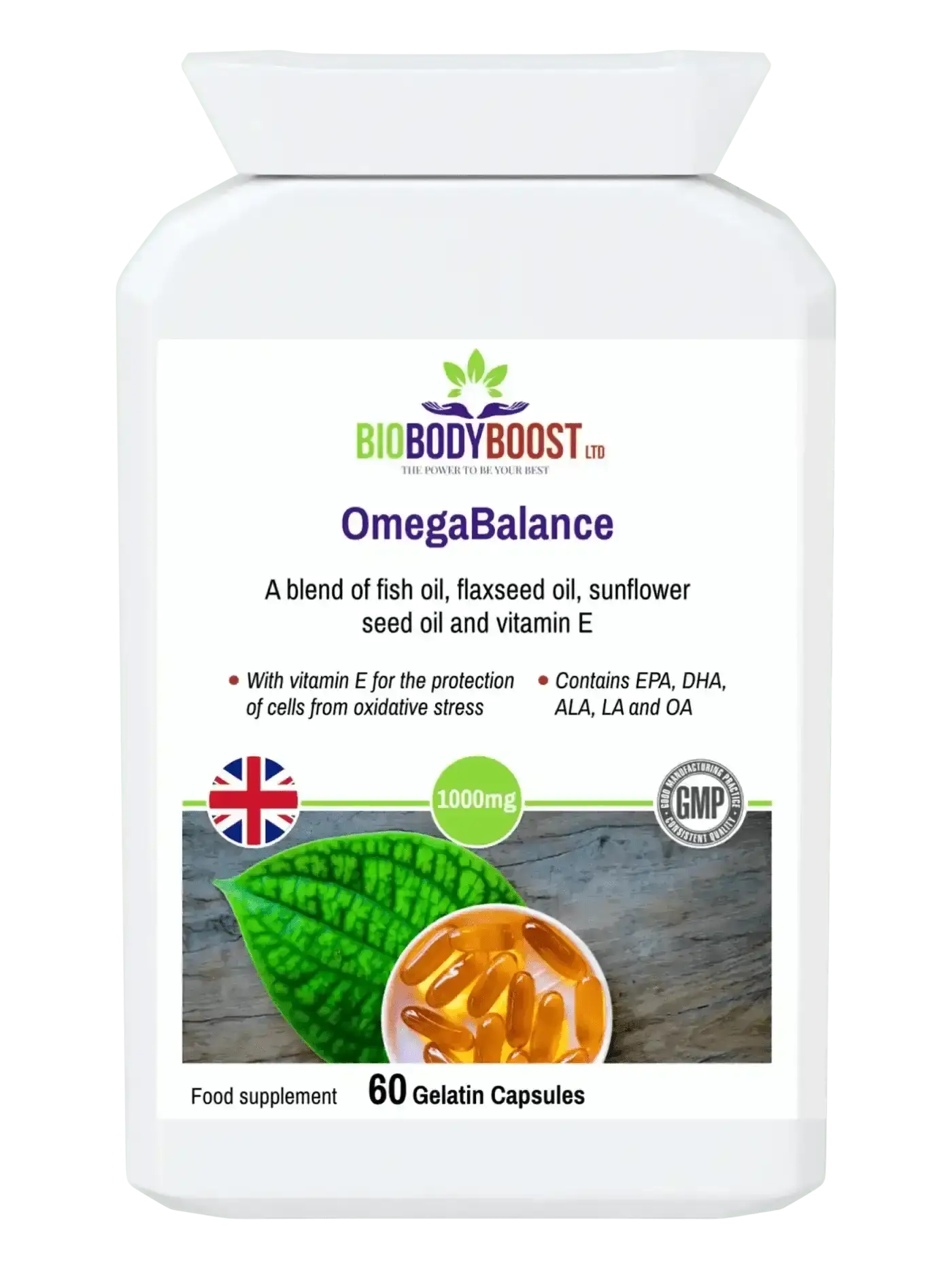
OmegaBalance by BioBodyBoost delivers EPA, DHA and ALA in triglyceride form in a halal-certified capsule — no bovine or porcine gelatine. AstaxaKrill delivers phospholipid EPA/DHA with naturally occurring astaxanthin in a halal-certified format. Both UK GMP manufactured. Browse the full halal range.