Quick answer: zinc genuinely supports testosterone in men who are deficient in zinc. This is well-established: Prasad et al. (1996, Nutrition) found zinc restriction reduced serum testosterone by 75% in healthy young men over 20 weeks, and zinc supplementation significantly restored testosterone in zinc-deficient older men. The EU-authorised health claim confirms it: zinc contributes to “maintenance of normal testosterone levels in the blood.” However — and this is what the TikTok content doesn’t tell you — zinc does not raise testosterone above the normal range in men who are already zinc-sufficient. It corrects a deficiency; it is not a testosterone booster in the conventional supplement-marketing sense. Who is deficient matters enormously.
Why zinc affects testosterone
Zinc is required at multiple points in the testosterone synthesis and regulation pathway:
- Leydig cell testosterone synthesis: the 17β-hydroxysteroid dehydrogenase enzyme that catalyses the final step of testosterone synthesis is zinc-dependent. Without adequate zinc, this enzymatic conversion is impaired.
- LH receptor sensitivity: zinc maintains the sensitivity of Leydig cells to luteinising hormone (LH) — the pituitary signal that drives testosterone production. Zinc deficiency blunts the LH response, further reducing testosterone output.
- 5-alpha reductase activity: zinc inhibits 5-alpha reductase, the enzyme that converts testosterone to the more potent DHT. This is relevant for men concerned about DHT-driven hair loss — zinc’s inhibitory effect on 5-alpha reductase at normal physiological concentrations provides some natural regulation.
- Aromatase inhibition: zinc modestly inhibits aromatase — the enzyme that converts testosterone to oestrogen. In zinc-deficient men, aromatase activity may be elevated, reducing the testosterone-to-oestrogen ratio.
The Prasad 1996 study — what it actually showed
The most cited zinc-testosterone trial is frequently misrepresented. Prasad et al. 1996 had two parts: (1) 9 healthy young men had zinc restricted in their diet for 20 weeks — serum testosterone fell by 75% (from 39.9 to 10.6 nmol/L). (2) 10 elderly men with marginal zinc deficiency were supplemented with zinc for 6 months — testosterone increased significantly (from 8.3 to 16.0 nmol/L).
What this means: zinc deficiency profoundly suppresses testosterone. Correcting zinc deficiency restores testosterone toward normal. What this does not mean: zinc supplementation raises testosterone above the normal range in zinc-sufficient men. The 75% testosterone drop from zinc restriction is the deficiency effect — not a dose-response curve that supplementation can reverse above normal.
Who is actually zinc-deficient in the UK
UK NDNS data suggests zinc insufficiency is more prevalent than widely recognised, particularly in:
- Vegetarian and vegan men: plant-based zinc (from legumes, wholegrains, nuts, seeds) has significantly lower bioavailability than zinc from meat due to phytate binding. Plant-based men may be consuming adequate dietary zinc by weight but absorbing significantly less.
- Men who sweat heavily: zinc is lost in sweat at approximately 1mg per litre. Men exercising intensely or working in hot environments lose significant zinc daily.
- Older men: zinc absorption efficiency declines with age; older men eating smaller quantities of zinc-rich foods are at elevated risk.
- Men with high alcohol intake: alcohol increases urinary zinc excretion.
- Men on high-dose iron supplements: iron competes with zinc for absorption at the same intestinal transporter.
The zinc + magnesium combination
Magnesium addresses testosterone from a different angle: it competes with testosterone for SHBG (sex hormone-binding globulin) binding, increasing biologically active free testosterone fraction even when total testosterone is unchanged. A 2011 Biological Trace Element Research study (n=399) found serum magnesium was significantly and independently associated with both total and free testosterone in sedentary and active men across all age groups.
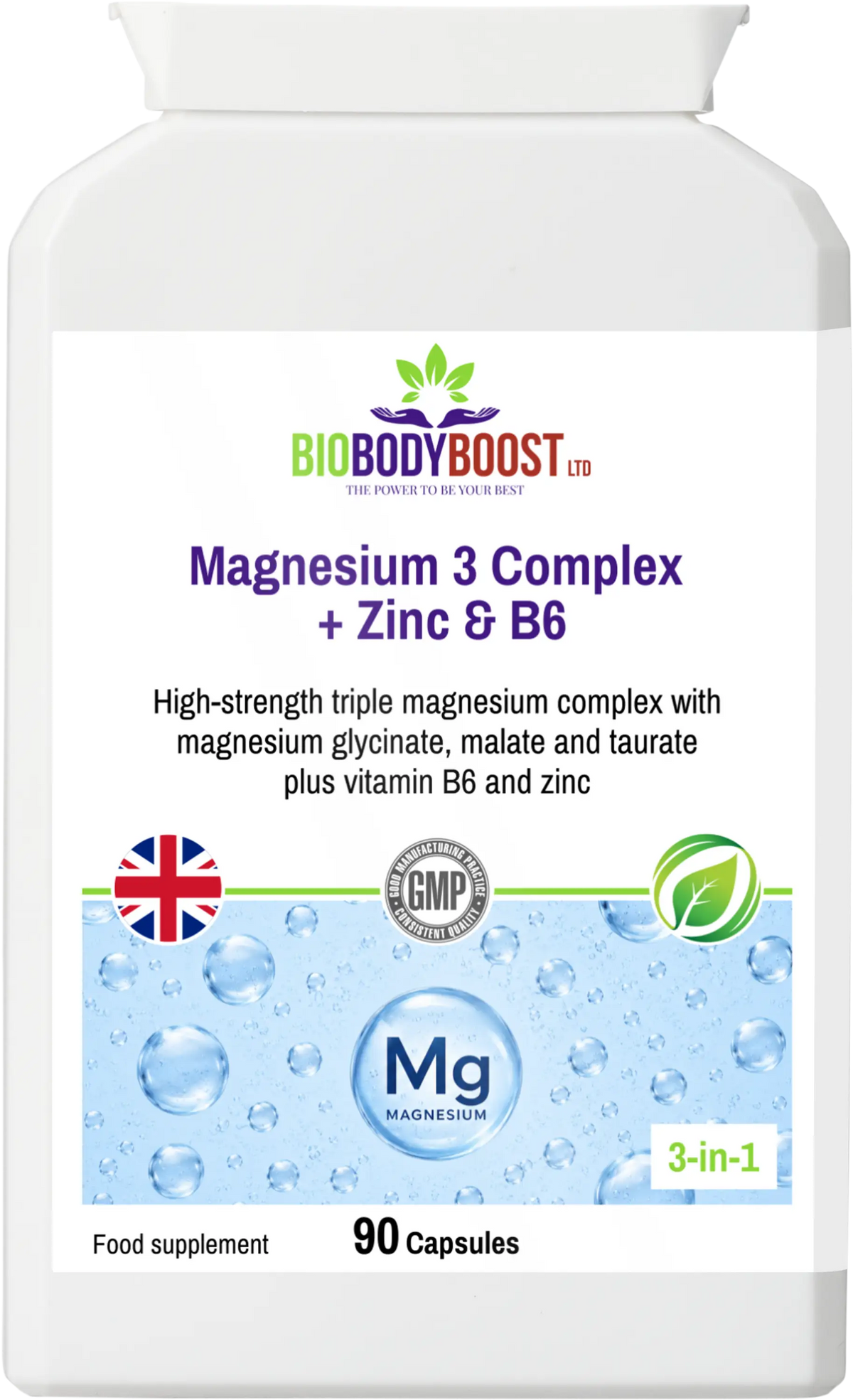
Zinc + magnesium together cover: (1) zinc for testosterone synthesis and LH receptor sensitivity; (2) magnesium for free testosterone availability via SHBG competition. Magnesium 3 Complex provides both: zinc 10mg (100% NRV) + 300mg elemental magnesium as glycinate + malate + taurate, with B6 (a cofactor for multiple testosterone-related enzymes). Halal certified, vegan, HPMC capsule. EU-authorised claims for zinc: “contributes to normal testosterone levels in the blood” and “contributes to normal fertility and reproduction.”
For the complete testosterone support context: see the testosterone after 40 UK guide covering vitamin D (Pilz 2011, +25.2%), ashwagandha cortisol reduction (Wankhede 2015) and sleep’s direct role (Leproult 2011 JAMA).
Does zinc actually increase testosterone UK?
In zinc-deficient men: yes, significantly. Prasad 1996 (Nutrition) found zinc supplementation significantly restored testosterone in zinc-deficient older men (from 8.3 to 16.0 nmol/L). In zinc-sufficient men: no meaningful increase above the normal range. Zinc is not a testosterone booster in the supplement-marketing sense — it is a deficiency corrector. The EU-authorised claim (“zinc contributes to normal testosterone levels”) accurately describes the maintenance role. The relevant question is whether you are zinc-deficient. Risk factors: vegetarian/vegan diet, heavy exercise and sweating, older age, high alcohol intake.
How much zinc for testosterone UK?
The EU-authorised claim for zinc and testosterone is based on the nutrient reference value: achieving adequate zinc status (NRV: 10mg/day for adults). Magnesium 3 Complex provides 10mg zinc (100% NRV). Higher doses of zinc (above 40mg/day supplemental) can cause copper deficiency by competing at intestinal absorption, and may paradoxically reduce testosterone. The therapeutic dose for deficiency correction is 10–25mg elemental zinc daily — within normal supplemental range. Megadosing zinc for testosterone is counterproductive and potentially harmful. 10mg/day in Magnesium 3 Complex is the appropriate maintenance dose.
Is zinc supplement halal UK?
Yes — zinc compounds used in supplements (zinc citrate, zinc bisglycinate, zinc gluconate, zinc oxide) are mineral-derived with no animal involvement. Inherently halal. The compliance check for zinc supplements is the capsule shell (HPMC not gelatine) and manufacturing environment. Magnesium 3 Complex uses HPMC capsules and carries full third-party halal certification under UHA Certificate Reference 24623.