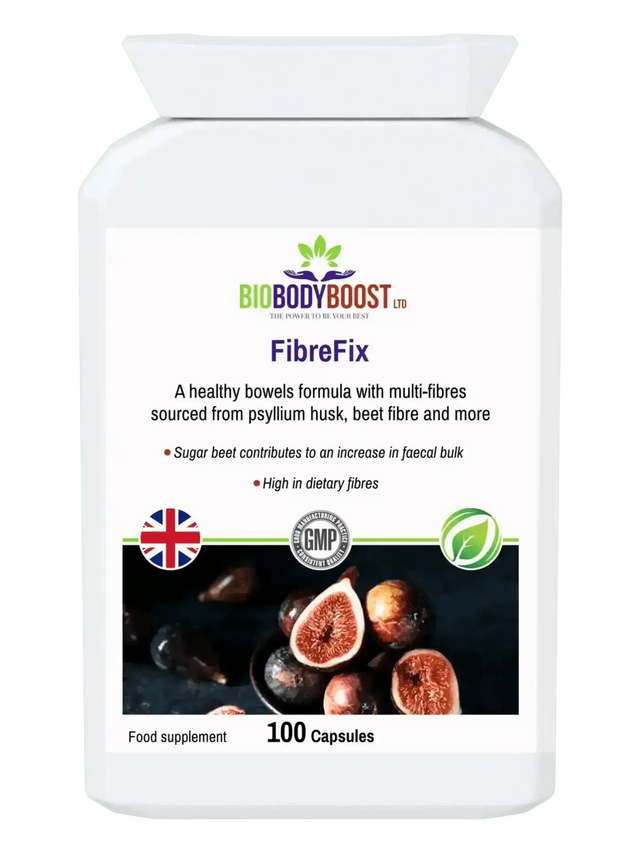
For UK Jewish consumers observing kashrut, finding kosher-certified vitamins and supplements requires more than reading the active ingredient list. The compliance issues in vitamins are almost always in the inactive ingredients — the capsule shell, the coating, the excipients and the softgel material. This guide covers which vitamins are straightforward, which need careful checking, and which UK products are certified.
Vitamins that are straightforward from a kosher perspective
Vitamin C (ascorbic acid)
Ascorbic acid is produced by fermentation of glucose — entirely plant/microbial origin. Kosher pareve with no inherent concerns. The compliance check is only the capsule or tablet coating and excipients. BioBodyBoost Liposomal Vitamin C — kosher certified, pareve.
B vitamins (B1, B2, B3, B5, B6, B12, folic acid, biotin)
B vitamins are synthesised chemically or by fermentation. No animal involvement in the active ingredients. Kosher pareve by source. Check capsule shell and excipients. Cyanocobalamin (synthetic B12) and methylcobalamin are both kosher pareve.
Vitamin D3 — source matters
Vitamin D3 (cholecalciferol) has two commercial sources:
- Lanolin-derived D3: from sheep wool wax. Lanolin is a secretion, not derived from slaughter. Most kosher authorities consider it pareve, though some require certification of the extraction process. KLBD certifies lanolin-derived D3 as kosher.
- Lichen-derived D3: from lichens (plant-kingdom organisms). Unambiguously kosher pareve — no animal involvement whatsoever. The preferred choice for consumers who want to avoid any question.
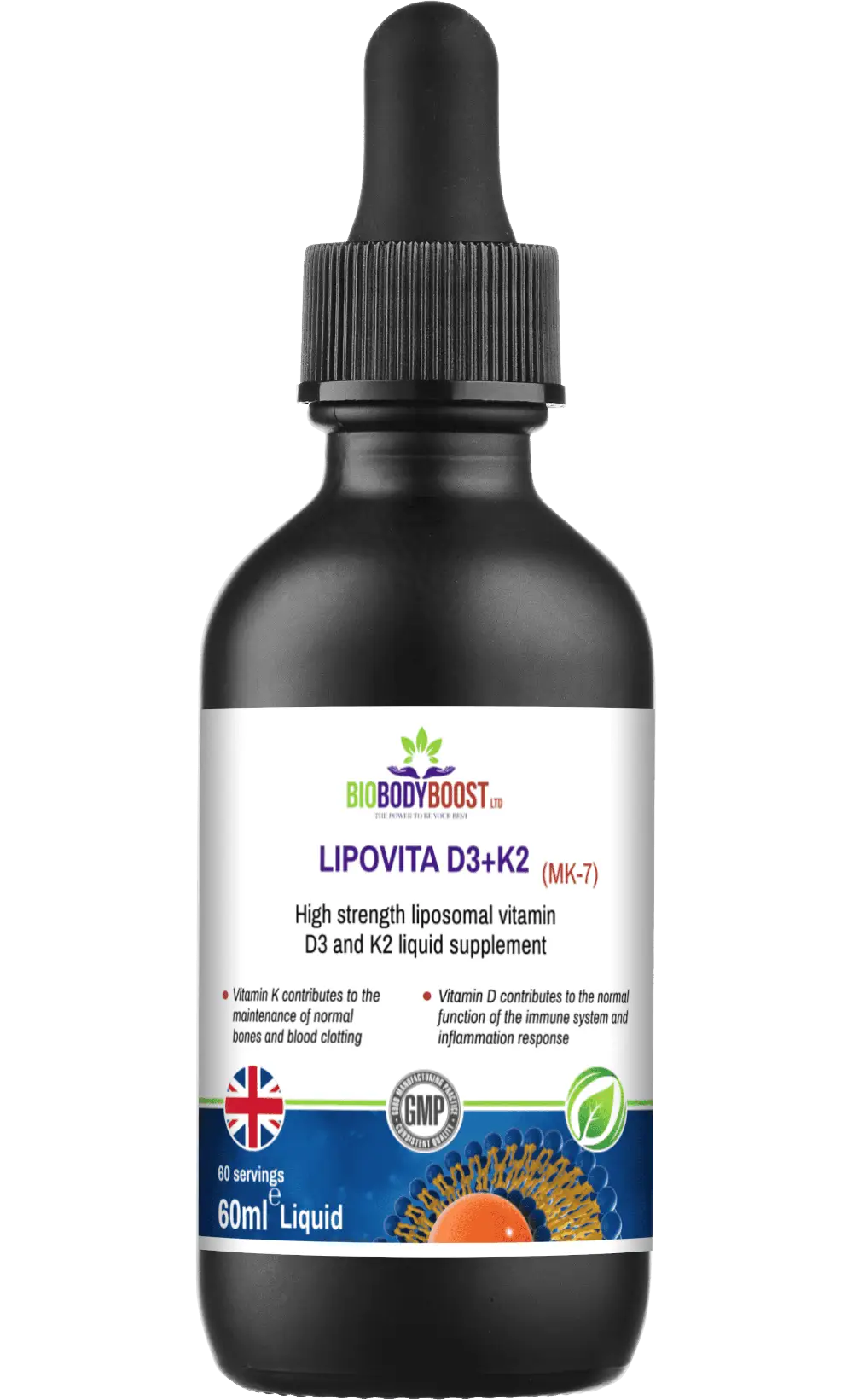
BioBodyBoost Lipovita D3+K2 uses lichen-derived D3 — kosher pareve, no animal question, certified.
Magnesium
Magnesium salts (glycinate, citrate, malate, taurate) are mineral or amino acid chelates — inherently kosher pareve. BioBodyBoost Magnesium 3 Complex — kosher certified, pareve.
Zinc, iron, selenium
All mineral-origin, inherently kosher pareve. Compliance check is excipients and capsule only.
Vitamins that need careful checking
Vitamin A
Vitamin A (retinol) in supplements comes in two forms: retinyl palmitate (from animal liver fat or fish liver oil) or beta-carotene (plant-derived, converts to vitamin A in the body). Retinyl palmitate requires certification confirming kosher animal source and processing. Beta-carotene is kosher pareve. Check the form used.
Omega-3 softgels
Three compliance issues: (1) the oil source — must be from kosher fish (fins and scales required); krill oil is never kosher; (2) the softgel shell — must not be porcine or bovine gelatine without kosher certification; (3) the processing facility. Algae-derived omega-3 (DHA from Schizochytrium microalgae) is kosher pareve — no fish involved at all. BioBodyBoost OmegaBalance is kosher certified.
Vitamin K2 (MK-7)
MK-7 is most commonly produced by fermentation of natto (fermented soybeans) using Bacillus subtilis natto. Kosher pareve by source. The fermentation growth media must be confirmed kosher — this is covered by certification. Some MK-7 is synthetic (also kosher pareve).
Collagen
The most complex kosher compliance issue in supplements. Bovine collagen requires slaughter certification from a kosher body. Porcine collagen is never kosher. Marine collagen from kosher fish (salmon, cod, tilapia — fish with fins and scales) is kosher pareve when processed in a certified facility. BioBodyBoost Marine Collagen Nourish uses marine collagen from certified kosher fish species, kosher certified.
Vitamins to avoid without specific certification
- Krill oil: never kosher — krill are shellfish (no fins and scales)
- Standard softgels without certification: almost always porcine gelatine shell
- Standard multivitamins in gelatine capsules: check capsule source — most UK pharmacy multivitamins use porcine gelatine without disclosure
- Probiotics with dairy growth media: classified KOSHER MILKY if cultured on dairy substrate — check pareve vs milky status
BioBodyBoost kosher-certified vitamins at a glance
| Product | Category | Kosher status |
|---|---|---|
| Lipovita D3+K2 | Vitamin D3 + K2 | Pareve |
| Liposomal Vitamin C | Vitamin C | Pareve |
| Magnesium 3 Complex | Magnesium + Zinc + B6 | Pareve |
| BioTic 20 Billion | Probiotic | Pareve |
| Marine Collagen Nourish | Collagen | Pareve |
| OmegaBalance | Omega-3 | Kosher |
| PeaPro Pea Protein | Protein powder | Pareve |
| Creatine Monohydrate | Sports nutrition | Pareve |
| BioBrain Nootropic | Cognitive support | Kosher (contains soy) |
Browse the full Kosher Supplements UK collection — 35 certified products, HPMC capsules throughout, UK GMP manufactured.
Are Holland and Barrett vitamins kosher?
Some are, most are not. Holland & Barrett do not operate a fully kosher-certified own-brand range. Individual products may carry KLBD or other certification — check the specific product label for a recognised certification logo. Many H&B own-brand capsules use standard gelatine (porcine) without disclosure. Solgar products stocked by H&B carry OU certification on many (not all) products — check the OU symbol specifically. For a consistently certified range across all categories, a dedicated kosher supplement brand is more reliable than checking individual products at a general retailer.
Are gummy vitamins kosher?
Standard gummy vitamins are almost never kosher — they use gelatine as the gummy base, typically porcine. Pectin-based gummies (from fruit) can be kosher if certified. BioBodyBoost Multivitamin Gummies (GummyNourish MVG60) are kosher certified — confirming the gummy base and all ingredients meet kosher standards. Always check for a recognised certification logo before assuming any gummy vitamin is kosher — the format is one of the highest-risk categories for non-kosher gelatine.
What is the difference between kosher pareve and kosher milky supplements?
Kosher pareve means the product contains no meat or dairy ingredients and can be consumed with either a meat or dairy meal. Kosher milky means the product contains dairy ingredients or was processed on dairy equipment — it cannot be consumed within your community’s waiting period after a meat meal. For daily-use supplements, pareve is strongly preferred because it has no mealtime restrictions. Products that are kosher milky include whey protein, some probiotic formulas cultured on dairy media, and any supplement containing casein, lactoferrin or other dairy derivatives.