Written by the BioBodyBoost Team · August 2026 · Our standards →
Quick answer: for a protein powder to be reliably halal in the UK you need one of three things: full halal approval covering the supply chain, a plant-based formula (naturally free of rennet and gelatine concerns), or a whey product where the rennet source is verified. Most big brands only certify selected flavours — and rarely name the certifier — which is why label-checking matters more in this category than almost any other.
The three halal red flags in protein powder
Rennet. Whey is a by-product of cheese-making, and cheese-making uses rennet. If that rennet is animal-derived from non-halal slaughter, strict positions consider the whey compromised — while the majority scholarly position holds transformed whey permissible. Where you stand determines what you buy; our full breakdown is here: is whey protein halal?
Gelatine. Appears as a thickener in some formulas and clear proteins — nearly always bovine or porcine.
Flavourings. Vanilla extract can carry alcohol; carmine (E120) colouring is insect-derived. These are the quiet ones that catch out “suitable for vegetarians” labels.
The simplest route: plant protein
Pea, rice and hemp proteins avoid every red flag above by default — no rennet, no gelatine — leaving only flavourings to check. If you want zero label detective work, this is the rational choice. PeaPro pea protein — halal certified, vegan, kosher, 18g protein per serving.
If you want whey specifically
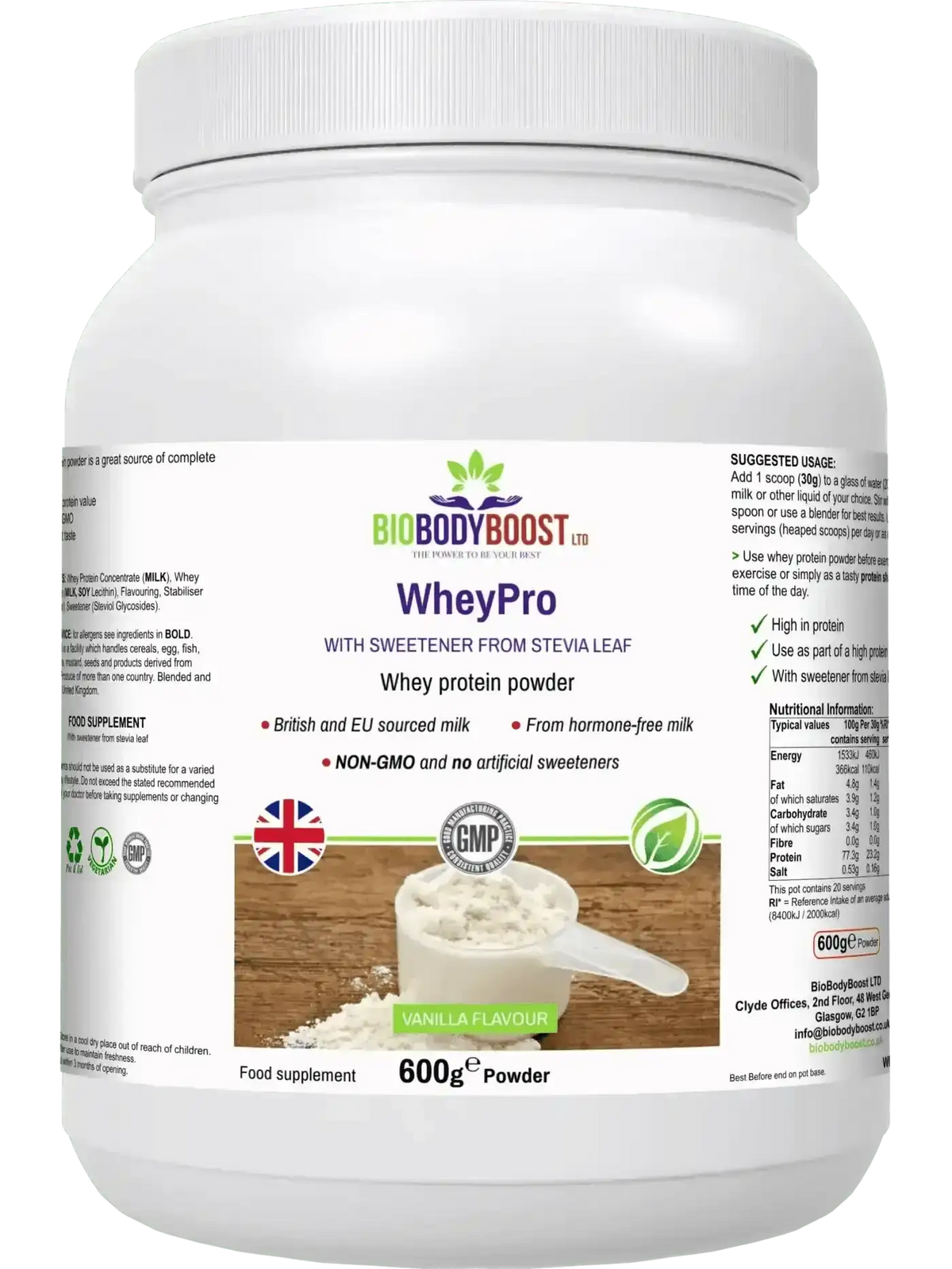
WheyPro Vanilla and the chocolate version deliver 23.6g protein per serving from whey sourced with verified microbial (plant-based) rennet — halal approved, UK made, no carmine, no gelatine. That removes all three red flags without switching to plant protein, at a price competitive with the big brands’ certified flavours.
How the mainstream brands compare
Myprotein certifies selected Impact Whey flavours (without naming the certifier publicly); Applied Nutrition’s ISO-XP carries halal certification; Warrior certifies part of its range. The common thread: certification is flavour-by-flavour, so a brand being “halal” in a headline does not make the tub in your basket halal. Check the specific product page every time — formulations change.
Explore Sports Nutrition UK and Halal Vitamins UK.
Is protein powder halal by default?
Plant proteins are effectively halal by default (subject to flavouring system compliance — check for E120 carmine and alcohol-based vanilla extract). Whey depends on the rennet source used in the cheesemaking process and your scholarly position — microbial/plant-based rennet is the clear route. Clear wheys and mass gainers need the closest checking due to gelatine and additives. When in doubt, third-party halal certification from a named body (UHA, HFA, HMC, IFANCA) on the specific product is the meaningful verification. See the full is whey protein halal UK guide.
What does halal approved mean at BioBodyBoost?
BioBodyBoost products carry third-party halal certification from the Universal Halal Authority (UHA), Certificate Reference 24623, covering Specialist Supplements Ltd (the manufacturer). Certification covers ingredients, processing aids, manufacturing environment and supply chain compliance — not just a self-declared claim. WheyPro and PeaPro both carry full halal certification under this certificate. All products use HPMC plant-derived capsules (no gelatine) throughout the range.
Which is better for muscle: whey or plant protein?
Per gram of protein at an adequate daily dose, both support muscle protein synthesis effectively. Whey has a complete amino acid profile and slightly faster leucine absorption kinetics — the theoretical edge is small and largely overcome by total daily protein intake. A 2015 JISSN RCT (Babault et al.) found pea protein at 50g/day produced equivalent muscle hypertrophy to whey over 12 weeks in resistance-trained men. Total daily protein (1.6–2.2g/kg body weight) and consistency matter far more than the source for muscle building outcomes.
Food supplements should not replace a varied diet. Certification claims for third-party brands reflect publicly available information at time of writing — always verify on the current packaging.