Key takeaways
- The NHS says adults should have no more than 6g of salt a day, about a teaspoon.
- Salt makes the body hold water, which can leave you feeling puffy the next day.
- In South Asian food, salt often hides in achar, papad, chaat masala, stock cubes and takeaways.
- Lemon, spices and herbs keep flavour high while you cut back.
In this guide
Why salt makes you puffy
Your body keeps the level of sodium in your blood within a tight range. After a salty meal, it holds on to extra water to balance it out. That can show up as puffy fingers, ankles or face, and a jump on the scales.
Over the long term, a high-salt diet also raises blood pressure, according to the NHS.
Where salt hides in everyday South Asian food
| Food | Why it adds up |
|---|---|
| Achar (pickle) | Salt is the main preservative; a spoonful can be very salty |
| Papad and poppadoms | Salted dough, often fried |
| Chaat masala and kala namak | Black salt is still salt |
| Stock cubes and ready spice mixes | Salt is often a main ingredient |
| Takeaway curries and naan | Restaurant portions are often salty |
| Bombay mix, chevda, crisps | Easy to eat a lot |
| Soy sauce and ketchup | Common in Indo-Chinese dishes |
Most salt isn't from the salt shaker. The NHS says around three-quarters of the salt we eat is already in food when we buy it, such as bread, sauces and ready meals.
Easy swaps that keep the flavour
- Halve the salt in your usual recipes; most families don't notice after a week or two
- Finish dishes with lemon or lime instead of extra salt
- Lean on spices and herbs: cumin, coriander, ginger, garlic, chilli, fresh dhania and mint
- Make your own masala rather than using stock cubes
- Keep achar to a small spoonful, or make a fresh, lower-salt chutney
- Roast or air-fry papad, and keep salty snacks for occasions
- Drink water with salty meals
For period-related puffiness, see water retention before your period. For wider community health priorities, see our South Asian health guide.
Reading labels
UK labels use traffic-light colours. For salt per 100g:
- High (red): more than 1.5g
- Low (green): 0.3g or less
If a label only shows sodium, multiply by 2.5 to get salt.


Halal & kosher approved · vegan
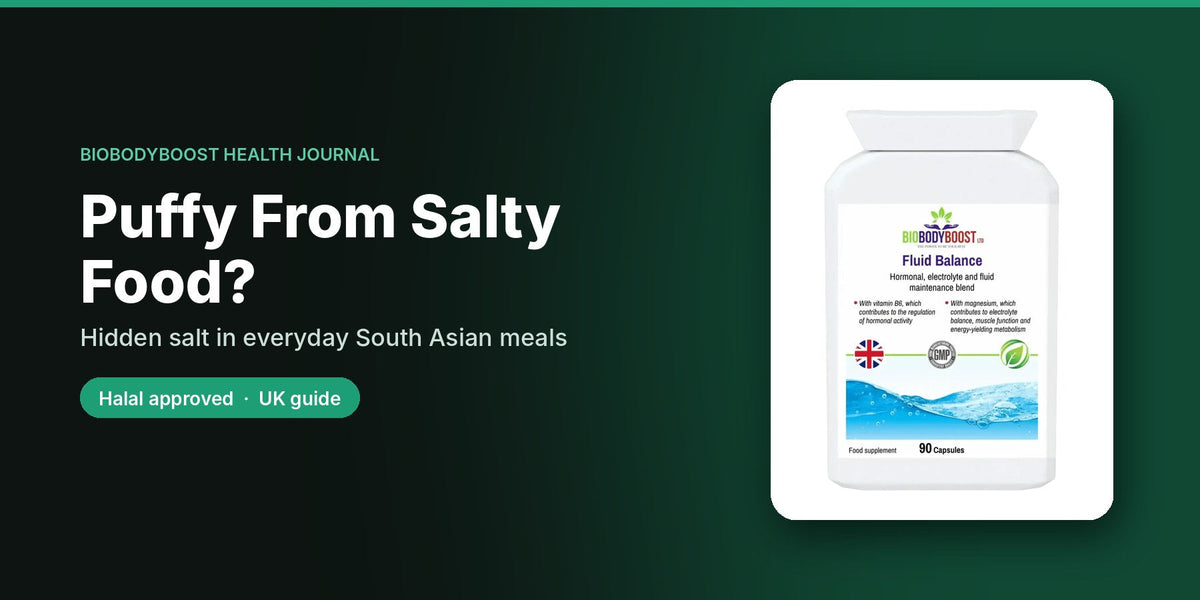
Fluid Balance
- Nine traditional botanicals including dandelion, nettle and parsley
- Magnesium contributes to electrolyte balance
- Vitamin B6 contributes to the regulation of hormonal activity
HALAL10 10% off your first order
Shop Fluid Balance →If you have high blood pressure, heart or kidney problems, or take diuretics, speak to your GP before taking any supplement for fluid balance. Swelling that doesn't go away needs a GP check.
Questions people ask
Is pink Himalayan salt or black salt healthier?
Not really. They're still mostly sodium chloride, so they count towards your 6g.
How quickly does salt make you puffy?
Often by the next morning after a salty meal, and it usually settles within a day or two.
Does drinking more water help after salty food?
Staying hydrated helps your body rebalance. Don't cut back on water to reduce puffiness.
Is a low-salt diet safe for everyone?
Cutting back to the 6g guideline is recommended for most adults. If you have a medical condition, follow your GP's advice.
Do spices contain salt?
Plain spices don't, but many ready-mixed masalas and seasoning blends do. Check the label.
Sources: NHS: salt · NHS: oedema · GB NHC register
This article is general information, not medical advice. Food supplements should not replace a varied, balanced diet and healthy lifestyle.