Key takeaways
- There are four main types of laxative: bulk-forming, osmotic, stimulant and softeners.
- The NHS usually suggests trying diet and lifestyle changes first, then a bulk-forming laxative.
- Magnesium works in a similar way to osmotic laxatives, drawing water into the bowel.
- Stimulant laxatives such as senna work faster but are for short-term use.
In this guide
Before reaching for a laxative
The NHS suggests starting with simple changes: more fibre, more fluid, more movement, and not putting off going to the toilet. For many people that's enough.
If it isn't, a pharmacist can help you choose a laxative. The NHS laxatives page explains the options.
The four types compared
| Type | Examples | How it works | Typical speed |
|---|---|---|---|
| Bulk-forming | Ispaghula (psyllium) husk, methylcellulose | Absorbs water to make stools bulkier and softer | 2 to 3 days |
| Osmotic | Macrogol, lactulose | Draws water into the bowel to soften stools | About 2 to 3 days |
| Stimulant | Senna, bisacodyl | Speeds up the muscles of the bowel | 6 to 12 hours |
| Softener | Docusate | Lets water into stools to soften them | Varies |
Based on the NHS laxatives page. Always follow the product leaflet.
Bulk-forming needs water. Take it with plenty of fluid, never dry, and not just before bed. Our guide to psyllium husk (isabgol) covers this.
Where magnesium fits
Some forms of magnesium, such as magnesium oxide, hydroxide and sulphate, draw water into the bowel in a similar way to osmotic laxatives. That's why high-dose magnesium can loosen stools.
Our guide to magnesium for constipation explains which forms do what.


Herb-free · halal & kosher approved · vegan
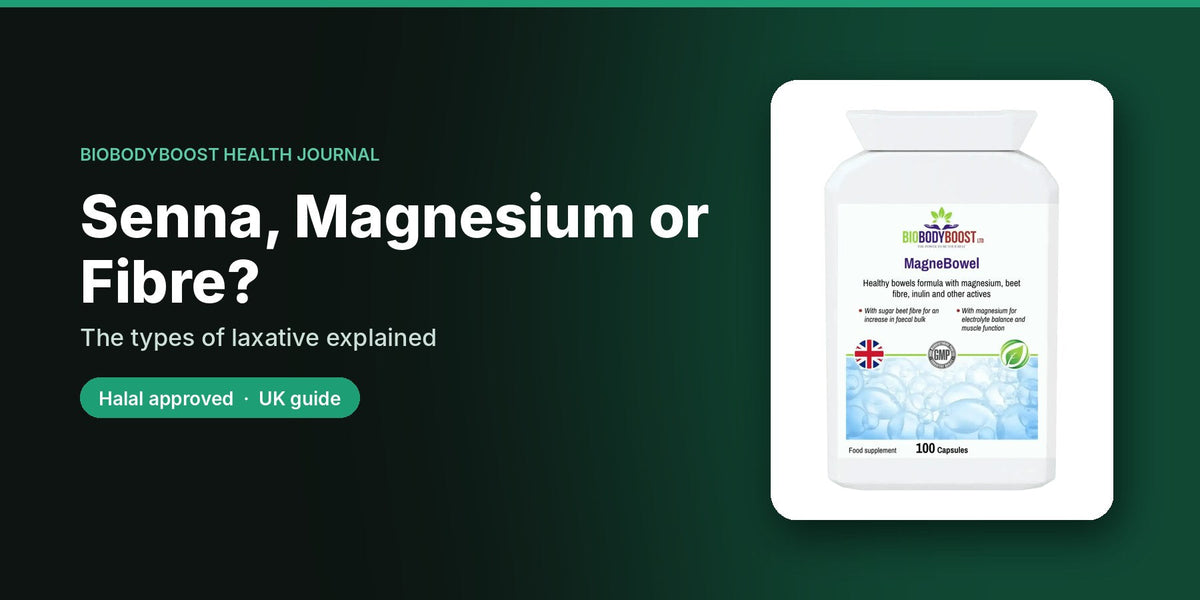
MagneBowel
- 498mg magnesium per serving from oxide, hydroxide, sulphate and citrate
- Sugar beet fibre contributes to an increase in faecal bulk
- No senna, rhubarb or other stimulant botanicals
HALAL10 10% off your first order
Shop MagneBowel →Who should be careful
- Children: only use laxatives on a GP's or pharmacist's advice
- Pregnant or breastfeeding: check with your midwife, GP or pharmacist
- Kidney disease: avoid high-dose magnesium
- Regular medication: some laxatives affect how medicines are absorbed
- Long-term use: don't use stimulant laxatives for long periods without advice
See your GP if constipation lasts more than a few weeks, or if you notice blood in your poo, weight loss or ongoing tummy pain.
Questions people ask
Which laxative works fastest?
Stimulant laxatives such as senna usually work within 6 to 12 hours. They're for short-term use.
Which laxative is gentlest?
Bulk-forming laxatives are often suggested first, as long as you drink plenty of water with them.
Is it OK to take senna every day?
Not long-term without medical advice. Speak to your GP if you need laxatives regularly.
Is magnesium a laxative?
Some forms of magnesium in high doses work in a similar way to osmotic laxatives. Lower-dose forms like glycinate are less likely to affect your bowels.
Are laxatives halal?
The active ingredients are usually fine. Check capsules and flavourings, or ask your pharmacist about the inactive ingredients.
Sources: NHS: laxatives · NHS: constipation · GB NHC register
This article is general information, not medical advice. Food supplements should not replace a varied, balanced diet and healthy lifestyle.