Key takeaways
- The electrolytes themselves (sodium, potassium, chloride, magnesium, citrates) are minerals and salts, so they are halal.
- The halal question is about the extras: flavourings, colours such as carmine (E120), glycerol, and gelatine in chews or gummies.
- A clear halal approval or certification on the pack is the quickest way to settle it.
- In Ramadan, electrolytes are drunk between iftar and suhoor only. Plain water is still the main drink.
- Kidney, heart or blood pressure condition, or on a low-salt diet? Ask your GP or pharmacist first.
In this guide
Most electrolyte drinks are built from minerals, sugar or sweetener, acid, flavour and colour. The minerals are halal. Whether the whole drink is halal depends on the flavourings, colours and, for chews and gummies, the gelatine.
Big retailers now call hydration a wellness trend that goes "beyond electrolytes". What they rarely tell you is how to check a hydration product is halal. This guide does.
The short answer
Sodium chloride is table salt. Potassium chloride, trisodium citrate and magnesium citrate are mineral salts. None of them come from animals or alcohol.
So a plain, unflavoured electrolyte powder is very unlikely to raise a halal issue. Problems start when a brand adds:
- Flavourings that use alcohol (ethanol) as a solvent or carrier.
- Colours from insects, mainly carmine or cochineal (E120).
- Glycerol (E422) or mono- and diglycerides (E471) of unknown animal origin.
- Gelatine, used in chews, gummies and some capsules.
Halal bodies do not all agree on alcohol used as a flavour carrier, or on carmine. That is why a halal approval on the pack is worth more than reading the label alone.
Ingredient by ingredient
| Ingredient | Usually | What to check |
|---|---|---|
| Sodium, potassium, magnesium salts | Halal | Nothing. These are minerals. |
| Citric acid (E330) | Halal | Made by fermentation; not an animal ingredient. |
| Maltodextrin, dextrose, sugar | Halal | Plant starch or sugar. Watch the amount if you have diabetes. |
| Sweeteners (sucralose, stevia) | Halal | Not animal-derived. |
| Flavouring / natural flavouring | Depends | May use an alcohol carrier. Labels do not have to say. Look for halal approval. |
| Carmine / cochineal (E120) | Disputed | Insect-derived red. Many Muslims avoid it. Common in red and berry flavours. |
| Plant colours (beetroot, grape skin, spirulina) | Halal | Grape skin extract is a colour, not wine. |
| Glycerol (E422), E471 | Depends | Can be plant or animal. A "vegan" label rules out animal fat. |
| Gelatine | Often not halal | Usually pork or non-halal beef unless stated. Found in chews and gummies. |
For a fuller list of additives, see our E-numbers halal and haram guide.
Quick label rule: a genuine "vegan" label removes gelatine, carmine, animal glycerol and animal E471 from the question. It does not settle alcohol-based flavour carriers. Halal approval covers all of it.
Powders, tablets, gummies and ready-to-drink
Powders usually have the shortest ingredient lists. They are the easiest format to check.
Effervescent tablets add binders and lubricants. Check for magnesium stearate source; our magnesium stearate guide explains why.
Gummies and chews are the riskiest format, because many use gelatine. See are gummy vitamins halal?
Ready-to-drink sports drinks carry the most flavourings and colours. Some sit closer to energy drinks; our halal energy drink guide covers those.
If you are unsure whether you need electrolytes at all, start with electrolytes explained.

Electrolytes in Ramadan
Ramadan 2027 is expected to begin in February, depending on the moon sighting. Fasts will be shorter than in summer, but long working days, heating and taraweeh still leave many people feeling drained.
Any drink, including an electrolyte drink, breaks the fast. So it belongs in the window between iftar and suhoor.
- At iftar: start with water and dates, then eat. Do not rely on a sugary drink alone.
- Between iftar and suhoor: sip water steadily rather than all at once.
- At suhoor: an electrolyte drink can help if you train, work somewhere hot, or sweat a lot. It is not needed for everyone.
- If you train while fasting: train after iftar where you can. See our Ramadan supplements guide.
If you are vomiting or have diarrhoea, that is different. The NHS says a pharmacist can recommend oral rehydration solutions, which are powders you mix with water (NHS: dehydration). Sports drinks are not designed for that.
Sugar, salt and who should be careful
The NHS says adults should have no more than 6g of salt a day (NHS: salt in your diet). Check the salt figure per serving, especially if you have more than one drink a day.
Hydration marketing is full of claims. In the UK, only two authorised claims exist for carbohydrate-electrolyte solutions, and only for drinks that meet set levels of carbohydrate and sodium (Regulation 432/2012). Words like "cellular hydration" have no authorised basis.
Speak to your GP or pharmacist before using electrolyte drinks if you have kidney disease, heart failure or high blood pressure, follow a low-salt or low-potassium diet, take medicines that affect potassium or fluid (for example some blood pressure tablets or water tablets), have diabetes, or are pregnant or breastfeeding. Electrolyte supplements are not intended for under-18s unless a health professional advises it.
A halal approved electrolyte drink mix

Vegan · Halal approved
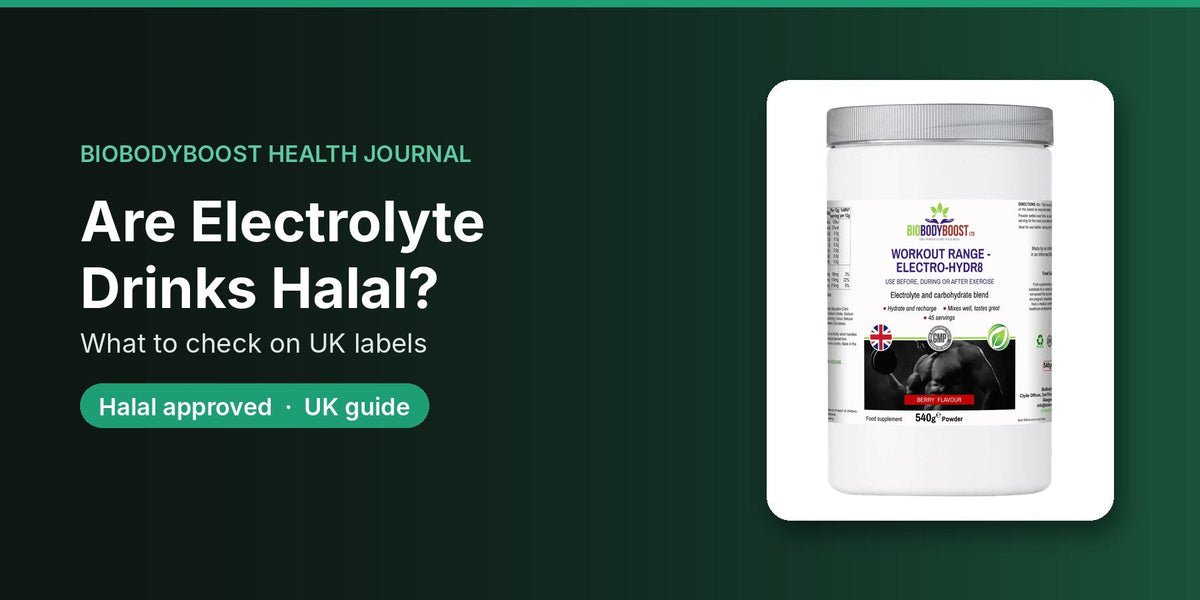
Electro-Hidr8 Electrolyte Drink Mix
- Short list: maltodextrin, citric acid, sodium and potassium salts, flavouring, sucralose
- Coloured with grape skin extract, not carmine; no gelatine
- Per 12g scoop: 215mg sodium, 56mg potassium, 9.3g carbohydrate
HALAL10 10% off your first order
Shop Electro-Hidr8 →It is made in a facility that also handles milk, egg, soy, gluten, nuts and crustaceans, so check the allergy advice if that matters to you. For the wider sports range, see our halal sports nutrition guide.
Common questions
Are electrolytes halal?
The electrolytes themselves are mineral salts, so yes. Check the flavourings, colours and any gelatine, or choose a halal approved product.
Are electrolyte tablets halal?
Often, but tablets contain more additives than powders. Check the colour, any glycerol, and the source of magnesium stearate.
Do electrolyte drinks break the fast?
Yes. Any drink breaks the fast, so have it between iftar and suhoor.
Is E120 halal?
Carmine (E120) comes from insects, and scholars differ on it. Many Muslims avoid it. Red and berry drinks are where it most often appears.
Does "natural flavouring" mean halal?
No. "Natural" describes the source of the flavour, not the carrier used. Alcohol can be used as a carrier and does not have to be listed.
Is a vegan electrolyte drink automatically halal?
Not automatically. Vegan rules out gelatine and animal fats, but not alcohol-based flavour carriers. Halal approval covers both.
Sources: NHS: dehydration · NHS: salt in your diet · Regulation (EU) 432/2012, authorised health claims (legislation.gov.uk) · Food Standards Agency: food additives
General information, not medical or religious advice. For a religious ruling, ask a scholar you trust. Food supplements should not replace a varied diet and healthy lifestyle. Do not exceed the recommended daily intake. Keep out of reach of children. Speak to your GP or pharmacist before use if you are pregnant, breastfeeding, taking medication or have a medical condition.