Quick answer: mainstream energy drinks (Red Bull, Monster, Rockstar, Prime) are problematic for UK Muslim consumers on two compliance levels: most contain carmine colouring (E120 — insect-derived, haram), and many use flavouring systems with alcohol-based carriers. Beyond compliance, the energy model they use — very high caffeine + sugar + artificial additives — creates a crash-and-dependency cycle that supplements can break. This guide covers the evidence-based halal alternatives that provide sustainable energy, hydration and focus without the compliance concerns or crash cycle.
Why energy drinks are problematic
Compliance concerns:
- E120 (Carmine/Cochineal): a red/pink colouring derived from crushed female Dactylopius coccus scale insects — haram. Common in pink and red energy drinks including some flavours of Rockstar, Prime and various own-brand products.
- Flavouring systems: natural and artificial flavourings frequently use ethanol as a solvent carrier. Halal-certified products confirm permissible flavouring systems.
- Gelatine in some formats: some energy chews and gummies use porcine gelatine.
Health concerns:
- A 250ml Red Bull contains 80mg caffeine (equivalent to a standard espresso) and 27g sugar. Consuming 2–3 cans takes many people above the European Food Safety Authority’s recommended maximum of 400mg caffeine/day.
- The NHS recommends adults consume no more than 30g free sugars per day — a single large energy drink can exceed this entirely.
- The caffeine-adenosine blocking mechanism creates dependency and tolerance: more caffeine is needed over time to achieve the same alertness effect, while adenosine receptor sensitivity is progressively impaired.
The sustainable halal energy stack
1. Electrolytes — the hydration-energy link
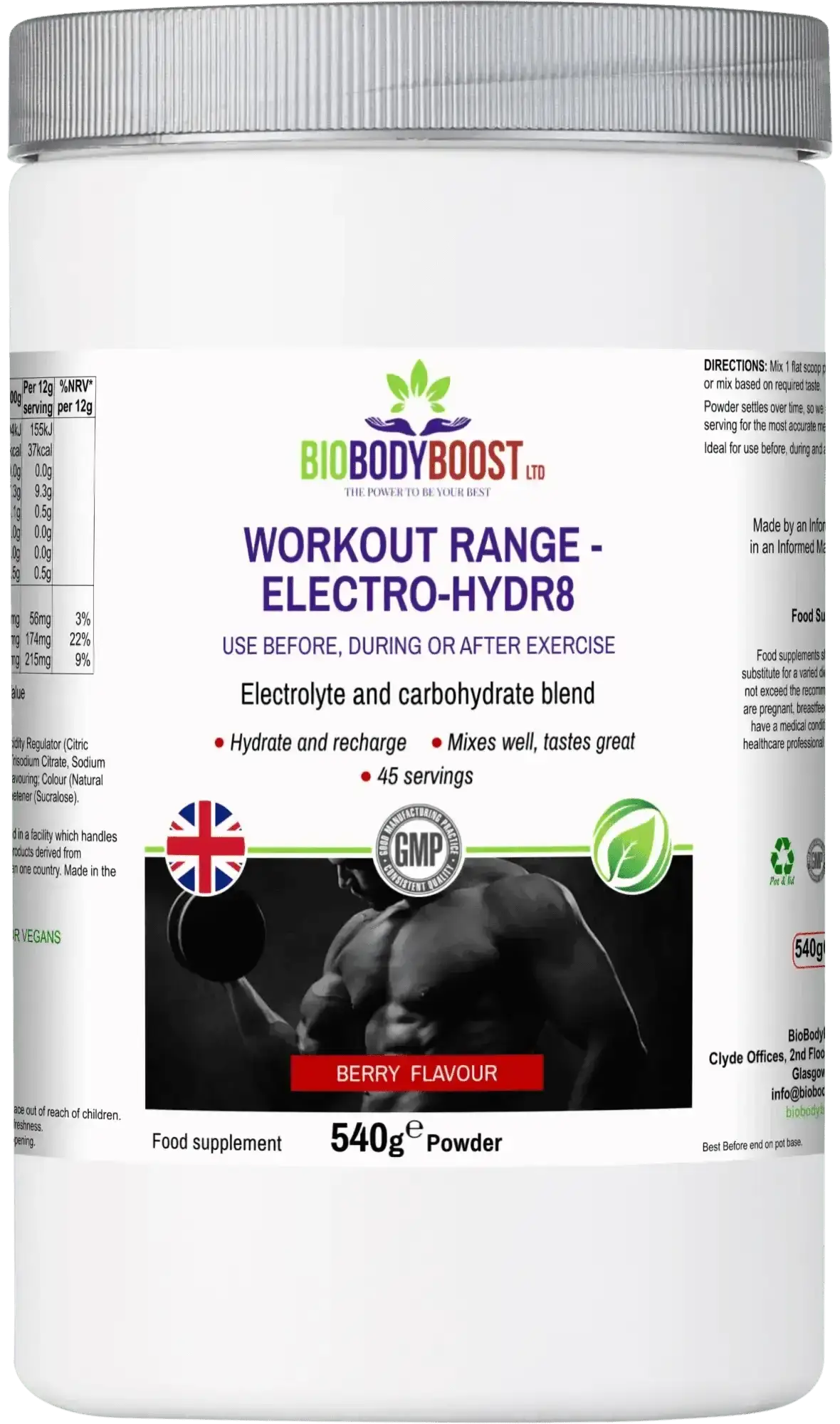
A significant proportion of “energy” complaints — afternoon slumps, concentration drops, headaches — are actually mild dehydration compounded by electrolyte depletion. The brain is 75% water and loses function measurably at 1–2% dehydration. Sodium drives fluid retention and thirst, maintaining plasma volume and nutrient delivery to the brain. Electro-Hidr8 — balanced electrolyte drink mix, berry flavour, halal certified. No artificial colourings, no alcohol-based flavourings, EFSA-compliant sodium for fluid balance. Use morning, pre-training or mid-afternoon instead of an energy drink.
2. Adaptogens — sustained energy without stimulant dependency
Adaptogens provide non-stimulant energy support via HPA axis modulation (ashwagandha), anti-fatigue MAO inhibition (rhodiola) and cognitive blood flow support (Korean ginseng) — addressing the root cause of energy depletion rather than masking it with adenosine blockade. ZenBlend — KSM-66 ashwagandha + rhodiola + Korean ginseng + L-theanine + niacin. No stimulants, no crash, no dependency. Halal certified. Take in the morning daily. Onset: 2–4 weeks.
3. Beetroot nitrates — physical energy and endurance
For exercise-related energy needs specifically, beetroot nitrates via nitric oxide modulate mitochondrial Complex IV efficiency, reducing the oxygen cost of physical effort by approximately 19%. This is sustainable energy from improved cellular efficiency — not stimulation. Red Punch — 2,250mg beetroot + Montmorency cherry. Halal certified. Take 90 minutes before exercise.
4. Natural caffeine sources — if stimulant energy is genuinely needed
If caffeine is the functional requirement, the compliance-safe sources are: green tea (halal, no compliance concern, 30–50mg per cup with L-theanine that smooths the peak), matcha (50–70mg per serving with significant L-theanine), black coffee (halal, no E120 concern, no alcohol carriers). These provide caffeine in a natural matrix without the compliance risks of commercial energy drinks.
The UK energy drink market — compliance checker
| Brand | E120 risk | Halal certified | Note |
|---|---|---|---|
| Red Bull (original) | ✓ Low | — Not certified | Original edition: no E120, but flavouring system unverified |
| Prime (pink/berry flavours) | ⚠ Check label | ✗ Not certified | Some flavours contain E120 |
| Monster (red/pink variants) | ⚠ High risk | ✗ Not certified | Common E120 in red/berry variants |
| Lucozade Sport | — Varies by flavour | ✗ Not certified | Check individual flavour E-codes |
| Electro-Hidr8 (BBB) | ✓ None | ✓ Halal certified | No E120, no alcohol-based flavourings |
Always check the current E-codes list on the label — formulations change.
Are energy drinks halal UK?
Many are not — or are unverified. Common compliance failures: E120 (carmine colouring, insect-derived, haram) in red/pink/berry flavoured variants; alcohol-based flavouring carriers; no halal certification from a named third-party body. Red Bull original edition does not list E120 but has no halal certification for the flavouring system. Prime energy in berry flavours has contained E120. Monster red and pink variants commonly contain E120. For certainty: choose halal-certified electrolyte mixes (like Electro-Hidr8) over commercial energy drinks, or use natural caffeine sources (green tea, black coffee) alongside adaptogen supplements.
What is E120 and why is it haram?
E120 (also labelled Carmine, Cochineal, Carminic Acid, Natural Red 4) is a red/crimson colouring extracted from the dried bodies of female Dactylopius coccus scale insects — approximately 70,000 insects per kilogram of colouring produced. Under Islamic jurisprudence, insects are not considered halal food, making E120 haram. It is used extensively in food and drink for its stable, vibrant red colour — particularly in pink, red and berry-flavoured products. Always check the E-codes on any coloured food or drink label.