Quick answer: electrolytes — sodium, potassium, magnesium, calcium and chloride — are minerals that carry an electrical charge and regulate fluid balance, nerve firing and muscle contraction. Most people eating normally do not need an electrolyte supplement daily. They earn their place during heavy sweating (60+ minutes of exercise), illness with fluid loss, hot weather, low-carb diets and Ramadan fasting (at Suhoor). For UK Muslim consumers the halal compliance issue is not the minerals — it is the flavouring systems, colourings and vitamin D sources added to most commercial electrolyte powders.
What each electrolyte actually does
Sodium — the primary sweat electrolyte
Sodium (Na⁺) is the primary cation in extracellular fluid and the electrolyte lost in the highest quantities through sweat. Maughan and Shirreffs (2012, Nutrition Reviews) confirmed that sweat sodium loss varies from 10–90mmol/L depending on acclimatisation status, genetics and training intensity — representing 0.23–2.07g of sodium lost per litre of sweat. Sodium maintains plasma osmolality (blood water concentration) and drives thirst signals. It carries the EU-authorised claim: sodium “contributes to the maintenance of normal muscle function and normal neurological function.”
Potassium — the intracellular balance partner
Potassium (K⁺) is the primary intracellular cation — where sodium dominates outside cells, potassium dominates inside. The sodium-potassium gradient across cell membranes (maintained by Na⁺/K⁺-ATPase, a magnesium-dependent pump) drives nerve impulse propagation and muscle contraction. Potassium deficiency (hypokalaemia) causes muscle weakness, cramps and irregular heartbeat. The NHS identifies potassium as essential for normal cell function and blood pressure regulation.
Magnesium — the most widely deficient electrolyte
Magnesium is an electrolyte in the technical sense (it carries a 2+ charge) and is lost through sweat, though in smaller amounts than sodium. More importantly for the general UK population, magnesium insufficiency is widespread — UK NDNS data shows approximately 70% of adults consume below the RNI. Magnesium carries the EU-authorised claims for “normal muscle function” and “reduction of tiredness and fatigue.” A specific sports context: Brilla and Haley (1992, Journal of the American College of Nutrition) found magnesium supplementation significantly improved strength performance in magnesium-deficient athletes.
Calcium — muscle contraction trigger
Calcium ions trigger muscle contraction (released from the sarcoplasmic reticulum in response to nerve signals) and are essential for normal nerve transmission. Calcium is lost in sweat in smaller amounts than sodium and potassium. Most people meeting dairy or calcium supplement recommendations maintain adequate calcium for electrolyte purposes.
Chloride — the most abundant anion in sweat
Chloride (Cl⁻) is the main negatively-charged electrolyte, balancing sodium’s positive charge and maintaining fluid equilibrium. It is lost alongside sodium in sweat in approximately equal molar amounts.
When electrolyte supplementation actually makes sense
Plain water is sufficient for most hydration needs. Electrolyte supplementation earns its place specifically when:
- Exercise beyond 60–90 minutes: Shirreffs et al. (2004, European Journal of Clinical Nutrition) confirmed that electrolyte replacement during prolonged exercise significantly outperformed water alone for fluid retention and performance maintenance. The sodium in electrolyte drinks drives thirst and fluid retention — plain water can actually blunt thirst before full rehydration, causing under-drinking.
- Hot weather or high sweat rate: sweat rate in hot conditions can exceed 2L/hour. Replacing this with plain water risks hyponatraemia (diluted blood sodium) — sodium replacement is critical.
- Illness with fluid loss: vomiting and diarrhoea cause electrolyte loss alongside fluid. Oral rehydration with electrolytes is standard medical guidance. The NHS recommends rehydration solutions for dehydration from illness.
- Ramadan fasting — Suhoor front-loading: taking electrolytes at Suhoor alongside the pre-dawn meal helps maintain fluid and mineral status through the fasting window. Sodium at Suhoor drives fluid retention; magnesium supports sustained muscle function through the day. Full Ramadan supplement timing guide.
- Low-carbohydrate diets: reducing carbohydrate reduces glycogen and the water stored with it, increasing sodium and potassium excretion via the kidneys. Electrolyte supplementation is standard guidance for keto and low-carb approaches.
When electrolyte supplements are not needed
- Training sessions under 60 minutes in normal temperatures — water and post-workout food adequately replace losses
- Daily use without significant sweat or fluid loss — excess sodium works against blood pressure targets
- As a replacement for adequate dietary mineral intake — electrolyte drinks supplement but do not substitute a mineral-sufficient diet
Water retention — the electrolyte angle most people miss
Counterintuitively, chronic puffiness and water retention are frequently caused by electrolyte imbalance — specifically high sodium against low potassium and low magnesium — rather than “too much water.” The Na⁺/K⁺ pump that regulates cellular water requires adequate potassium to function. When potassium is low relative to sodium, water shifts out of cells into the interstitial space (the gap between cells) — producing subcutaneous puffiness. Correcting potassium and magnesium intake alongside moderating sodium often reduces this more effectively than reducing fluid intake.
Halal compliance — the three checkpoints
The electrolyte minerals themselves (sodium, potassium, magnesium, calcium, chloride) are inorganic and inherently halal. The compliance concerns are in the additives:
- Flavouring systems: natural and artificial flavourings frequently use ethanol (alcohol) as a carrier solvent. In finished products these are typically trace amounts — scholars differ on their permissibility. Halal-certified products confirm the flavouring system meets certification standards.
- Colourings: E120 (Carmine/Cochineal) is a red colouring derived from scale insects — haram. E171 (titanium dioxide) and plant-derived colourings are generally halal. Check E-codes on any electrolyte product.
- Added vitamin D: many electrolyte formulas add vitamin D3 — which can be lanolin-derived (sheep wool, halal under most scholars) or lichen-derived (plant-origin, unambiguous). See the vitamin D3 halal guide for the full discussion.
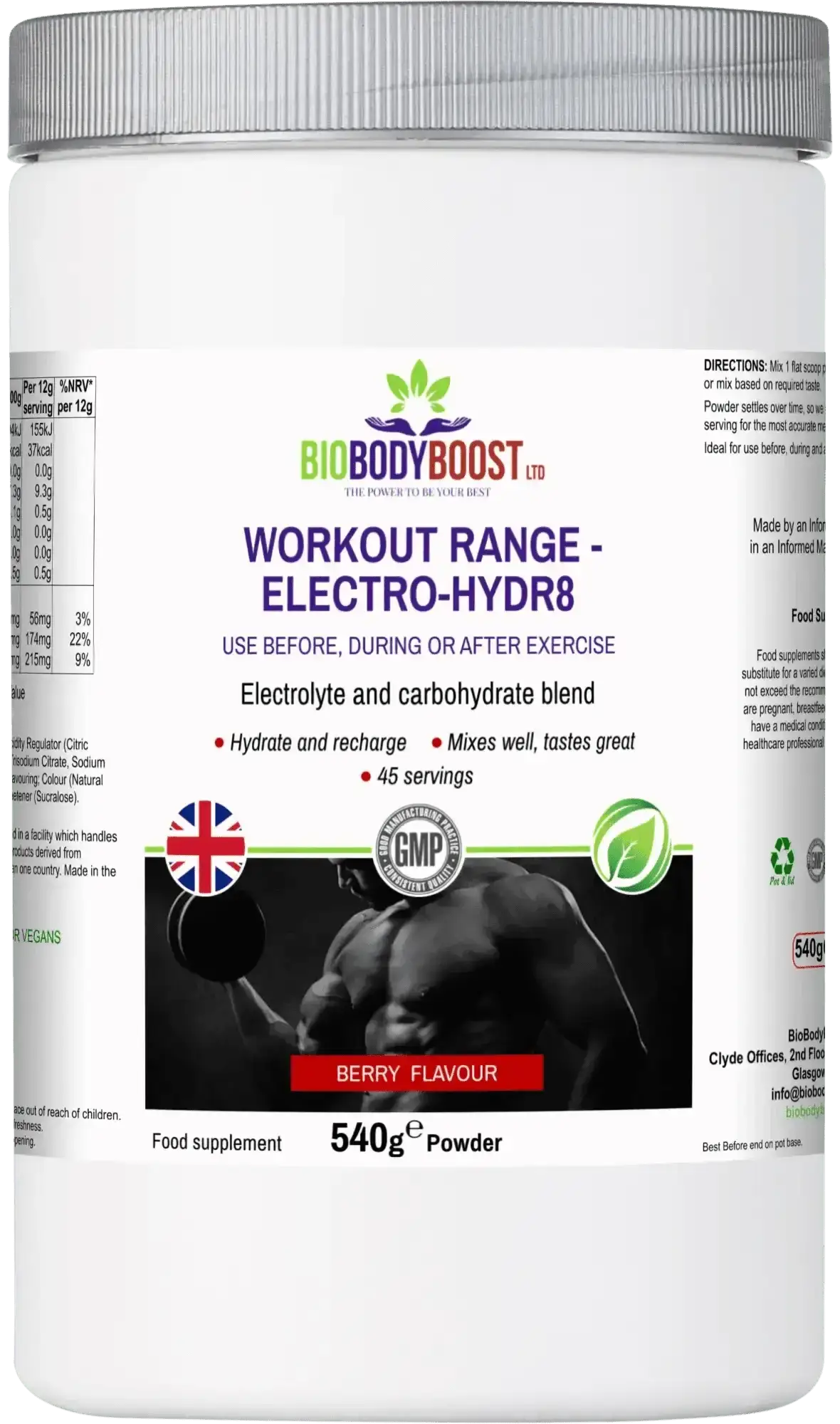
BioBodyBoost Electro-Hidr8
Electro-Hidr8 is BioBodyBoost’s halal-certified electrolyte drink mix — 540g berry-flavour powder providing a balanced electrolyte profile for hydration, training and Ramadan use. Halal approved, UK GMP manufactured. Mix 1 scoop in 500ml water. Take at Suhoor for Ramadan front-loading or during/after training sessions over 60 minutes. Browse the full Sports Nutrition UK collection.
What are electrolytes and why do we need them?
Electrolytes are minerals that carry an electrical charge when dissolved in fluid — sodium, potassium, magnesium, calcium and chloride are the primary ones. This charge is what allows them to transmit nerve impulses (action potentials), regulate fluid movement between compartments (osmosis), and trigger muscle contractions (including the heartbeat). Without adequate electrolytes, nerve signals cannot propagate normally, muscles cramp, and fluid balance fails. The NHS identifies these minerals as essential for normal cell and body function.
Do electrolytes break the Ramadan fast?
Plain mineral electrolytes in unsweetened water are considered by many Islamic scholars to not break the fast, as they provide no caloric nutrition. However, flavoured, sweetened electrolyte powders are food and break the fast. The conservative and most straightforward practice: take electrolytes at Suhoor (pre-dawn) and Iftar (breaking of fast) rather than during fasting hours. Taking electrolytes with the Suhoor meal front-loads sodium and magnesium for the day ahead, helping maintain fluid status and muscle function through the fasting window. Consult your scholar for your community’s specific guidance.
What are the signs you need electrolytes?
Classic signs of electrolyte depletion during or after exercise: muscle cramps (particularly leg cramps), headache, unusual fatigue, dizziness and reduced performance despite adequate sleep. In daily life: persistent muscle cramps or twitching, unexplained fatigue, low mood and difficulty concentrating can all reflect magnesium and potassium insufficiency (which are widely prevalent in UK adults). Persistent or severe symptoms require a GP assessment — the NHS recommends medical assessment for significant dehydration symptoms.
Is it safe to take electrolytes every day?
For active people with high sweat output, daily electrolyte use is appropriate. For sedentary people or those with low sweat rates, daily high-sodium electrolyte drinks work against blood pressure and fluid balance targets — match electrolyte supplementation to actual losses. The NHS recommends adults consume no more than 6g of salt (sodium chloride) per day — electrolyte supplements contribute to this total. Magnesium supplementation daily is appropriate for the approximately 70% of UK adults consuming below the RNI regardless of exercise status.
Are electrolyte drinks halal?
The minerals in electrolyte drinks (sodium, potassium, magnesium, calcium) are inorganic and inherently halal. The compliance checks are: (1) flavouring system — must not use impermissible alcohol-based carriers; (2) colourings — E120 (carmine) is haram; (3) any added vitamin D3 — source should be confirmed. BioBodyBoost Electro-Hidr8 is third-party halal certified, covering all three compliance levels. When assessing any electrolyte product, a named halal certification body logo (not a self-declared claim) is the meaningful verification standard.