
Quick answer: sports nutrition is one of the highest-risk supplement categories for halal compliance. The specific risks: whey protein from non-halal-supervised dairy, BCAA amino acids from animal-derived sources (particularly porcine feathers or hair), gelatine capsules in creatine and pre-workout products, carmine (E120) colouring in flavoured protein powders and energy drinks, and alcohol-based flavourings. This guide covers every category of sports supplement with the specific compliance checks for Muslim athletes, and maps to BioBodyBoost’s halal-certified UK range.
Protein powders — the biggest halal risk category
Whey protein
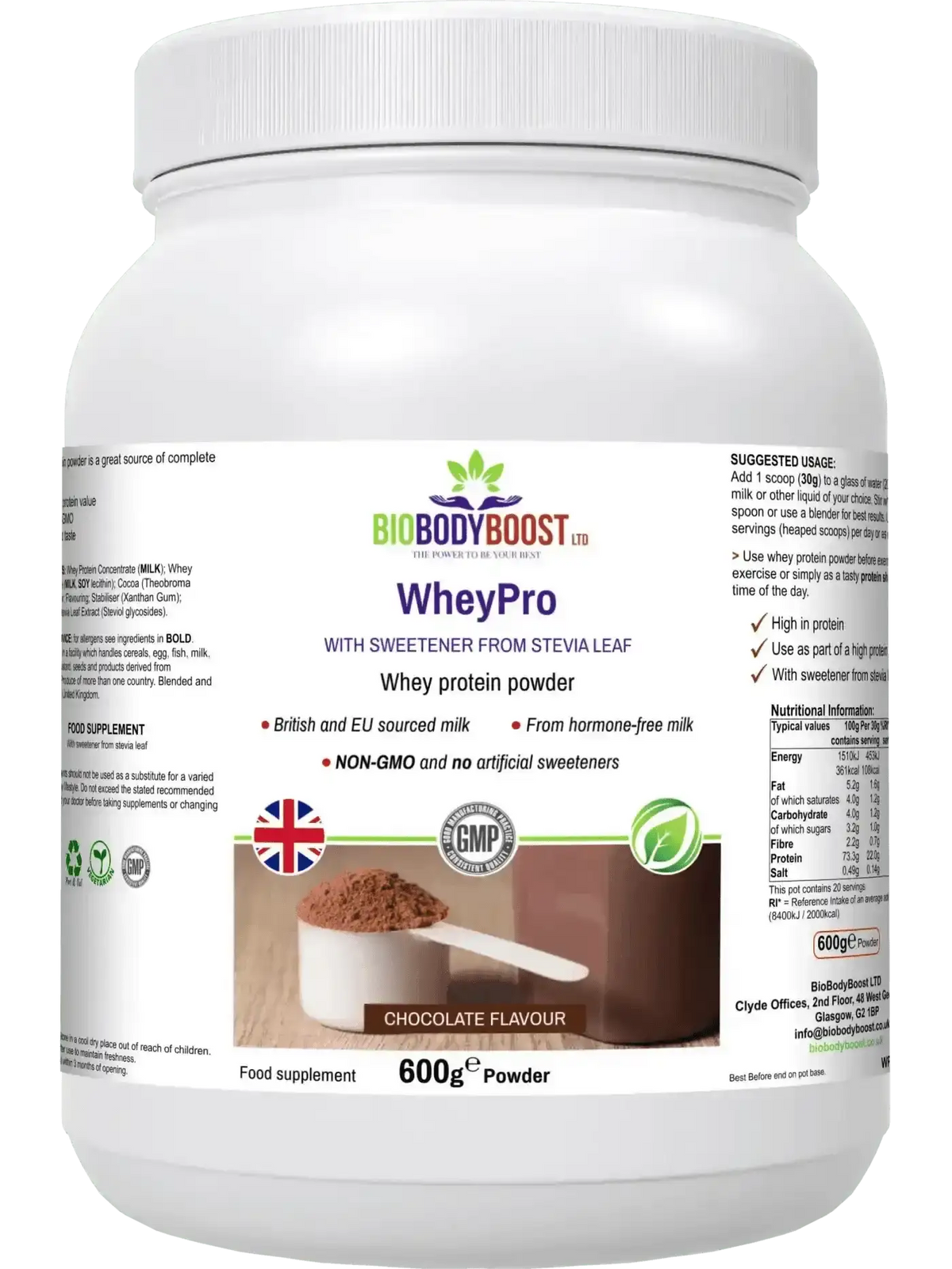
Whey is a dairy byproduct from cheese production. For halal compliance: (1) the dairy source must come from cattle that have not been given haram feed; (2) the rennet used in cheese production (which produces the whey) ideally should be microbial or vegetable rennet, not porcine; (3) the manufacturing facility must not cross-contaminate with porcine products. Most mainstream whey protein brands (Myprotein, Bulk, Optimum Nutrition) do not have full halal certification — some have a halal sub-range. WheyPro Chocolate and WheyPro Vanilla are halal certified under UHA Certificate Ref. 24623.

22g protein per serving, fully declared — hormone-free EU dairy, halal-certified facility.
Plant protein
Vegan protein from pea, rice or soy is inherently plant-derived with no animal involvement. The compliance check is the manufacturing environment (shared with non-halal dairy?) and flavourings. PeaPro — pea protein isolate, halal certified, vegan, UK made.
Creatine — fully halal by default
Creatine monohydrate is synthesised chemically from sarcosine and cyanamide — no animal involvement at any stage. Inherently halal and vegan. The compliance check: capsule shell if in capsule format (many creatine products use gelatine capsules), and any flavourings in flavoured creatine formulas. Unflavoured creatine powder has no compliance concern whatsoever. Creatine Monohydrate — 100% pure unflavoured, halal certified. See the creatine loading protocol guide.
BCAAs — check the source
Branched-chain amino acids (L-Leucine, L-Isoleucine, L-Valine) can be sourced from: (1) plant fermentation — bacterial/yeast fermentation of plant sugars, fully halal and vegan; (2) human hair (L-Cysteine specifically, less common in BCAA); (3) duck feathers or animal hair (older sourcing method, now less common). Fermentation-derived BCAAs are now the industry standard for vegan-labelled products. Always look for "fermentation-derived" or "vegan" on the label. BioBodyBoost BCAA 2:1:1 — fermentation-derived leucine, isoleucine and valine with citrulline, halal certified.
Pre-workout — the E120 risk
Pre-workout supplements are the highest-risk flavoured category for E120 (carmine — insect-derived red/pink colouring). Many pre-workouts are bright red, orange or pink — these colours frequently use carmine. Additionally, pre-workout formulas often use stimulant blends where the individual component sources are not disclosed. BioBodyBoost Pre-Workout — halal certified, no E120, no porcine gelatine capsules.
Electrolytes and hydration
Electrolyte mixes are generally lower compliance risk than protein or amino acid products, but flavoured versions may contain E120 or alcohol-based flavouring carriers. Electro-Hidr8 — balanced electrolyte drink mix, halal certified, no E120.
Beetroot and nitric oxide
Beetroot dietary nitrates convert to nitric oxide, reducing the oxygen cost of exercise (Bailey 2009, JAPPL: ∑9% O₂ cost). Entirely plant-derived, inherently halal. Red Punch — 2,250mg beetroot + Montmorency cherry, halal certified. Take 90 minutes before training.
The halal sports nutrition compliance checklist
| Category | Primary risk | What to check | BBB product |
|---|---|---|---|
| Whey protein | Dairy source, rennet, facility | Full halal certification of facility | WheyPro |
| Pea/plant protein | Shared facility, flavourings | Halal cert on facility | PeaPro |
| Creatine (unflavoured) | None — synthetic | Just confirm no added gelatine | Creatine |
| BCAA | Animal-derived amino acids | “Fermentation-derived” or “vegan” + halal cert | BCAA 2:1:1 |
| Pre-workout | E120 colouring, unknown stimulant sources | E-number check + halal cert | Pre-Workout |
| Electrolytes | E120 in coloured variants | E-number check | Electro-Hidr8 |
| Beetroot nitrates | None — plant-derived | Manufacturing environment | Red Punch |
Browse the full Halal Sports Nutrition UK collection.
Is whey protein halal UK?
Whey protein can be halal if: (1) the dairy is from cattle not given haram feed; (2) the manufacturing facility is halal-certified covering the full production process; (3) no porcine rennet was used in cheese production. Most mainstream UK brands (Myprotein, Bulk, Optimum Nutrition) do not carry full halal certification — some have halal-certified sub-ranges. WheyPro from BioBodyBoost carries full halal certification under UHA Certificate Ref. 24623 covering the complete production process. For a fully vegan and unambiguously halal alternative: PeaPro pea protein.
Are BCAAs halal UK?
Fermentation-derived BCAAs — yes, halal and vegan. BCAAs (leucine, isoleucine, valine) can be derived from bacterial/yeast fermentation of plant sugars (halal, vegan) or from animal sources including duck feathers (not halal for observant Muslims). Always look for “fermentation-derived” or “vegan” on the label. BioBodyBoost BCAA 2:1:1 uses fermentation-derived amino acids and carries full halal certification.
BioBodyBoost — Halal Certified UK Supplements
Use code HALAL10 for 10% off your first order — halal approved under UHA Certificate Ref. 24623, vegan, UK made. Shop halal sports nutrition →