Quick answer: fish oil delivers the most EPA+DHA per pound; krill oil delivers omega-3 in phospholipid form with added astaxanthin; algae oil is the only vegan source of preformed DHA and EPA. At equivalent doses, health outcomes are the same regardless of source. Choose based on diet, budget, and tolerance — not marketing.
Why algae oil exists: fish don't make omega-3
Fish accumulate DHA and EPA by eating microalgae or smaller fish that ate microalgae. They are a delivery mechanism, not a source. Algae oil uses the same marine microalgae that sit at the base of this food chain, cultivated in closed bioreactor systems without fishing. This is why algae oil is the only genuinely vegan source of preformed DHA and EPA — not a plant-based approximation, the actual original source.
The EU-authorised claim thresholds: what doses you actually need
These apply equally to all three sources — the biology cares about EPA and DHA as molecules, not where they came from:
- Normal heart function: 250mg EPA+DHA combined daily
- Normal brain function and normal vision: 250mg DHA daily
- Blood pressure maintenance: 3g EPA+DHA daily
- Blood triglyceride maintenance: 2g EPA+DHA daily
Check actual EPA+DHA mg per serving on any product before buying — not total oil weight, not "omega-3 complex." A 1g capsule of standard fish oil typically contains 300mg EPA+DHA. A 500mg krill oil capsule may contain 100–150mg EPA+DHA. An algae oil capsule varies widely by product.
Fish oil: the default, for good reason
Fish oil (from anchovies, sardines, mackerel) delivers EPA and DHA bound to triglycerides — the same form as dietary fat. It provides the highest concentration of EPA+DHA per capsule at the lowest cost. This is why it dominates the market.
What research supports: The cardiovascular evidence base for omega-3 was built predominantly on fish oil. A 2019 meta-analysis in the Journal of the American Heart Association (Maki et al., 13 RCTs) found fish oil supplementation at 1–5g EPA+DHA/day significantly reduced triglycerides by 20–30% in people with elevated baseline levels. The REDUCE-IT trial (2018, NEJM, n=8,179) found highly purified EPA (icosapentaenoic acid) at 4g/day reduced major cardiovascular events by 25% vs placebo — the largest omega-3 cardiovascular trial to date.
Honest limit: Fishy aftertaste affects a meaningful share of users and correlates with oxidation. Refrigerate after opening and check for an unpleasant smell — rancid fish oil should be discarded. Not vegan or vegetarian.
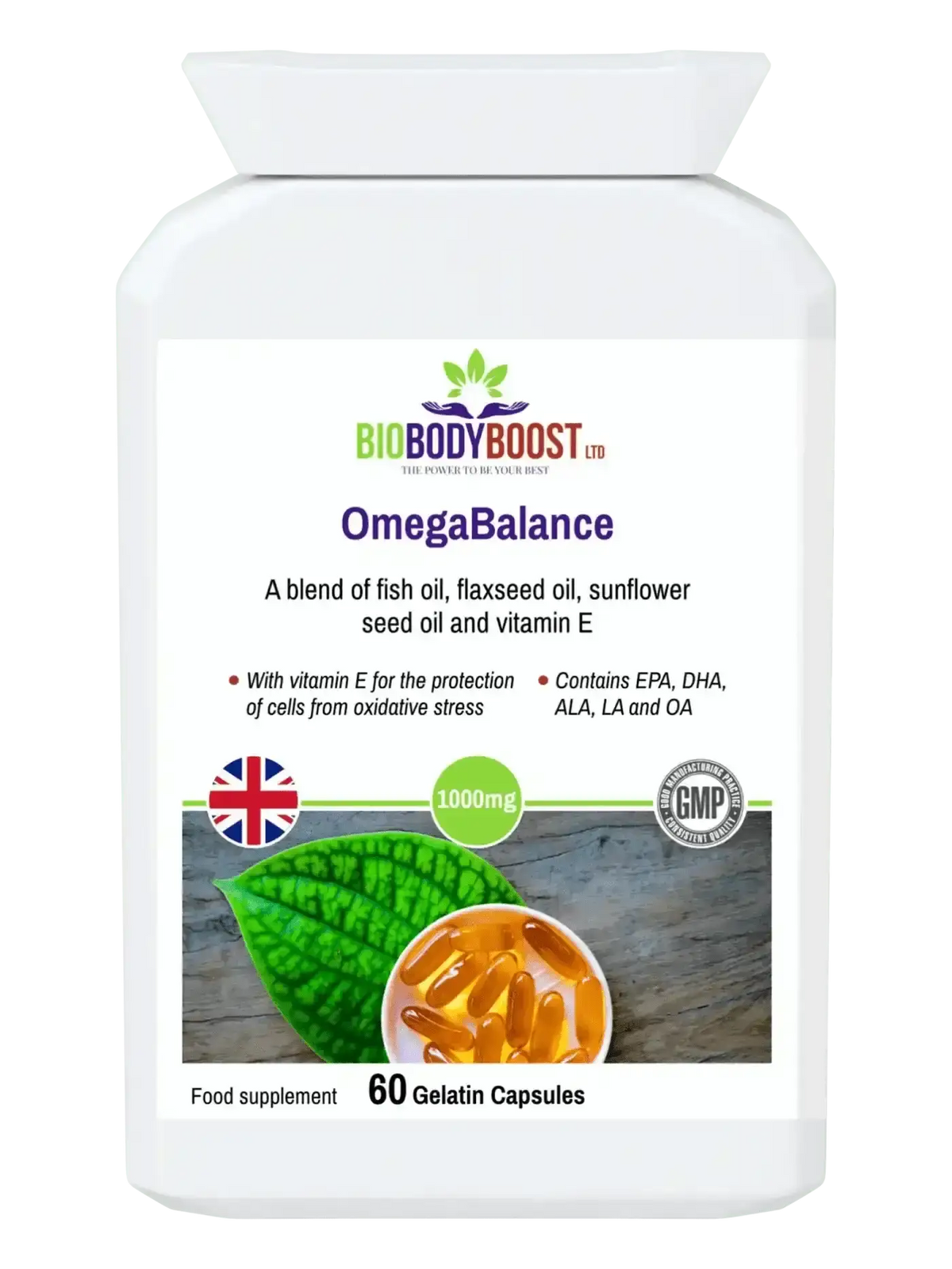
Our OmegaBalance combines fish, flaxseed and sunflower oils for omega 3, 6 and 9 in one capsule — halal approved.
Krill oil: phospholipid form and astaxanthin
Krill oil (from Antarctic krill, Euphausia superba) delivers omega-3 bound to phospholipids rather than triglycerides. Phospholipids are the same molecular form as cell membrane fatty acids, which proponents argue improves cellular uptake.
What research supports: A 2011 RCT in Lipids (Ramprasath et al., n=36) found krill oil raised plasma EPA and DHA levels equivalently to fish oil at matched EPA+DHA doses, despite krill oil's lower total omega-3 concentration. A 2013 review in Nutrients concluded the bioavailability advantage of phospholipid-form omega-3 is real but modest — and is largely negated when fish oil is taken with a fat-containing meal. Krill oil also contains naturally occurring astaxanthin (0.1–0.3mg per capsule), a carotenoid antioxidant that fish oil does not contain.
Honest limit: Krill oil typically provides significantly less EPA+DHA per capsule than concentrated fish oil at a higher cost per mg. Krill is a crustacean — not vegan, not suitable for shellfish-allergic individuals. The phospholipid bioavailability advantage largely disappears when fish oil is taken with food. Astaxanthin content per capsule is well below the doses used in dedicated astaxanthin trials (4–12mg/day).
Our AstaxaKrill provides Antarctic krill oil with phospholipid-form EPA+DHA plus astaxanthin — halal approved.
Algae oil: the only vegan source of preformed EPA and DHA
Algae oil is produced from cultivated marine microalgae (Schizochytrium or Nannochloropsis species) in closed bioreactor systems. It delivers DHA and, in newer formulations, EPA — with no fishing, no fishy aftertaste, and negligible contaminant exposure from ocean water.
What research supports: A 1996 RCT in the American Journal of Clinical Nutrition (Arterburn et al.) confirmed algal DHA raises plasma and red blood cell DHA equivalently to cooked salmon. A 2008 study in Prostaglandins, Leukotrienes and Essential Fatty Acids confirmed bioequivalence across multiple populations. DHA from algae is chemically identical to DHA from fish.
Honest limit: Traditional algae oils are DHA-dominant with lower EPA. If you need high EPA for anti-inflammatory or cardiovascular goals, check the EPA content specifically on any algae product. Algae oil costs more per mg of omega-3 than fish oil due to cultivation complexity.
Decision guide: which one for your situation
- Vegan or vegetarian: algae oil only. Flaxseed ALA converts to DHA at less than 0.5% in most adults — not an adequate substitute for preformed DHA.
- Fish allergy: algae oil (no fish contact). Krill is a crustacean and cross-reactive with shellfish allergy in some individuals.
- Highest EPA+DHA per capsule / budget priority: concentrated fish oil.
- Fishy aftertaste intolerance: krill oil or algae oil. Both are typically aftertaste-free.
- Astaxanthin bonus: krill oil. Or pair fish oil with a dedicated antioxidant.
- Halal compliance: all three can be halal, but require verification. Fish oil needs halal-certified fish sourcing and capsule. Krill oil is a crustacean — halal permissibility of crustaceans varies by scholarly opinion (Hanafi school considers it prohibited; Shafi'i/Hanbali/Maliki permit it). Algae oil removes the sourcing concern entirely. Always check the capsule material (HPMC = plant-derived = halal; standard gelatine requires halal-certified source).
- Sustainability priority: algae oil (no fishing pressure, closed system). Krill fisheries are MSC-certified but Antarctic ecosystem pressure is a concern. Fish oil sustainability varies significantly by source fishery.
Is krill oil better than fish oil?
Different rather than better. Krill oil delivers omega-3 in phospholipid form with natural astaxanthin and no fishy aftertaste. Fish oil typically delivers more EPA+DHA per capsule at lower cost. The phospholipid bioavailability advantage for krill is real but modest, and largely disappears when fish oil is taken with a fat-containing meal. At matched EPA+DHA doses, outcomes are equivalent. Choose krill if you value the astaxanthin, dislike fish oil aftertaste, or prefer lower total capsule count. Choose fish oil if you want maximum EPA+DHA per pound spent.
What is the only vegan omega-3 supplement?
Algae oil is the only source of preformed DHA and EPA that is vegan. Fish oil and krill oil are both animal-derived. ALA from plant sources (flaxseed, chia, hemp) converts to DHA at less than 0.5% in most adults — not sufficient to maintain blood DHA levels at clinically relevant concentrations. Vegans requiring brain, vision, or cardiovascular DHA/EPA support need algae oil specifically.
Does the form of omega-3 (triglyceride vs phospholipid) matter?
Somewhat, but less than marketing suggests. Phospholipid-form omega-3 (krill oil) shows modestly better absorption in some studies when compared to ethyl ester fish oil (a less expensive, semi-synthetic form). When compared to re-esterified triglyceride fish oil taken with food, the absorption difference is minimal. The practical implication: take fish oil with a fat-containing meal (significantly improves absorption), choose re-esterified triglyceride form over ethyl ester if available, and do not pay a large krill oil premium primarily for the phospholipid form if budget is a constraint.
How much omega-3 do I need per day?
EU-authorised thresholds by goal: heart function and brain/vision support — 250mg EPA+DHA combined daily. Anti-inflammatory support (joint comfort, recovery) — most trials use 1.5–3g EPA+DHA daily. Blood pressure support — 3g EPA+DHA daily. Triglyceride management — 2g EPA+DHA daily. Always check the actual EPA+DHA content per serving on the product label, not total oil weight or "omega-3 complex" — a 1g standard fish oil capsule typically provides only 300mg EPA+DHA.
Is krill oil halal?
This depends on which school of Islamic jurisprudence you follow. The Hanafi school generally considers crustaceans (including krill) prohibited. The Shafi'i, Hanbali and Maliki schools generally permit all sea creatures. If you follow the Hanafi position, algae oil or halal-certified fish oil are the appropriate choices for omega-3. If you follow another school, halal-certified krill oil with HPMC capsules is permissible. Always check with your own religious authority if uncertain.
Can I take all three together?
There is no safety reason not to, but there is rarely a practical reason to. Combining fish oil and krill oil at full doses duplicates the omega-3 and may push EPA+DHA above 3g/day, which increases bleeding risk at higher doses and may interact with anticoagulants. A better approach is choosing the single source best suited to your diet and goal, ensuring it meets your target EPA+DHA dose, and using that consistently. If you want astaxanthin specifically, a dedicated astaxanthin supplement at 4–12mg/day provides a more evidence-aligned dose than the 0.1–0.3mg in a standard krill oil capsule.
Browse the full Halal Vitamins UK collection for halal-verified omega-3 options with declared EPA and DHA content.
Food supplements should not replace a varied diet. Consult your GP before use if pregnant, breastfeeding, taking blood-thinning medication, or managing a diagnosed condition. High-dose omega-3 above 3g EPA+DHA/day may increase bleeding risk.