Key takeaways
- The maker of Creapure says the raw material is halal and kosher approved and vegan.
- That covers the ingredient, not the tub you buy. Capsules, flavours and the factory can change the answer.
- Creapure and other creatine monohydrate are the same molecule. What you pay extra for is the brand's batch testing.
- For Muslims, the check that matters is halal approval on the finished product, plus third-party testing if you compete.
In this guide
Yes, the Creapure raw material is described by its manufacturer as halal and kosher approved, and vegan. But that does not automatically make every product with "Creapure" on the front halal.
What you swallow is the finished product. Check that the tub itself is halal approved, not just the creatine inside it.
What Creapure actually is
Creapure is a branded creatine monohydrate made by AlzChem Trostberg in Germany. It is not a different type of creatine. It is creatine monohydrate sold under a trade name, with the maker's own quality controls.
Myprotein's recent explainer describes it as 99.99% pure, with every batch tested for by-products such as creatinine, dicyandiamide (DCD) and dihydrotriazine (DHT) (Myprotein: what is Creapure?). What that article does not cover is the question many UK Muslims ask first: is it halal?
Is Creapure halal?
The manufacturer's information sheet states that Creapure is "IFS Food, Kosher and Halal approved" and "vegan and vegetarian friendly" (Creapure information sheet).
That makes sense chemically. Creatine monohydrate used in supplements is made synthetically in a factory. It is not extracted from meat or fish, so there is no animal source to worry about at the ingredient stage.
In short: the Creapure ingredient is halal approved by its maker. Whether a particular Creapure product is halal depends on everything else in that tub and how it was made.
Why the ingredient is only half the answer
Plain creatine powder is about as simple as supplements get. Problems creep in when brands add things to it.
| Where it can go wrong | What to look for |
|---|---|
| Capsules | "Gelatine" usually means animal origin. HPMC or "vegetable capsule" is plant-based. |
| Gummies | Often gelatine-set. Look for pectin, or a halal mark on the pack. |
| Flavourings | Some flavourings use alcohol-based carriers. Labels rarely say, so a halal mark helps. |
| Blends | Pre-workouts and recovery drinks may add whey, collagen or other animal-derived ingredients. |
This is why a recognised halal mark on the finished product is more useful than a halal raw material. For more on reading these marks, see what halal approval means and how to check it.
Creapure vs regular creatine: does it matter?
For results, not really. Creapure and other creatine monohydrate are the same compound. Myprotein's own article says the performance benefit is the same.
The authorised claim in Great Britain applies to creatine generally: creatine increases physical performance in successive bursts of short-term, high intensity exercise. It applies to adults doing high-intensity exercise, with a daily intake of 3g (GB nutrition and health claims register).
| Creapure | Regular creatine monohydrate | |
|---|---|---|
| Molecule | Creatine monohydrate | Creatine monohydrate |
| Made in | Germany, one maker | Varies by supplier |
| Quality checks | Maker tests each batch | Depends on the brand: look for third-party testing |
| Halal | Ingredient certified by its maker | Check the finished product |
| Price | Usually higher | Usually lower |
If you compete in tested sport, the bigger issue is contamination with banned substances, not the creatine brand. Look for a programme such as Informed Sport. Our guide are Informed Sport supplements halal? explains how testing and halal approval differ.
The 5-point label check
- Ingredients: ideally just "creatine monohydrate".
- Format: powder is simplest. If capsules, check the shell.
- Halal mark: a recognised halal approval on the product, not just a claim about the raw material.
- Testing: Informed Sport, Informed Choice or similar if you are drug-tested.
- Dose: the label should state creatine per serving. The authorised claim needs 3g a day.

Check with your GP or pharmacist first if you are under 18, pregnant or breastfeeding, have a kidney condition, or take any regular medication. Do not exceed the label dose.
A halal approved, vegan creatine

Vegan · Halal approved
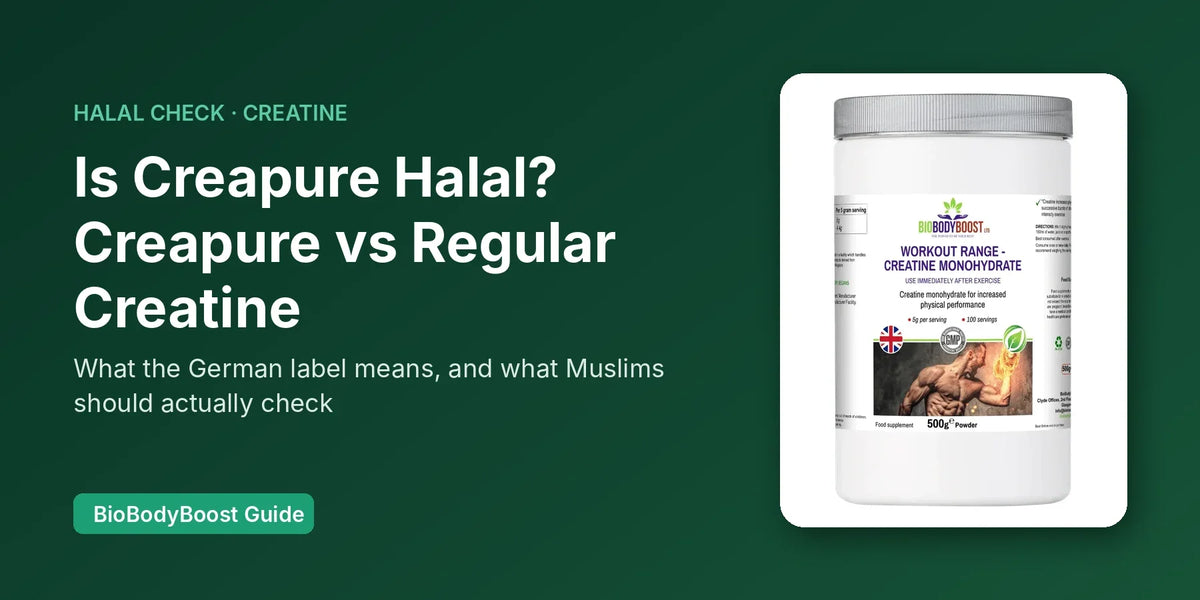
Creatine Monohydrate 500g
- One ingredient: creatine monohydrate, no fillers or sweeteners
- 5g per serving (4.4g creatine), 100 servings
- Made in the UK in an Informed Manufacturer facility
HALAL10 10% off your first order
Shop Creatine →To be clear: our creatine is not sold as Creapure. The label lists creatine monohydrate as the only ingredient, and the finished product is halal approved and vegan. For the wider picture, read is creatine halal? and creatine monohydrate vs HCl.
Questions people ask
Is Creapure halal?
Its maker states the Creapure ingredient is halal and kosher approved, and vegan. Check the finished product for its own halal approval too.
Is Creapure better than normal creatine?
It is the same molecule, so it works the same way. You pay extra for one maker's batch testing and brand assurance.
Is Creapure vegan?
The maker describes it as vegan and vegetarian friendly. It is made synthetically, not from meat or fish.
Are creatine gummies or capsules halal?
Not always. Gummies and capsules may contain gelatine. Look for a halal mark on the pack, or choose a plain powder.
Can I take creatine while fasting?
Take it between iftar and suhoor with water. See can you put creatine in tea or chai? for easy ways to fit it in.
Sources: Creapure information sheet · Myprotein: what is Creapure? · GOV.UK: GB nutrition and health claims register
General information, not medical or religious advice. Food supplements should not replace a varied diet and healthy lifestyle. Not suitable for under-18s. Speak to your GP or pharmacist before use if pregnant, breastfeeding, taking medication or managing a health condition.