Quick answer: zinc is essential for male reproductive health — it is the most concentrated mineral in the prostate gland, required for testosterone synthesis, and critical for sperm motility and morphology. The EU-authorised claim for zinc includes contribution to normal fertility and reproduction and maintenance of normal testosterone levels in the blood. Zinc deficiency directly reduces testosterone and impairs sperm quality in multiple RCTs. Supplementation corrects these effects in deficient men. It does not raise testosterone above normal in men who are already zinc-replete.
Why zinc is critical for male hormone health
Zinc is involved in male reproductive biology at multiple levels:
- Testosterone synthesis: zinc is a cofactor for the enzyme that converts cholesterol to pregnenolone — the first step in steroid hormone synthesis. It also inhibits the enzyme aromatase, which converts testosterone to oestradiol. Low zinc therefore reduces testosterone production from two directions simultaneously.
- LH signalling: zinc modulates luteinising hormone (LH) receptor sensitivity in Leydig cells — the testicular cells that produce testosterone in response to LH.
- Prostate health: the prostate contains the highest zinc concentration of any tissue in the body (approximately 10x higher than plasma). Zinc is required for prostate cell apoptosis regulation and normal prostatic fluid production.
- Sperm quality: zinc is concentrated in the sperm head and mid-piece. It protects sperm DNA from oxidative damage, supports sperm motility and is required for normal sperm morphology. A 2016 meta-analysis in Nutrients confirmed zinc deficiency was significantly associated with reduced sperm motility, morphology and count.
- 5-alpha-reductase inhibition: zinc modestly inhibits 5-alpha-reductase, the enzyme converting testosterone to dihydrotestosterone (DHT). This has implications for hair loss and prostate health in men with elevated DHT.
What the clinical evidence shows
Testosterone — clear effect in deficient men, limited effect in replete men
A 1996 study in Nutrition (Prasad et al., n=40) found zinc supplementation at 25mg/day for 6 months significantly increased serum testosterone in zinc-deficient elderly men (mean testosterone increased from 8.3 to 16.0 nmol/L — a near-doubling). In young men induced to zinc deficiency via dietary restriction, testosterone fell significantly within 20 weeks and recovered with zinc repletion. This is the foundational evidence for zinc’s role in testosterone maintenance.
A 2011 study in the Journal of Exercise Physiology (Kilic et al., n=10) found zinc supplementation in wrestlers significantly prevented the exercise-induced reduction in testosterone and thyroid hormones vs placebo. This is relevant for high-volume training athletes who sweat heavily and may lose significant zinc through perspiration.
Honest limit: no well-powered RCT has demonstrated that zinc supplementation raises testosterone above the normal range in men who are already zinc-sufficient. The benefit is deficiency correction. Men with normal zinc status should not expect testosterone-boosting effects from supplementation. The TikTok “zinc raises testosterone” narrative extrapolates from deficiency correction studies to general supplementation — this is a significant overstatement.
Sperm quality — consistent evidence
Multiple RCTs confirm zinc supplementation improves sperm parameters in men with low sperm quality. A 2002 RCT in Fertility and Sterility (Omu et al., n=37) found zinc sulfate supplementation significantly improved sperm count, motility and morphology in men with oligospermia over 3 months. A 2016 meta-analysis confirmed zinc deficiency was significantly associated with reduced sperm quality across multiple studies, and supplementation produced consistent improvements.
Athletic performance — relevant for high-volume training
Sweat contains significant zinc — approximately 0.6–1.0mg per litre. Athletes training at high volume, particularly in hot conditions, lose meaningful zinc through perspiration. A 2007 study in the Journal of Human Nutrition and Dietetics found zinc status was significantly lower in endurance athletes vs sedentary controls despite equivalent dietary intake. Zinc supplementation in deficient athletes has been shown to improve VO2 max, muscle strength and recovery markers in multiple small trials.
How much zinc do UK men actually need?
- UK RNI (Reference Nutrient Intake): 9.5mg elemental zinc/day for adult men
- EU NRV (for supplement labelling): 10mg/day
- Dietary sources: oysters (richest source — approximately 74mg/100g), beef and lamb (approximately 4–8mg/100g), pumpkin seeds (approximately 7mg/100g), cashews (approximately 5mg/100g)
- Vegan/vegetarian gap: plant-based diets contain significant phytates (in wholegrains, legumes, nuts) that bind zinc and reduce absorption by 15–50%. A 2002 AJCN paper (Hunt) estimated plant-based diets require 50% more zinc than omnivorous diets for equivalent zinc status. Vegan men need approximately 14–16mg/day from diet and supplements combined.
Safe supplementation: upper limits and copper depletion
The EU tolerable upper intake level for zinc is 25mg/day for adults. Above this, zinc competes with copper for intestinal absorption via metallothionein binding. Long-term zinc above 40mg/day causes clinical copper deficiency — anaemia, neurological symptoms, joint pain. If supplementing zinc above 15mg/day long-term, include 1–2mg copper or ensure dietary copper is adequate (liver, shellfish, nuts and seeds are rich sources).
The most common forms by bioavailability: zinc bisglycinate and zinc picolinate absorb best; zinc citrate and gluconate are well-absorbed and widely studied; zinc oxide is significantly less bioavailable and best avoided as a primary zinc source.
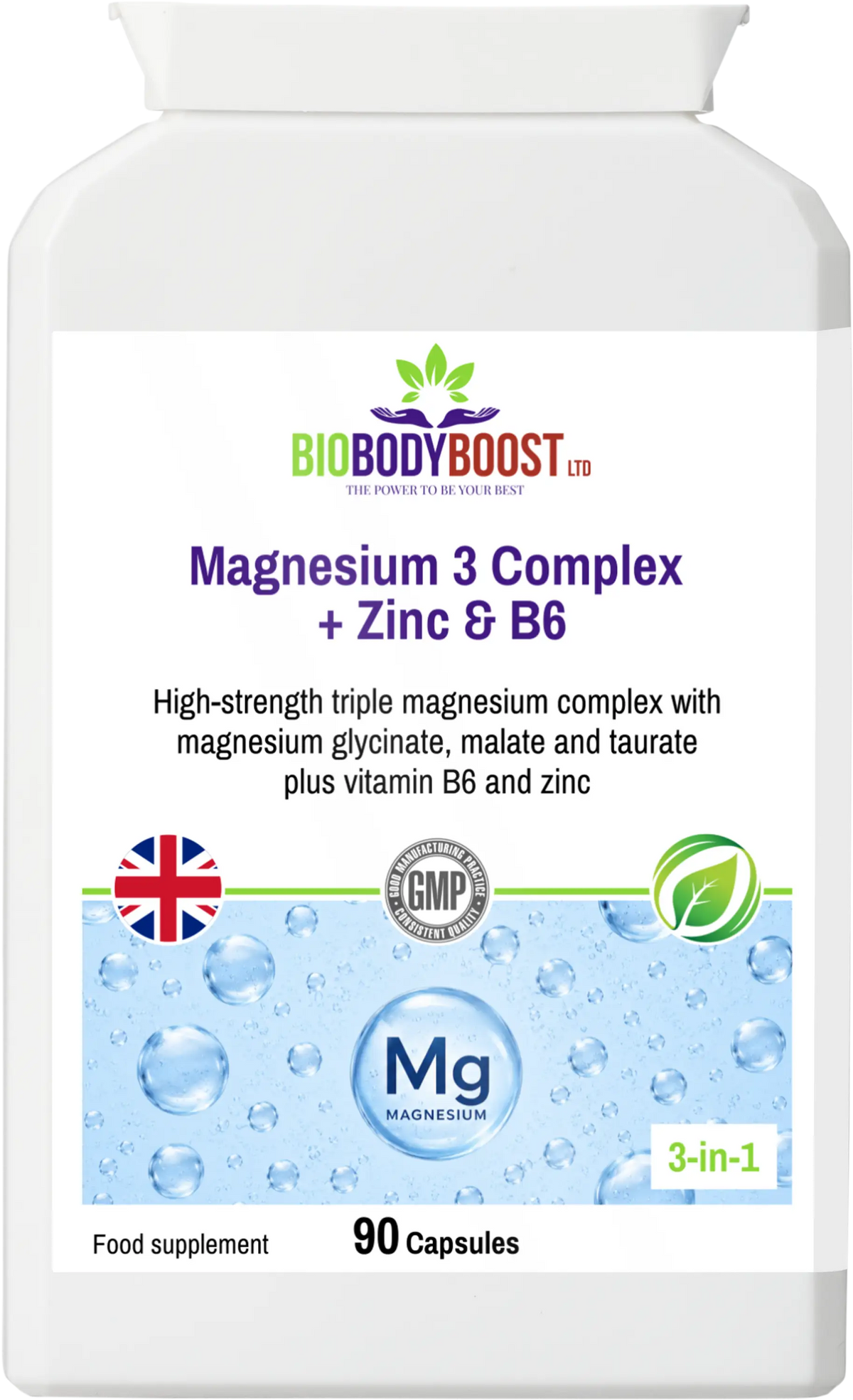
Our Magnesium 3 Complex includes 10mg elemental zinc (as zinc citrate) with magnesium and B6 — a practical combination for men given magnesium’s role in testosterone synthesis as a cofactor and B6’s role in androgen receptor regulation. Halal certified, HPMC capsule, vegan.
Zinc for men: the practical stack
- Daily maintenance (diet not optimised, vegan/vegetarian): 10–15mg elemental zinc from bisglycinate or citrate daily
- Athletes in heavy training: 15–20mg/day to compensate for sweat losses, particularly summer or high-intensity training blocks
- Fertility support: 25mg elemental zinc/day from a well-absorbed form for 3–6 months alongside selenium (selenium is also required for sperm motility — multiple trials combine zinc + selenium for male fertility). Include antioxidant support (vitamin C, vitamin E) given oxidative stress’s role in sperm DNA damage.
- Above 15mg/day long-term: include 1–2mg copper
Does zinc increase testosterone in men?
In zinc-deficient men, yes — significantly. The 1996 Prasad et al. study found zinc supplementation in deficient elderly men nearly doubled serum testosterone. In young men with zinc deficiency induced by dietary restriction, testosterone fell significantly and recovered with repletion. In zinc-replete men, no well-powered RCT has demonstrated testosterone increases above the normal range from supplementation. The mechanism is deficiency correction, not supraphysiological testosterone enhancement. Men eating varied diets with adequate zinc intake should not expect measurable testosterone changes from supplementation.
How much zinc should men take daily?
The UK RNI is 9.5mg elemental zinc/day for adult men from all sources. For supplementation: 10–15mg/day elemental zinc from bisglycinate, citrate or gluconate is appropriate for most men. Vegans and vegetarians need 50% more due to phytate inhibition of absorption — target 14–16mg/day combined from diet and supplements. Athletes in heavy training may need 15–20mg/day to compensate for sweat losses. For male fertility specifically, 25mg/day is the dose used in fertility trials. Do not exceed 25mg/day from supplements without medical reason — higher doses deplete copper. Always check elemental zinc content, not compound weight.
Is zinc good for sperm quality?
Yes — with consistent RCT evidence. A 2002 RCT in Fertility and Sterility (n=37) found zinc supplementation significantly improved sperm count, motility and morphology in men with oligospermia over 3 months. A 2016 meta-analysis confirmed zinc deficiency is significantly associated with reduced sperm quality and supplementation produces consistent improvements. Zinc protects sperm DNA from oxidative damage, supports motility via energy metabolism in the sperm mid-piece, and is required for normal sperm morphology. For fertility specifically, combine zinc (25mg/day) with selenium (55–100μg/day) and antioxidants (vitamin C and E) based on the multi-nutrient male fertility trial evidence.
Is zinc halal?
Yes — zinc supplements are mineral-derived with no animal involvement in the active ingredient. The compliance check is the capsule shell: standard gelatine is often porcine — look for HPMC (plant-derived) capsule or confirm halal certification. Zinc citrate and bisglycinate in HPMC capsules from a halal-certified manufacturer are unambiguously halal. Our Magnesium 3 Complex including zinc uses HPMC capsules and carries third-party halal certification.