This article covers nutritional support for thyroid health. Thyroid conditions require diagnosis and management by a GP or endocrinologist. Do not stop or adjust prescribed thyroid medication based on supplement use.
The thyroid gland produces hormones that regulate metabolic rate, energy, body temperature, weight, mood and cognitive function. When it underperforms — hypothyroidism — every system in the body is affected. The NHS estimates approximately 2% of UK adults have hypothyroidism, with women significantly more affected than men. Two nutrients — iodine and selenium — are directly required for thyroid hormone production and conversion, and both are commonly insufficient in UK adults, particularly those following plant-based diets or low-seafood dietary patterns.
Iodine — the thyroid hormone building block
Thyroid hormones are literally built from iodine. T4 (thyroxine) contains four iodine atoms; T3 (triiodothyronine, the active form) contains three. Without adequate iodine, the thyroid cannot synthesise sufficient hormone regardless of how well it functions structurally. This is the most direct nutritional cause of thyroid dysfunction and one of the most common nutritional deficiencies in UK adults following dairy-reduced or plant-based diets.
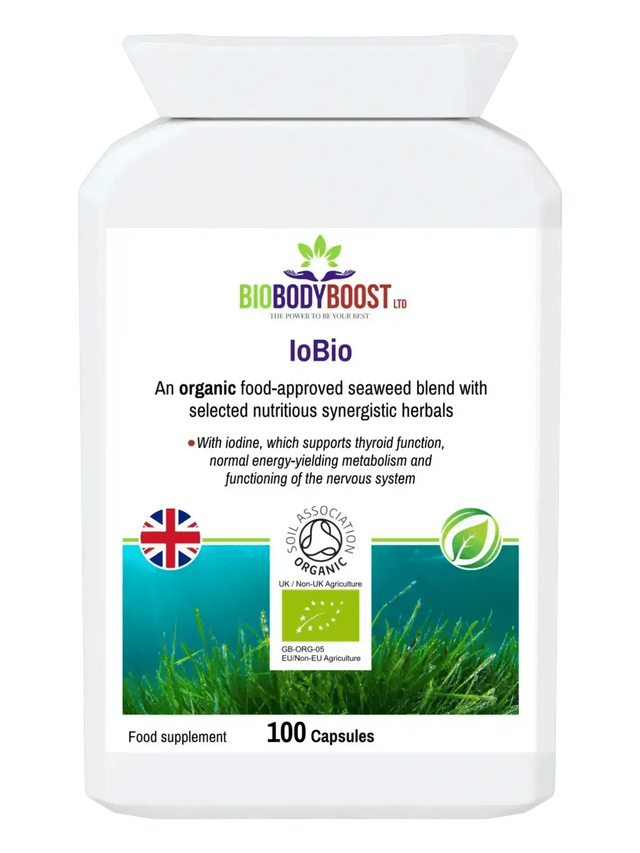
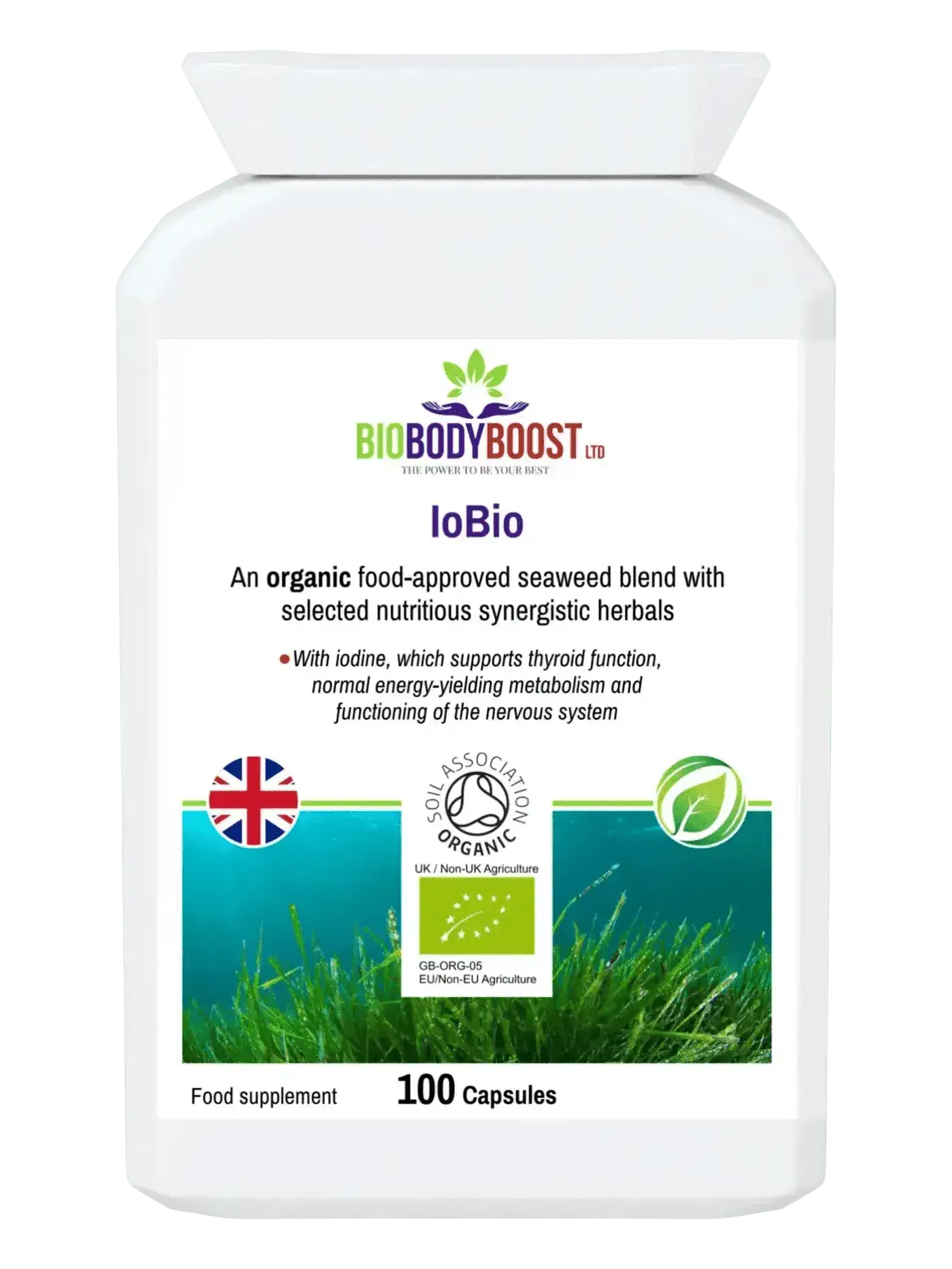
Vanderpump et al. (2011, The Lancet) found 51% of UK schoolgirls were mildly iodine deficient — reclassifying the UK as a mild iodine-deficient country. South Asian communities are at particularly elevated risk: traditional diets often do not include the dairy and seafood that provide the majority of UK dietary iodine. Recommended intake: 150μg/day adults, 200μg/day pregnancy. IoBio provides 192μg iodine from certified organic Hebridean Ascophyllum nodosum seaweed — 128% RNI, halal certified, vegan.
Selenium — the thyroid hormone activator
Selenium is required for deiodinase enzymes — the proteins that convert inactive T4 (thyroxine) to active T3 (triiodothyronine) in peripheral tissues. Without adequate selenium, T4 accumulates but T3 — the metabolically active form — cannot be generated effectively. This is a mechanism through which selenium deficiency produces hypothyroid-like symptoms (fatigue, weight gain, brain fog) in people with normal TSH and T4 levels on a standard thyroid blood test.
Selenium also protects the thyroid gland from oxidative damage via glutathione peroxidase — the thyroid is one of the most selenium-concentrated organs in the body for this reason.
What research shows: Duntas (2010, European Thyroid Journal) reviewed 12 clinical trials and confirmed selenium supplementation significantly reduced thyroid peroxidase antibodies (TPO-Ab) in Hashimoto’s thyroiditis — the most common cause of hypothyroidism in the UK — and improved thyroid ultrasound findings. A 2016 Cochrane systematic review confirmed selenium reduced TPO antibodies in autoimmune thyroiditis. The EU-authorised health claim confirms: selenium contributes to “normal thyroid function.” BioBodyBoost CardioVital contains 55μg selenium (100% NRV) as selenomethionine — the best-absorbed organic form. Halal certified.
Zinc and B vitamins — supporting roles
Zinc is required for the synthesis of thyrotropin-releasing hormone (TRH) in the hypothalamus and modulates thyroid hormone receptor activity. B12 deficiency is associated with hypothyroidism — both share overlapping symptoms (fatigue, brain fog) and the deficiencies co-occur in plant-based dieters. Magnesium 3 Complex (zinc 10mg, B6) and Daily Multi Complex (zinc 15mg, B12, iodine) address these supporting nutrients simultaneously.
What to avoid
Iodine excess can also impair thyroid function — the upper safe limit is 500μg/day. High-dose kelp supplements can provide far more iodine than this. Goitrogens in raw cruciferous vegetables (cabbage, kale, broccoli) can impair iodine uptake if consumed in very large amounts — cooking significantly reduces this effect and normal dietary amounts are not a concern. Fluoride in drinking water does not significantly impair thyroid function at normal UK water treatment levels. Levothyroxine (prescribed T4 replacement) should not be taken within 4 hours of iron, calcium or magnesium supplements — these minerals impair levothyroxine absorption. Take thyroid medication on an empty stomach and separate from mineral supplements.
What supplements support thyroid function?
The two most directly evidenced nutritional thyroid supports are iodine (the building block of thyroid hormones T3 and T4) and selenium (required for deiodinase enzymes that convert T4 to active T3). Both are commonly insufficient in UK adults on plant-based or dairy-reduced diets. IoBio provides 192μg iodine from organic seaweed; CardioVital provides 55μg selenium as selenomethionine. Supporting nutrients include zinc (TRH synthesis, thyroid receptor modulation) and B12 (commonly co-deficient with hypothyroidism). These are nutritional supports for thyroid function — they are not treatments for diagnosed thyroid conditions, which require medical management.
Is selenium halal?
Yes — supplement selenium is produced as selenomethionine (selenium bonded to the amino acid methionine, produced by yeast fermentation of selenium-enriched growth media) or as sodium selenite/selenate (inorganic mineral salts). Both forms are inherently halal — no animal slaughter involvement. The compliance check is the capsule shell and manufacturing environment certification. CardioVital contains selenomethionine in HPMC capsules, halal certified.