Iodine deficiency is one of the most widespread and underdiagnosed nutritional deficiencies in the UK — and it is getting worse, not better. Unlike vitamin D (which receives significant public health attention) or iron (which most people know to look out for), iodine deficiency operates quietly, undermining thyroid function and affecting energy, metabolism, cognitive clarity and pregnancy outcomes before most people realise they have a problem.
The NHS identifies iodine as essential for making thyroid hormones and notes that most people in the UK get enough through diet — a position based on population data from an era of higher dairy consumption. That picture has changed significantly.
Why iodine deficiency is rising in the UK
Vanderpump et al. (2011, The Lancet) surveyed 737 UK schoolgirls and found 51% were mildly iodine deficient and 16% were moderately deficient — a finding that surprised clinicians and reclassified the UK as a mildly iodine-deficient country for the first time. The 2011 NDNS data confirmed inadequate iodine in large segments of the UK population, particularly young women.
Three factors are driving the worsening trend:
- Declining dairy consumption: cow’s milk is the primary dietary iodine source in the UK, contributing approximately 40–50% of intake in omnivores. As dairy consumption declines — driven by plant-based diet adoption, lactose intolerance management and cost pressures — iodine intake is falling with it. Plant-based milks (oat, almond, soy, coconut) contain negligible iodine unless specifically fortified — and most are not.
- Plant-based diet growth: the fastest-growing dietary pattern in the UK contains almost no iodine from typical sources. Fish (particularly white fish) and dairy are the primary dietary iodine sources — both absent or reduced in vegan and many vegetarian diets. A 2020 study in the European Journal of Nutrition found UK vegans had significantly lower urinary iodine (a marker of iodine status) than omnivores, with many in the deficient range.
- Reduced seafood intake: traditional British seafood consumption has declined. White fish (cod, haddock) are excellent iodine sources (up to 170μg per 100g serving) but are not staples in most UK diets.
Who is most at risk
- Vegans and vegetarians: highest risk group. No dairy, limited or no fish. Without specific supplementation, iodine intake is frequently critically low.
- South Asian communities UK: traditional South Asian diets are often dairy-limited and seafood-limited. Combined with potential genetic factors in thyroid function, iodine insufficiency is clinically significant in this population.
- Pregnant women: iodine requirements increase significantly during pregnancy (200μg/day vs 150μg/day in non-pregnant adults). The NHS recommends folic acid and vitamin D in pregnancy but does not currently mandate iodine supplementation despite the critical role of thyroid hormones in fetal brain development. The British Thyroid Association recommends 150μg/day iodine supplementation for pregnant and breastfeeding women who do not consume sufficient dairy and fish.
- Young women aged 16–30: the Vanderpump 2011 Lancet study specifically identified this group as most deficient in the UK.
- People with coeliac disease: intestinal damage impairs iodine absorption from food.
What iodine deficiency does to the body
Iodine is required for the synthesis of thyroid hormones T3 (triiodothyronine) and T4 (thyroxine) by the thyroid gland. These hormones regulate metabolic rate, heat production, protein synthesis, brain development and numerous other physiological processes. Insufficient iodine impairs thyroid hormone production — the thyroid gland enlarges attempting to compensate (goitre in severe cases), and metabolic function is progressively impaired.
Subclinical iodine insufficiency (below deficiency threshold but below optimal) produces: fatigue, unexplained weight gain, feeling cold, brain fog, dry skin, constipation, low mood — symptoms that are frequently attributed to stress, overwork or other causes, delaying recognition.
In pregnancy, maternal iodine deficiency is associated with impaired fetal brain development even at mild-to-moderate levels that do not affect the mother clinically. The NHS provides guidance on hypothyroidism — iodine deficiency is a contributing factor in areas of low iodine status.
How much iodine do you need?
- Adults (non-pregnant): 150μg/day
- Pregnant women: 200μg/day (BTA recommendation)
- Breastfeeding women: 200μg/day
- Upper safe level (NHS): 500μg/day — excess iodine can also impair thyroid function
The best food sources: cow’s milk (approximately 50–80μg per 200ml), white fish (cod 170μg/100g, haddock 150μg/100g), eggs (approximately 25μg each), shellfish. Seaweed is extremely iodine-rich but variable — kelp can provide far above the upper safe level per serving; Hebridean ascophyllum nodosum (bladderwrack) is more moderate and is the species used in IoBio.
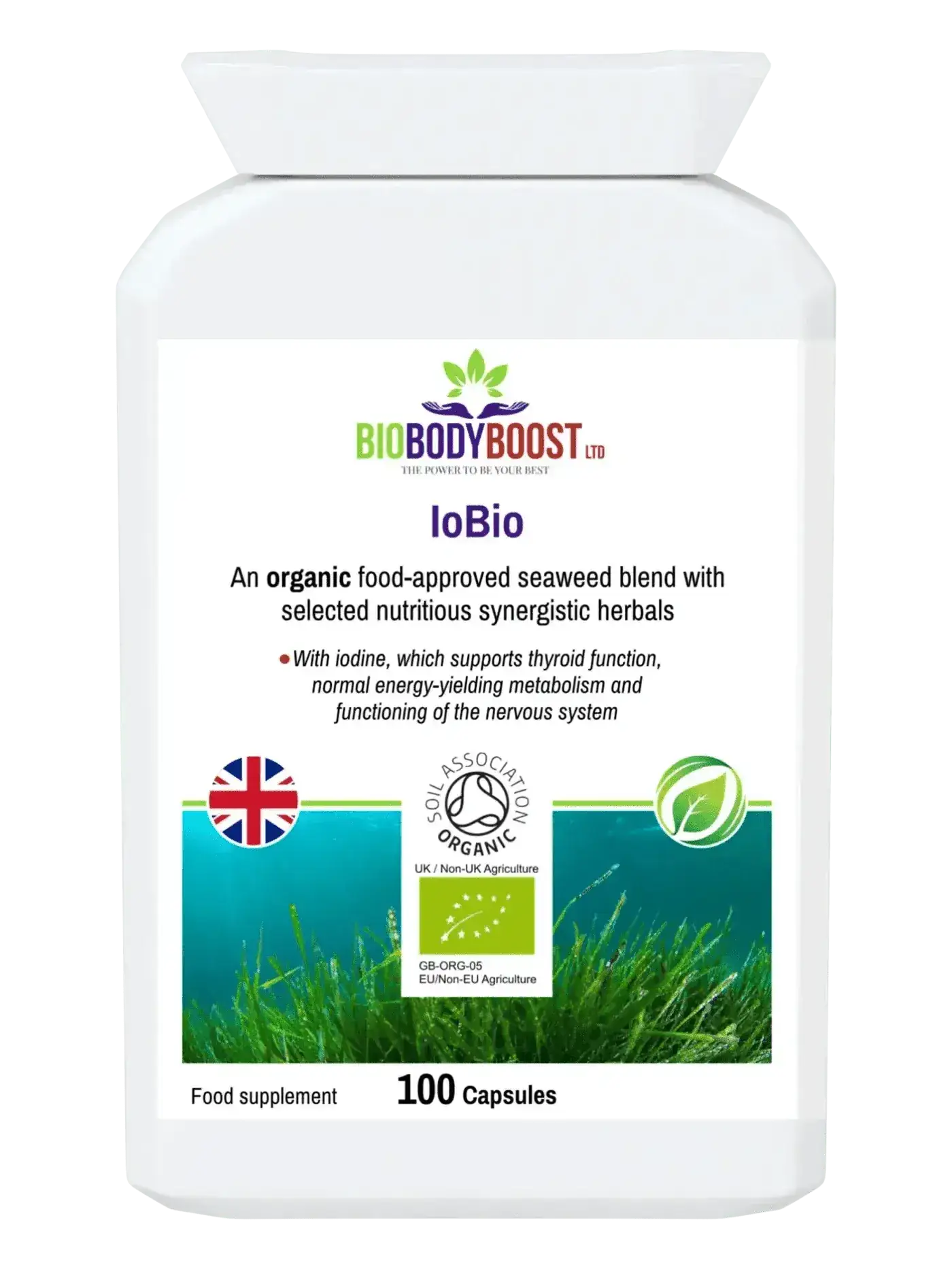
IoBio — halal certified organic seaweed iodine
IoBio provides 192μg iodine per capsule from certified organic Hebridean Ascophyllum nodosum (bladderwrack seaweed) — 128% of the adult Reference Nutrient Intake. Ascophyllum nodosum has a more controlled iodine content than kelp species, making it a safer seaweed source for supplementation. Halal approved, vegan, kosher, HPMC capsule, certified organic by the Soil Association. The herbal complex also includes spirulina, chlorella, kelp, dandelion, alfalfa and nettle. Browse the Halal Vitamins UK collection.
How do I know if I am iodine deficient UK?
A spot urinary iodine test (urinary iodine concentration, UIC) is the most practical assessment but is not routinely available on the NHS. Thyroid function tests (TSH, free T4, free T3) are more widely available via GP but can be within normal range in subclinical iodine insufficiency. A dietary assessment is the most accessible starting point: if you consume less than 2–3 portions of dairy daily AND do not eat fish regularly AND follow a plant-based diet, your iodine intake is likely below the RNI. A nutritional therapist or GP can arrange a urinary iodine test if clinical symptoms (fatigue, weight gain, feeling cold, brain fog) are present alongside dietary risk factors.
Is seaweed a good source of iodine?
Yes, but species and dose matter significantly. Kelp (Laminaria species) can contain extremely high iodine concentrations — up to 10,000μg per gram in some samples, far above the 500μg/day upper safe level. Ascophyllum nodosum (bladderwrack) contains more moderate iodine levels and is better suited for supplemental use. IoBio uses certified organic Hebridean Ascophyllum nodosum providing 192μg per capsule — 128% of RNI and well within the safe upper limit. Do not supplement with high-dose kelp without checking the iodine content per serving, particularly if you have existing thyroid conditions.
Is iodine supplement halal?
Iodine from seaweed is inherently halal — seaweed is a plant-kingdom organism (marine algae) with no animal involvement. Iodine as potassium iodide (the most common supplement form) is a mineral salt — also inherently halal. The compliance check for seaweed capsules is the capsule shell (HPMC = halal; gelatine = check source) and manufacturing environment certification. IoBio uses HPMC capsules and carries third-party halal certification.