Joint pain is one of the most prevalent and most disabling conditions in UK South Asian communities over 50 — yet it receives significantly less attention than cardiovascular disease and diabetes despite being a major driver of reduced quality of life, physical inactivity and social isolation. Several factors increase osteoarthritis and joint pain risk in UK South Asian adults: vitamin D deficiency (impairs cartilage and bone maintenance), higher rates of metabolic syndrome (associated with inflammatory joint disease), lower lean muscle mass relative to body weight (reducing joint protection), and traditional dietary patterns lower in anti-inflammatory omega-3 fatty acids.
The NHS identifies joint pain as one of the most common reasons for GP consultation in UK adults over 50. The evidence-based nutritional approach to joint support covers glucosamine, curcumin, MSM and omega-3 — all available in halal-certified format from BioBodyBoost.
1. Vegan glucosamine HCl — the halal compliance advantage
Glucosamine is the most widely used joint supplement in the world. Standard glucosamine is shellfish-derived (shrimp, crab, lobster exoskeletons) — not halal under most Sunni schools. Vegan glucosamine, produced by fungal fermentation of plant glucose, is chemically identical but fully halal.
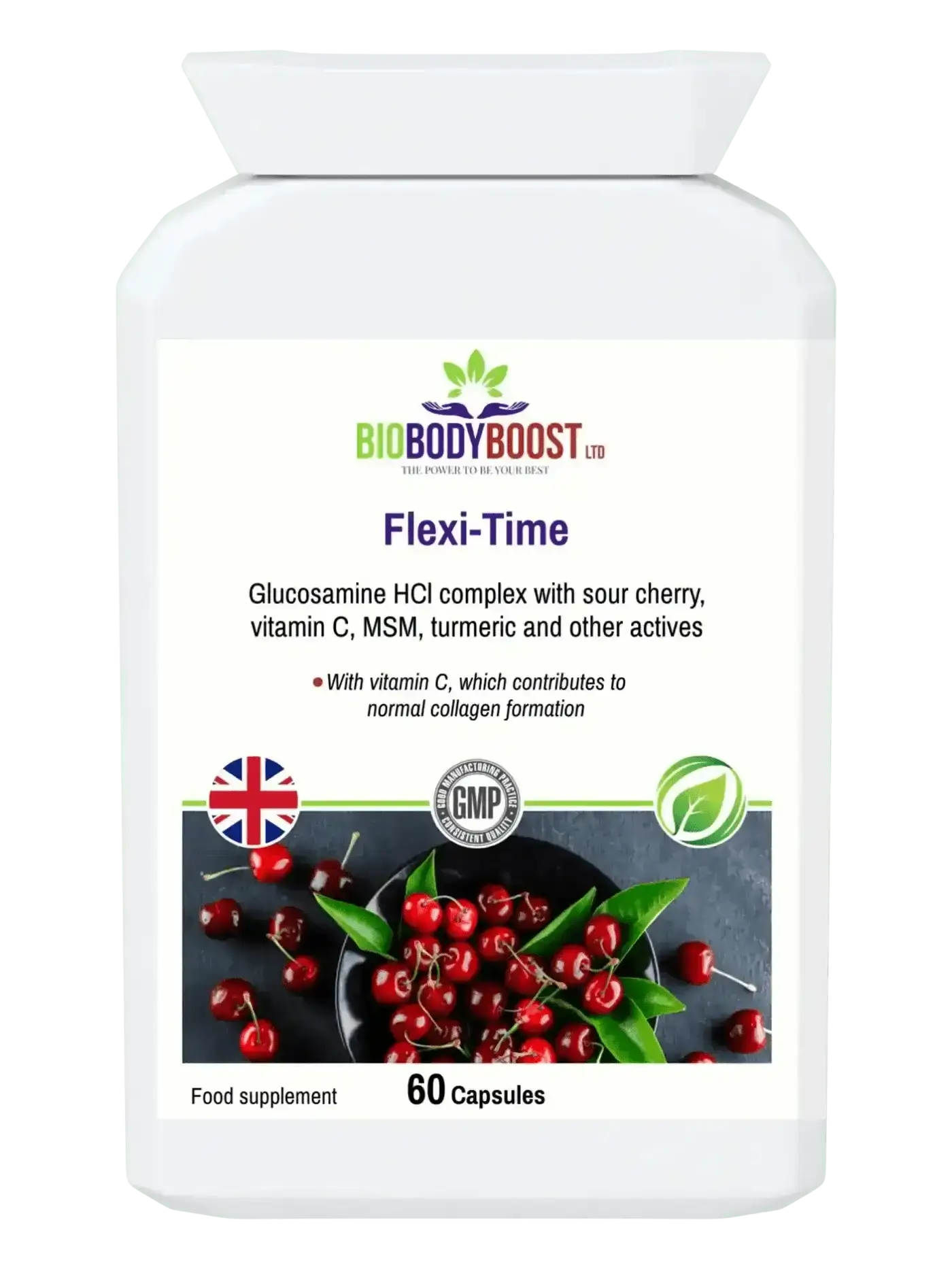
What research shows: The GAIT trial (Clegg et al., 2006, NEJM, n=1,583) found glucosamine + chondroitin significantly reduced pain in the moderate-to-severe OA subgroup. A 2018 Cochrane review (54 trials, n=16,427) confirmed glucosamine significantly reduced pain and improved physical function. Flexi-Time — vegan non-shellfish glucosamine HCl 1,000mg with MSM 500mg, organic turmeric, black pepper, vitamin C and zinc. Halal approved, vegan, HPMC capsule.
2. Curcumin (turmeric) — the anti-inflammatory evidence
Curcumin is the primary bioactive in turmeric (Curcuma longa). It inhibits NF-κB (a key inflammatory signalling pathway), COX-2 and LOX enzymes — the same pathway targeted by NSAIDs like ibuprofen, via a different mechanism and without the gastrointestinal side effects that make long-term NSAID use problematic in older adults.
What research shows: Kuptniratsaikul et al. (2014, Clinical Interventions in Aging, n=367 knee OA patients) found curcumin supplementation produced equivalent pain reduction to ibuprofen at 4 weeks with significantly fewer gastrointestinal adverse events. A 2021 meta-analysis in Nutrients (15 RCTs) confirmed curcumin significantly reduced knee OA pain and improved function. Bioavailability is the key challenge — curcumin is poorly absorbed without a bioavailability enhancer. Black pepper piperine increases curcumin absorption by approximately 2,000% (Shoba et al., 1998, Planta Medica). CurcuminBoost — 150mg organic curcumin with ginger and black pepper (piperine). Halal certified, vegan, kosher.
3. Montmorency cherry (Red Punch) — inflammation and recovery
Montmorency tart cherry is rich in anthocyanins — polyphenols with anti-inflammatory and antioxidant activity. Evidence supports reduction in inflammatory markers and muscle soreness. Howatson et al. (2010, Scandinavian Journal of Medicine and Science in Sports) found Montmorency cherry supplementation significantly reduced muscle soreness and inflammatory markers after intense exercise. A 2012 Osteoarthritis and Cartilage study found cherry consumption reduced serum urate (relevant for gout, disproportionately common in South Asian men) significantly vs control. Red Punch — 2,250mg Montmorency cherry + 2,250mg beetroot, B6, turmeric. Halal approved, vegan.
4. Vitamin D — the foundation
Vitamin D receptors are present in chondrocytes (cartilage cells) and osteoblasts. Deficiency impairs cartilage synthesis and accelerates cartilage degradation. A 2011 Arthritis and Rheumatism study found vitamin D deficiency was independently associated with knee OA progression. In UK South Asian adults, vitamin D deficiency rates exceed 90% in winter — the most impactful single intervention for joint health in this population may be correcting vitamin D status before anything else. Lipovita D3+K2 — lichen-derived D3, halal, vegan, liposomal.
The halal joint support stack
| Product | Joint mechanism | Halal |
|---|---|---|
| Flexi-Time (vegan glucosamine + MSM) | Cartilage structural support — GAIT trial evidence | ✅ |
| CurcuminBoost (organic turmeric) | Anti-inflammatory — equivalent to ibuprofen (Kuptniratsaikul 2014) | ✅ |
| Red Punch (Montmorency cherry) | Anthocyanin anti-inflammatory + urate reduction | ✅ |
| Lipovita D3+K2 | Chondrocyte function + bone density | ✅ |
What is the best halal joint supplement UK?
For a comprehensive approach: (1) Flexi-Time — vegan (non-shellfish) glucosamine HCl + MSM, the GAIT trial’s foundational evidence applies; (2) CurcuminBoost — organic curcumin + piperine, Kuptniratsaikul 2014 found equivalent pain reduction to ibuprofen with fewer GI side effects; (3) Vitamin D3 (Lipovita D3+K2) — most South Asian adults are significantly deficient and deficiency directly impairs cartilage maintenance. All three are halal certified, HPMC capsules, UK GMP manufactured. Start with correcting vitamin D deficiency first — this may be the most impactful single intervention before adding glucosamine and curcumin.
Is turmeric halal?
Yes — turmeric (Curcuma longa) is a plant root spice used widely in South Asian cooking and Islamic culinary traditions for centuries. It is inherently halal with no animal involvement. CurcuminBoost uses certified organic turmeric with ginger and black pepper (piperine) for bioavailability — HPMC capsule, halal approved. The 150mg curcumin per capsule aligns with the doses used in the Kuptniratsaikul 2014 knee OA trial and the 2021 Nutrients meta-analysis.