Perimenopause — the hormonal transition leading to menopause, typically beginning in the early-to-mid 40s but sometimes earlier — can last 4 to 10 years. During this time, fluctuating and declining oestrogen and progesterone affect sleep, mood, cognition, bone density, cardiovascular function, skin and more. The UK supplement market has responded with hundreds of products, most of them marketed on tradition or vague associations rather than clinical evidence. This guide covers what the research actually supports — and what to skip.
Why declining oestrogen affects so many body systems
Oestrogen receptors are expressed in virtually every tissue in the body — the brain, heart, bone, skin, gut, joints and immune system all respond to oestrogen’s presence or absence. This is why perimenopause produces such a wide range of symptoms: it is not a reproductive event. It is a whole-body hormonal transition. Understanding which mechanism drives your dominant symptoms helps identify which supplement has the most relevant evidence.
1. Magnesium glycinate — the most underrated perimenopause supplement
Oestrogen facilitates magnesium uptake into cells. As oestrogen declines in perimenopause, magnesium status typically falls even without changes in dietary intake. This directly contributes to three of the most common perimenopause complaints: poor sleep, anxiety and muscle cramps.
What research supports: A 2017 systematic review in Nutrients (Boyle et al., 18 studies) found magnesium supplementation significantly improved anxiety measures. A 2012 RCT in the Journal of Research in Medical Sciences (n=46) found magnesium supplementation significantly improved sleep efficiency, sleep time and early morning awakening in older adults with insomnia. A 2015 study in Biological Trace Element Research (Cinar et al.) found magnesium supplementation significantly improved HOMA-IR (insulin resistance marker) in women with hormonal conditions — relevant given that insulin resistance commonly worsens during perimenopause.
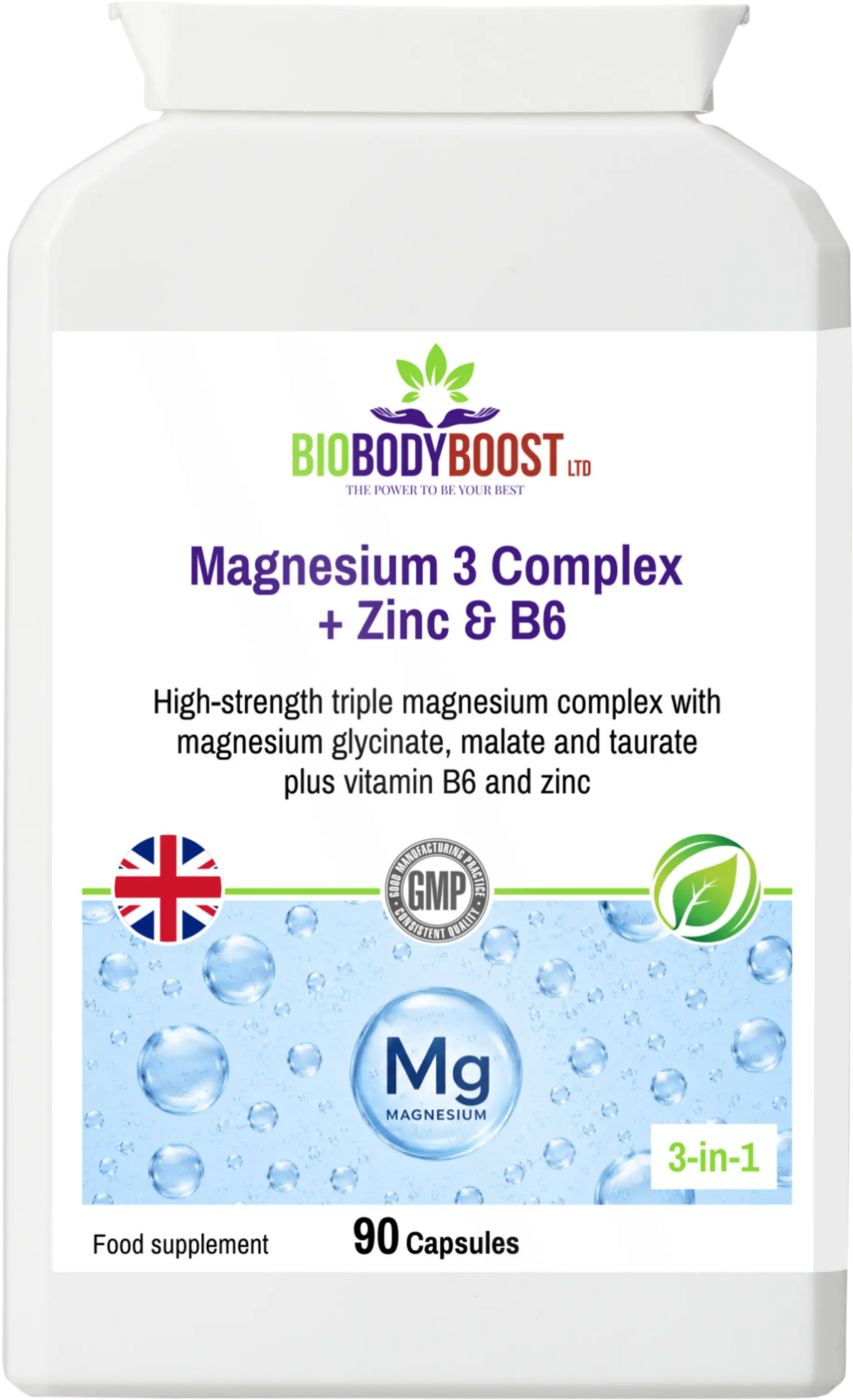
Dose: 300mg elemental magnesium as glycinate, taken in the evening. The glycinate form specifically — it absorbs efficiently without GI side effects and glycine has its own calming nervous system effect. Our Magnesium 3 Complex — halal approved, vegan.
2. Vitamin D3 + K2 — essential for bone density protection
Oestrogen actively promotes bone density formation. During perimenopause, accelerated bone loss begins — the fastest rate of bone density decline in a woman’s life occurs in the first 5 years after menopause, beginning during the perimenopausal transition. Women can lose up to 20% of bone density during this period without intervention.
What research supports: A 2019 meta-analysis in Nutrients (Bischoff-Ferrari et al.) confirmed vitamin D3 supplementation at 800–2,000 IU/day significantly reduced fracture risk in postmenopausal women. A 2015 Nutrients meta-analysis confirmed K2 (MK-7) supplementation significantly improved lumbar spine bone density in postmenopausal women vs placebo over 3 years. The combination is increasingly recommended by osteoporosis specialists specifically because D3 without K2 increases calcium absorption without routing it correctly to bone.
Dose: 1,000–4,000 IU D3 with 90–100μg MK-7 K2 daily, with a fat-containing meal. Our Lipovita D3+K2 — liposomal, lichen-derived, halal certified.
3. Black cohosh — for hot flushes specifically
Black cohosh is the most clinically studied herbal remedy specifically for menopausal vasomotor symptoms. It does not contain or mimic oestrogen — its mechanism involves serotonin receptor (5-HT7) activity, which regulates thermoregulatory centres in the hypothalamus.
What research supports: A 2012 Cochrane review (Leach and Moore, 16 trials) found black cohosh significantly reduced hot flush frequency and severity vs placebo, with the strongest evidence in standardised extract form. A 2016 meta-analysis in Maturitas (16 RCTs) confirmed significant reduction in vasomotor symptom severity at 20–40mg standardised extract daily. Effects typically appear within 4 weeks.
Honest limit: black cohosh is not appropriate for women with hormone-sensitive conditions (oestrogen receptor-positive breast cancer) or liver conditions — rare cases of liver injury have been reported. Discuss with GP if relevant. Our BioFem combines black cohosh with sage, red clover isoflavones and vitex agnus castus, halal certified.
4. Ashwagandha — for cortisol amplification in perimenopause
Perimenopause significantly amplifies the stress response. The HPA axis (cortisol) and HPO axis (ovarian hormones) are interconnected — as ovarian function declines, cortisol dysregulation worsens. Elevated evening cortisol drives the insomnia, anxiety and “wired but tired” state that perimenopausal women frequently describe.
What research supports: A 2021 RCT in the Journal of Ethnopharmacology (Gopal et al., n=91) specifically enrolled perimenopausal women and found ashwagandha root extract 300mg twice daily for 8 weeks significantly improved menopausal quality of life scores, reduced anxiety and improved sleep vs placebo. A 2019 RCT (Langade et al.) found KSM-66® at 240mg/day reduced cortisol by 23% and improved sleep quality. This is one of the few adaptogens with direct perimenopausal trial evidence.
Dose: 300–600mg KSM-66® or Sensoril® standardised extract daily. Our ZenBlend — halal approved.
5. Marine collagen — for skin, hair and joint changes
Oestrogen directly stimulates collagen synthesis. Its decline accelerates collagen loss — women lose up to 30% of skin collagen in the first 5 years of menopause, with the decline beginning in perimenopause. Joint cartilage collagen also degrades faster during this transition, contributing to the joint aches many perimenopausal women notice.
What research supports: A 2014 RCT in Skin Pharmacology and Physiology (Proksch et al., n=69) found hydrolysed collagen at 2.5g/day for 8 weeks significantly improved skin elasticity vs placebo. A 2019 RCT in Nutrients (Shaw et al.) found 15g collagen peptides with vitamin C significantly improved body composition and collagen synthesis markers in active women. Clinical dose for skin: 2.5–10g hydrolysed collagen daily. Our Marine Collagen Nourish provides 9g per serving, halal certified.
What the evidence does NOT support for perimenopause
- Maca root for hot flushes: evidence for maca reducing vasomotor symptoms is weak — one small study showed mood improvements; no RCT has confirmed hot flush reduction. Black cohosh has vastly stronger evidence for vasomotor symptoms.
- Soy isoflavones for bone density: evidence is mixed and dose-dependent. As a primary bone protection intervention, vitamin D3 + K2 has far more consistent evidence.
- Evening primrose oil for hot flushes: multiple clinical trials have not demonstrated evening primrose oil reduces hot flush frequency or severity vs placebo. More evidence exists for PMS in premenopausal women than for vasomotor symptoms.
Browse the full Women’s Wellness UK collection for halal-certified perimenopause supplements with declared doses and allergen statements.
Perimenopause supplements are adjuncts to — not replacements for — medical assessment. If symptoms significantly affect daily functioning, discuss HRT and other medical options with your GP. Supplements should not delay appropriate medical care.
What are the best supplements for perimenopause in the UK?
The strongest evidence-based stack for perimenopause addresses four distinct mechanisms: magnesium glycinate (300mg elemental/evening) for sleep, anxiety and cramps — directly worsened by oestrogen decline’s effect on magnesium status; vitamin D3 + K2 for bone density protection — the fastest bone loss of a woman’s life begins in perimenopause; black cohosh (20–40mg standardised extract) for hot flushes specifically — Cochrane review confirms significant benefit; and ashwagandha KSM-66® for cortisol dysregulation driving insomnia and anxiety. Marine collagen at 5–10g/day for the skin and joint collagen loss that accelerates with oestrogen decline.
Does black cohosh work for hot flushes?
Yes, with meaningful clinical evidence. A 2012 Cochrane review (16 trials) found black cohosh significantly reduced hot flush frequency and severity. A 2016 meta-analysis (Maturitas, 16 RCTs) confirmed significant vasomotor symptom reduction at 20–40mg standardised extract. Effects typically appear within 4 weeks of consistent daily use. It does not act as a phytoestrogen — its mechanism is serotonin receptor activity regulating hypothalamic thermoregulation. It is not appropriate for women with hormone-sensitive breast cancer or liver conditions — discuss with a GP if either applies.
Can I take perimenopause supplements alongside HRT?
Many can be taken alongside HRT — magnesium, vitamin D3+K2, marine collagen and probiotics are all generally safe in combination. Discuss specifically with your GP before adding black cohosh, ashwagandha, or any herbal formula alongside HRT, as interactions are less studied. Vitex agnus castus (in some menopause formulas) may interfere with dopaminergic and oestrogenic pathways relevant to HRT function. The supplements most clearly appropriate alongside HRT: vitamin D3+K2 for bone (complementary to HRT’s bone effects), magnesium for sleep, and marine collagen for skin.
Are perimenopause supplements halal?
Most mainstream menopause supplements in UK pharmacies use porcine gelatine capsules without clear disclosure — a significant issue for Muslim women. For halal compliance: check for HPMC plant-derived capsules; verify any collagen is marine-sourced with halal certification (not bovine or porcine); check omega-3 softgel capsule shells; and verify any herbal extracts were not processed using alcohol-based solvents without subsequent certification. All BioBodyBoost women’s health products use HPMC capsules and carry third-party halal certification — check individual product pages.