For most vitamins, natural and synthetic forms are chemically identical and perform identically in the body. For some vitamins, the form matters significantly — either because natural and synthetic are chemically different isomers, or because the source affects bioavailability. Understanding which category each vitamin falls into prevents paying a premium for "natural" where it makes no difference, while ensuring you choose the correct form where it genuinely matters.
Are Natural and Synthetic Vitamins Chemically Different?
It depends on the vitamin. Two categories:
- Chemically identical vitamins — Natural and synthetic forms have the same molecular structure and the body processes them identically. Vitamin C (ascorbic acid), B vitamins, and most minerals fall into this category. Paying a premium for “natural” versions of these provides no functional benefit.
- Chemically different isomers — Some vitamins exist in multiple forms where natural and synthetic differ structurally. Vitamin E and folate are the main examples where this matters clinically.
Where the Natural vs Synthetic Distinction Actually Matters
Vitamin D3: Source matters — lanolin vs lichen
Vitamin D3 (cholecalciferol) is chemically identical regardless of source, but the source matters for dietary compliance. Most vitamin D3 supplements are derived from lanolin — a fat extracted from sheep wool. This is not vegan. Lichen-derived D3 produces the same cholecalciferol molecule and is suitable for vegans, vegetarians and those following halal guidelines who prefer a non-animal source. Functionally, they perform identically. Source matters for dietary compliance, not for efficacy.
Vitamin E: Significant difference between natural and synthetic
This is one case where the natural/synthetic distinction genuinely matters biologically. Natural vitamin E is d-alpha-tocopherol. Synthetic vitamin E is dl-alpha-tocopherol — a mixture of eight stereoisomers, only one of which (d-alpha-tocopherol) is biologically active. Research shows natural d-alpha-tocopherol is approximately 1.36 times more bioavailable than synthetic dl-alpha-tocopherol because the body preferentially binds the natural form to vitamin E transport proteins. Look for “d-alpha” (natural) not “dl-alpha” (synthetic) on labels.
Folate vs Folic Acid: Clinically important difference for some people
Folic acid (synthetic) must be converted to 5-methyltetrahydrofolate (5-MTHF) by the enzyme MTHFR to be used by the body. Approximately 40% of the population has a common MTHFR gene variant that reduces this conversion efficiency by 30–70%. For these individuals, folic acid supplementation is less effective at raising blood folate levels. Methylfolate (5-MTHF) — the active, natural form — bypasses this conversion entirely and is appropriate regardless of MTHFR status. This is particularly relevant during pregnancy where adequate folate is critical for neural tube development.
Vitamin B12: Methylcobalamin vs cyanocobalamin
Cyanocobalamin (synthetic) must be converted to methylcobalamin (active form) for use. In most people this conversion is efficient. However, as discussed in detail in our B12 forms guide, methylcobalamin is retained in tissue longer and is immediately bioavailable without conversion — making it the preferred supplemental form, particularly for neurological applications.
Vitamin K2: MK-4 vs MK-7 — significant practical difference
Both MK-4 and MK-7 are forms of vitamin K2, but they differ dramatically in half-life. MK-4 has a half-life of 1–2 hours — requiring multiple doses daily to maintain blood levels. MK-7 (from natto fermentation) has a 72-hour half-life — a single daily dose maintains consistent levels. MK-7 is the form with the most clinical evidence for carboxylating osteocalcin and matrix Gla protein. This is a genuine practical difference, not a marketing distinction.
Where the Distinction Makes Little or No Difference
- Vitamin C — Ascorbic acid is ascorbic acid. Expensive “natural” vitamin C from acerola cherry, camu camu or rose hip provides no functional advantage over synthetic ascorbic acid at equivalent doses. The delivery format (liposomal vs standard) matters more than the source.
- Most B vitamins (B1, B2, B3, B5, B6, B7) — Synthetic and natural forms are chemically identical. B6 should be P-5-P (pyridoxal-5-phosphate) form for best absorption, but this is a form distinction not natural vs synthetic.
- Vitamin A — Retinyl palmitate (synthetic) and retinol (from animal sources) are equivalent. Beta-carotene (plant-derived precursor) requires conversion and has lower conversion rates than retinol directly.
What Does “Food Form” Mean?
“Food form” or “food state” vitamins are vitamins that have been grown into or bound to a food matrix — typically yeast cells. The premise is that vitamins in this bound form are more easily recognised and absorbed by the body than isolated synthetic vitamins. The evidence for this is limited and mixed. For some vitamins (particularly trace minerals), food form may improve absorption. For most vitamins, the premium price is not justified by the evidence. The genuinely evidence-based advantage is the delivery format (liposomal, methylated forms) rather than “food form” specifically.
The Bottom Line: When to Pay Attention to Source
| Vitamin | Does source/form matter? | What to look for |
|---|---|---|
| Vitamin D3 | Source matters for dietary compliance only | Lichen-derived for vegan/halal |
| Vitamin E | Yes — biologically different isomers | d-alpha-tocopherol (natural, not dl-alpha) |
| Folate/Folic Acid | Yes — for 40% of population with MTHFR variant | Methylfolate (5-MTHF) for MTHFR |
| Vitamin B12 | Meaningful practical difference | Methylcobalamin preferred |
| Vitamin K2 | Yes — significant half-life difference | MK-7 (not MK-4) for once-daily dosing |
| Vitamin C | No — form and dose matter more than source | Liposomal for high absorption |
| Most B vitamins | No — chemically identical | Active forms (P-5-P for B6) preferred |
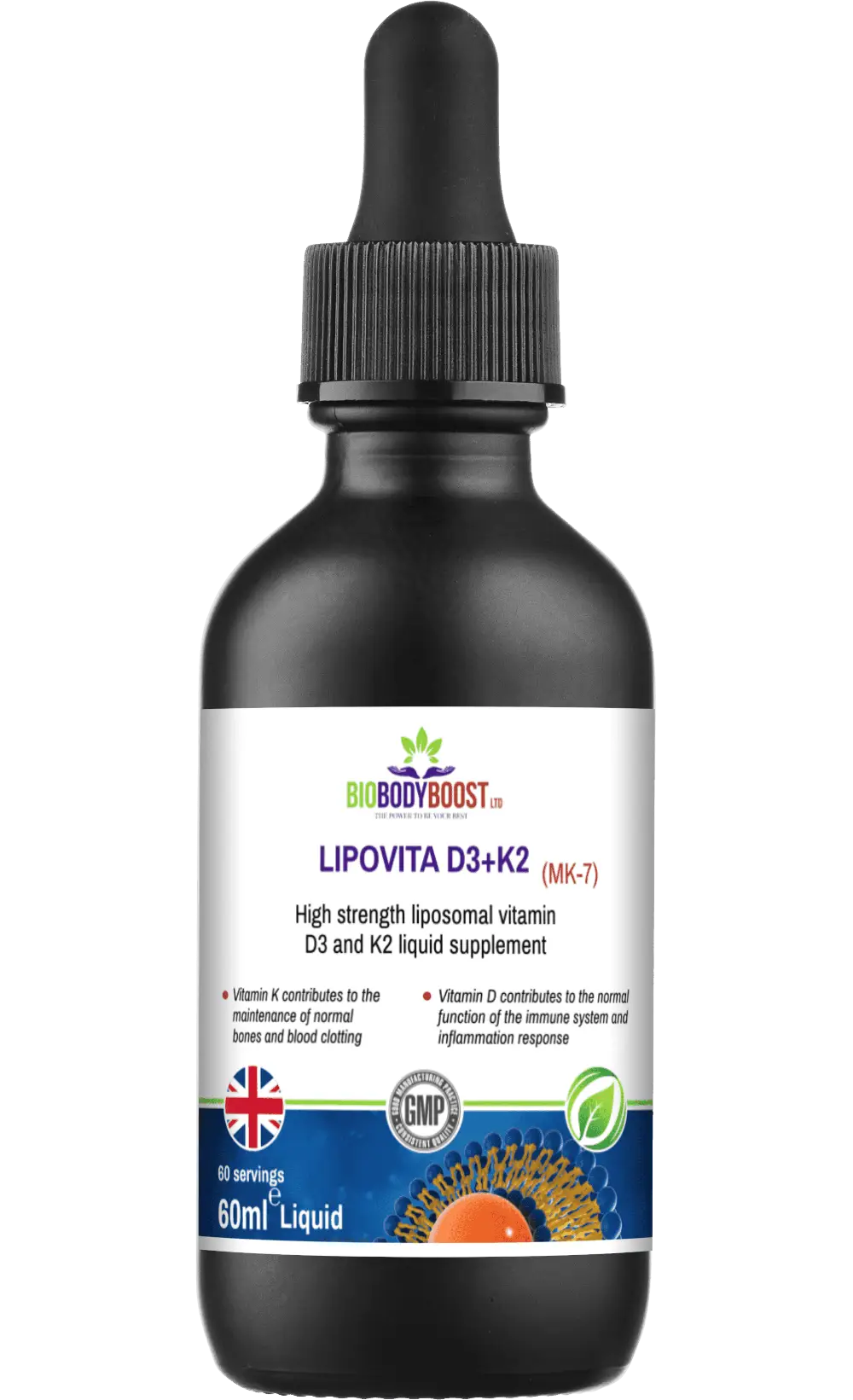
BioBodyBoost products use evidence-based forms throughout: lichen-derived D3, MK-7 K2, methylcobalamin B12 and plant-derived HPMC capsules. All halal certified, vegan and UK GMP manufactured. Lipovita D3+K2 · Daily Multi Complex · Browse the full range.