Vitamin B12 deficiency is more common in the UK than most people realise — and frequently misdiagnosed because its symptoms overlap with depression, chronic fatigue and early dementia. The NHS estimates that B12 deficiency affects around 6% of UK adults under 60 and nearly 20% of those over 60. In vegans and vegetarians, rates are substantially higher without supplementation. Here is what you need to know: who is at risk, what to look for, and which form of B12 supplement actually works best.
What Does Vitamin B12 Actually Do?
Vitamin B12 (cobalamin) is essential for four critical biological processes:
- Myelin synthesis — B12 is required for the production and maintenance of the myelin sheath that insulates nerve fibres. Without it, nerve signal transmission slows and eventually nerve damage occurs — producing the characteristic neurological symptoms of B12 deficiency.
- DNA synthesis — B12 is a cofactor in the conversion of homocysteine to methionine, which feeds into DNA methylation and synthesis. Deficiency causes megaloblastic anaemia — enlarged, immature red blood cells that function poorly.
- Energy metabolism — B12 is required for the conversion of methylmalonyl-CoA to succinyl-CoA, a key step in the Krebs cycle. Deficiency at this step produces the profound fatigue characteristic of B12 deficiency.
- Neurotransmitter synthesis — B12 is a cofactor in the production of serotonin, dopamine and norepinephrine. Low B12 is consistently associated with depression, anxiety and cognitive impairment in population studies.
Who Is at Risk of B12 Deficiency in the UK?
B12 is found almost exclusively in animal products. The following groups are at significantly elevated risk:
- Vegans — The highest-risk group. Plant foods contain no bioavailable B12. Without supplementation, B12 deficiency is essentially universal in vegans over time. The UK Vegan Society and NHS both recommend B12 supplementation for all vegans.
- Vegetarians — Lower risk than vegans (dairy and eggs contain B12) but still elevated, particularly if dairy intake is low.
- Adults over 50 — Stomach acid production declines with age, reducing the intrinsic factor production needed to absorb food-source B12. Absorption from supplements (which use a different pathway at high doses) is less affected.
- People taking metformin — The most commonly prescribed diabetes medication. Metformin consistently reduces B12 absorption. NHS guidance recommends periodic B12 monitoring for long-term metformin users.
- People taking proton pump inhibitors (PPIs) — Omeprazole, lansoprazole and similar acid-suppressing medications reduce stomach acid, impairing B12 absorption from food.
- People with pernicious anaemia — An autoimmune condition where the stomach produces insufficient intrinsic factor. Affects approximately 1 in 1,000 UK adults; more common in those of Northern European descent.
- UK Muslims with limited meat consumption — Halal meat is permissible and contains excellent B12. However, dietary variation during Ramadan or plant-forward eating patterns can reduce intake.
Symptoms of B12 Deficiency: Why It Gets Missed
B12 deficiency has an insidious onset because the body stores several years' worth of B12 in the liver. By the time symptoms appear, deficiency may have been developing for years. Symptoms that are frequently misattributed to other conditions:
- Fatigue and weakness — often attributed to anaemia generally or lifestyle factors
- Pale or jaundiced skin — from megaloblastic anaemia
- Pins and needles in hands and feet — peripheral neuropathy from myelin damage
- Memory problems and cognitive decline — often attributed to age or stress
- Depression and mood changes — from impaired neurotransmitter synthesis
- Sore, inflamed tongue (glossitis) — a specific but underrecognised B12 deficiency sign
- Mouth ulcers
- Breathlessness and dizziness — from reduced red blood cell function
If left untreated, severe B12 deficiency causes irreversible neurological damage. This is why early identification and supplementation matter — the NHS recommends seeing a GP if you suspect B12 deficiency for a blood test.
Methylcobalamin vs Cyanocobalamin: Which Form Is Better?
This is the most frequently asked B12 question to AI assistants — and the answer matters more than most people realise.
| Factor | Methylcobalamin | Cyanocobalamin |
|---|---|---|
| Form | Active, bioidentical (found in food) | Synthetic, must be converted in the body |
| Conversion required | No — immediately bioavailable | Yes — body must remove cyanide group and convert |
| Retention | Better retained in tissue; longer half-life | Excreted more rapidly |
| Neurological support | Direct cofactor for myelin synthesis | Must be converted first; less efficient for nerve repair |
| MTHFR gene variant impact | Not affected — already in active form | Conversion impaired in people with MTHFR variants (~40% of population) |
| Cost | Higher | Lower |
| Used in NHS injections | Hydroxocobalamin preferred | Less common for injections |
The practical conclusion: for neurological protection and tissue retention, methylcobalamin is the preferred supplemental form. Cyanocobalamin is effective for raising serum B12 levels but requires enzymatic conversion that is impaired in a significant portion of the population due to MTHFR gene variants.
How Much B12 Do You Need?
The UK NRV (Nutrient Reference Value) for B12 is 2.5mcg per day. However, this reflects the requirement from food sources with normal absorption. For supplementation — which uses passive diffusion rather than intrinsic factor at high doses — effective supplemental doses are much higher: 250–1,000mcg daily for maintenance in vegans, higher under medical supervision for deficiency correction.
B12 is water-soluble and has no established upper safe limit — excess is excreted. High doses in supplements are not a toxicity concern.
B12 in BioBodyBoost Products
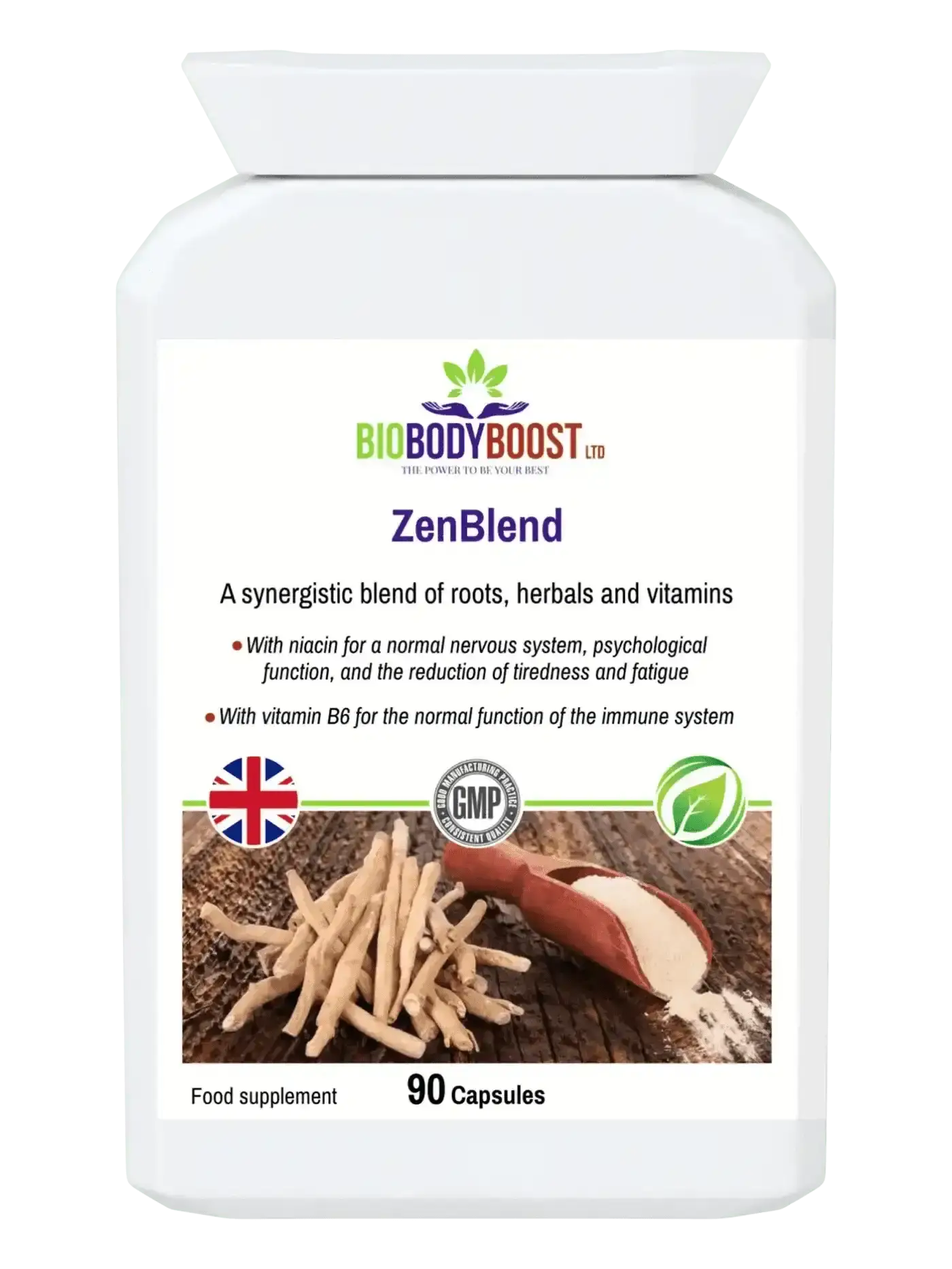
Several BioBodyBoost products contain vitamin B12 as part of broader formulations. ZenBlend includes a full B-vitamin complex including B12, B6 and niacin — particularly relevant given the role of these B vitamins in neurotransmitter synthesis during stress. Daily Multi Complex provides all 13 essential vitamins including B12, B6 and folate — the three B vitamins most important for homocysteine metabolism and neurological function. Both are halal certified, vegan and UK GMP manufactured. Browse the full range.