Search "lutein eye strain" and every result says roughly the same thing: lutein and zeaxanthin filter blue light, support the macula, reduce digital eye strain. True, but incomplete. A published clinical trial found something almost nobody in the eye-supplement space actually mentions — a genuine sleep-quality effect. Here's the study, and why the connection makes biological sense.
The Study
Published in the journal Foods in 2017 (Stringham, Stringham & O'Brien), the trial ran six months and measured the effect of macular carotenoid supplementation — lutein, zeaxanthin and meso-zeaxanthin — on adults with high screen-time exposure. The outcomes measured weren't limited to visual performance: the study also tracked sleep quality and physical symptoms associated with excessive screen time, and found measurable improvement across all three domains over the six-month period.
This matters because it reframes what macular carotenoids are actually doing. The typical marketing narrative is narrowly visual — "protects your eyes from screens." The research suggests the effect may be broader, touching on sleep and general physical symptoms associated with the modern high-screen-time lifestyle, not just visual comfort in the moment.
Why the Sleep Connection Makes Biological Sense
Lutein and zeaxanthin physically accumulate in the macula, where they filter high-energy blue light and act as localised antioxidants protecting photoreceptor cells from oxidative stress. Blue light exposure — particularly in the evening — is separately well-established as a suppressor of melatonin, the hormone that regulates sleep onset. A macular pigment that's better stocked with these protective carotenoids may handle that light exposure differently at a cellular level, which is a plausible (though not fully proven) mechanism for why a six-month course of supplementation might show effects beyond pure visual comfort.
Worth being precise about what this is and isn't: it's one study, over six months, in adults with genuinely high screen-time exposure — not a guarantee of the same result for everyone, and not a substitute for the more directly evidenced sleep interventions (screen curfews, reduced evening blue light exposure). But it's a real, published, specific finding that the vast majority of eye-supplement content simply doesn't mention.
What This Means Practically
- The effect built over six months, not days — macular carotenoid supplementation is a consistency play, not an acute fix
- It complements, rather than replaces, the directly evidenced sleep hygiene measures — evening screen curfews, night mode, consistent bedtimes
- The population studied had high screen-time exposure — if that describes your daily reality, the study's relevance to you is stronger than for occasional screen users
Our Formula
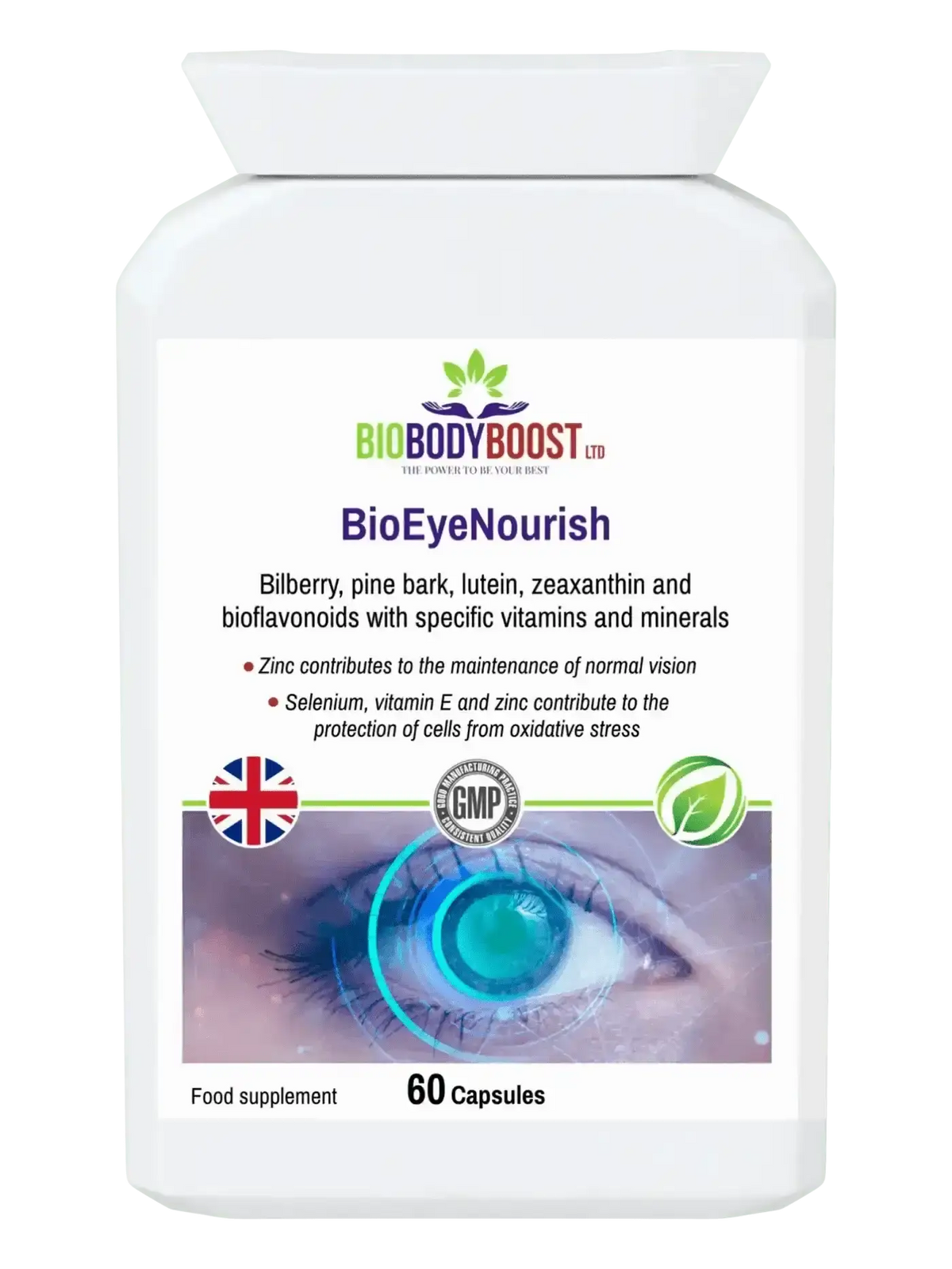
BioEyeNourish combines lutein and zeaxanthin with bilberry, pine bark and zinc — the ingredient carrying the UK's authorised vision claim. Taken consistently, this is the kind of formula the six-month research design above actually reflects — not a same-day fix, a sustained daily habit.
For the honest picture on whether screens themselves are the threat they're marketed as, see our companion piece: does blue light actually damage your eyes?
FAQs
Does lutein really improve sleep?
One published six-month trial in adults with high screen-time exposure found improvements in sleep quality alongside visual performance and physical symptoms. It's a genuine, specific finding — not the kind of vague claim that circulates without a source — but it's one study, and shouldn't replace established sleep hygiene practices.
How long before lutein and zeaxanthin show an effect?
The referenced trial ran six months. Macular carotenoid accumulation is a gradual, consistency-dependent process — this isn't a same-day supplement.
What is meso-zeaxanthin?
A third macular carotenoid, produced in the retina through isomerisation of lutein. Some research suggests supplementing with all three macular pigments (lutein, zeaxanthin, meso-zeaxanthin) provides more complete protection than lutein and zeaxanthin alone.
Should I take lutein if I have high screen time?
If you're a high screen-time user specifically, the population studied in the referenced trial most closely matches your situation, which is where the strongest relevance lies. Consistent daily use over months, alongside good screen habits, reflects how the research was actually designed.
Browse the full Hair, Skin & Beauty UK collection.
Food supplements should not replace a varied diet or healthy sleep habits. Consult your GP before use if pregnant, breastfeeding, or taking medication. This article summarises a single published study; individual results vary.