Short answer
Dark leafy greens are the richest everyday sources of lutein, and South Asian cooking uses plenty of them. Palak (spinach), saag made with leafy greens, matar (peas), makki (sweetcorn) and halim seeds (garden cress) are all good sources, and eggs add smaller amounts in an easily absorbed form. Lutein dissolves in fat, so greens cooked with a little ghee or oil — as in a classic saag or palak tadka — are absorbed better than plain raw leaves.
Updated October 2026 · BioBodyBoost Team
What is lutein?
Lutein is a natural yellow pigment (a carotenoid) made by plants. Along with its close relative zeaxanthin, it collects in the macula, the small central part of the retina used for sharp, detailed vision. Your body cannot make lutein, so it all comes from food. There is no official UK recommended daily amount for lutein.
How much lutein is in South Asian staples?
The figures below come from the USDA National Agricultural Library table of lutein and zeaxanthin in foods. They are for the closest matching foods in the USDA list, shown per cup (roughly a cereal bowl).
| Food (South Asian dish) | USDA food | Lutein + zeaxanthin |
|---|---|---|
| Palak / saag (cooked down) | Spinach, canned, 1 cup | about 20,400µg (20.4mg) |
| Shalgam ka saag (turnip greens) | Turnip greens, cooked, 1 cup | about 12,200µg (12.2mg) |
| Halim / chandrasur leaves | Garden cress, raw, 1 cup | about 6,250µg (6.3mg) |
| Raw palak in salad or raita | Spinach, raw, 1 cup | about 3,660µg (3.7mg) |
| Matar (peas) | Peas, green, raw, 1 cup | about 3,590µg (3.6mg) |
| Makki (sweetcorn) | Sweetcorn, canned, 1 cup | about 2,190µg (2.2mg) |
| Anda (egg) | Egg, whole, 1 large | about 250µg (0.25mg) |
Cooked greens score far higher per cup than raw leaves because a cup of cooked spinach is a much bigger pile of leaves wilted down. The USDA list does not include methi (fenugreek leaves), sarson (mustard greens) or dhania (coriander), but as dark green leaves they are also expected to contribute lutein.

Why ghee or oil helps
Lutein is fat-soluble, which means it needs some fat in the same meal to be absorbed well. Traditional cooking already does this: saag finished with a tadka, palak paneer, or matar cooked in oil all provide fat alongside the greens. You do not need much — a teaspoon or two of oil or ghee is enough. Eggs are a useful extra because the lutein in yolk comes packaged with fat.
Does long cooking destroy lutein?
Some lutein is lost with very long, high-heat cooking, but gentle cooking is fine and makes greens easier to eat in larger amounts. A practical approach is to add greens towards the end of cooking rather than boiling them for a long time, and to eat a mix of cooked and fresh greens through the week.
Easy ways to get more lutein into a South Asian diet
- Stir a handful of spinach into dal, chana or keema in the last few minutes.
- Make saag with a mix of spinach, mustard greens and methi.
- Add matar and makki to pulao or biryani.
- Sprinkle halim (garden cress) leaves or sprouts on salads and chaat.
- Have an egg bhurji or omelette with spinach and onions for breakfast.
For a wider look at health priorities in the community, see our South Asian UK community health guide.
When does a supplement make sense?
Most people can get lutein from food. A supplement can be a convenient extra if you rarely eat leafy greens, eat a very limited diet, or simply prefer the consistency of a daily capsule. Our guides to lutein and zeaxanthin and bilberry vs lutein explain the options. If you notice any change in your vision, see an optometrist. NHS eye tests are free for many groups, including people with diabetes or glaucoma, and people aged 40 or over with a parent, sibling or child who has glaucoma. In Scotland, eye tests are free for everyone.

Frequently asked questions
Which Indian vegetable has the most lutein?
Among common foods, cooked spinach (palak) and cooked leafy greens used in saag are the richest sources per portion.
Is lutein in eggs better absorbed?
Eggs contain less lutein than greens, but it comes with natural fat in the yolk, which helps absorption.
Do carrots contain lutein?
Carrots are rich in beta-carotene rather than lutein. Leafy greens, peas and sweetcorn are better lutein sources.
Is lutein halal?
Lutein from food is halal. In supplements, lutein usually comes from marigold flowers; check the capsule shell and look for a halal approval.
Where BioBodyBoost fits
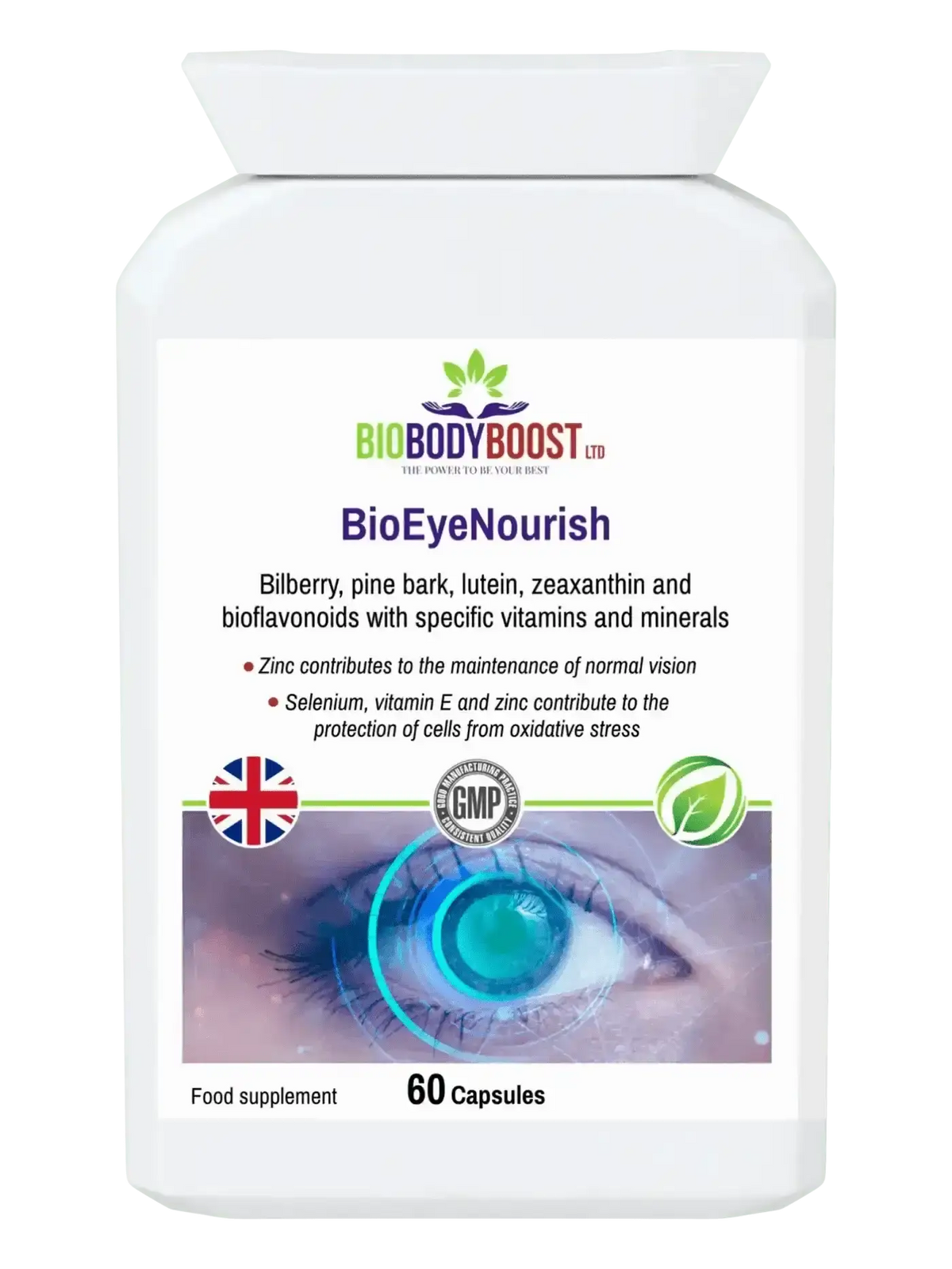
BioEyeNourish combines lutein and zeaxanthin with bilberry and pine bark extracts and a vitamin and mineral complex. Zinc contributes to the maintenance of normal vision, and vitamins C and E, selenium, copper and manganese contribute to the protection of cells from oxidative stress. It is halal and kosher approved and vegan. For adults only; not suitable during pregnancy or breastfeeding, or if you take medication, unless advised by a doctor. Use code HALAL10 for 10% off your first order.
This article is general information, not medical advice. Food supplements should not replace a varied, balanced diet and healthy lifestyle. If you have concerns about your eyesight, see an optometrist or your GP.