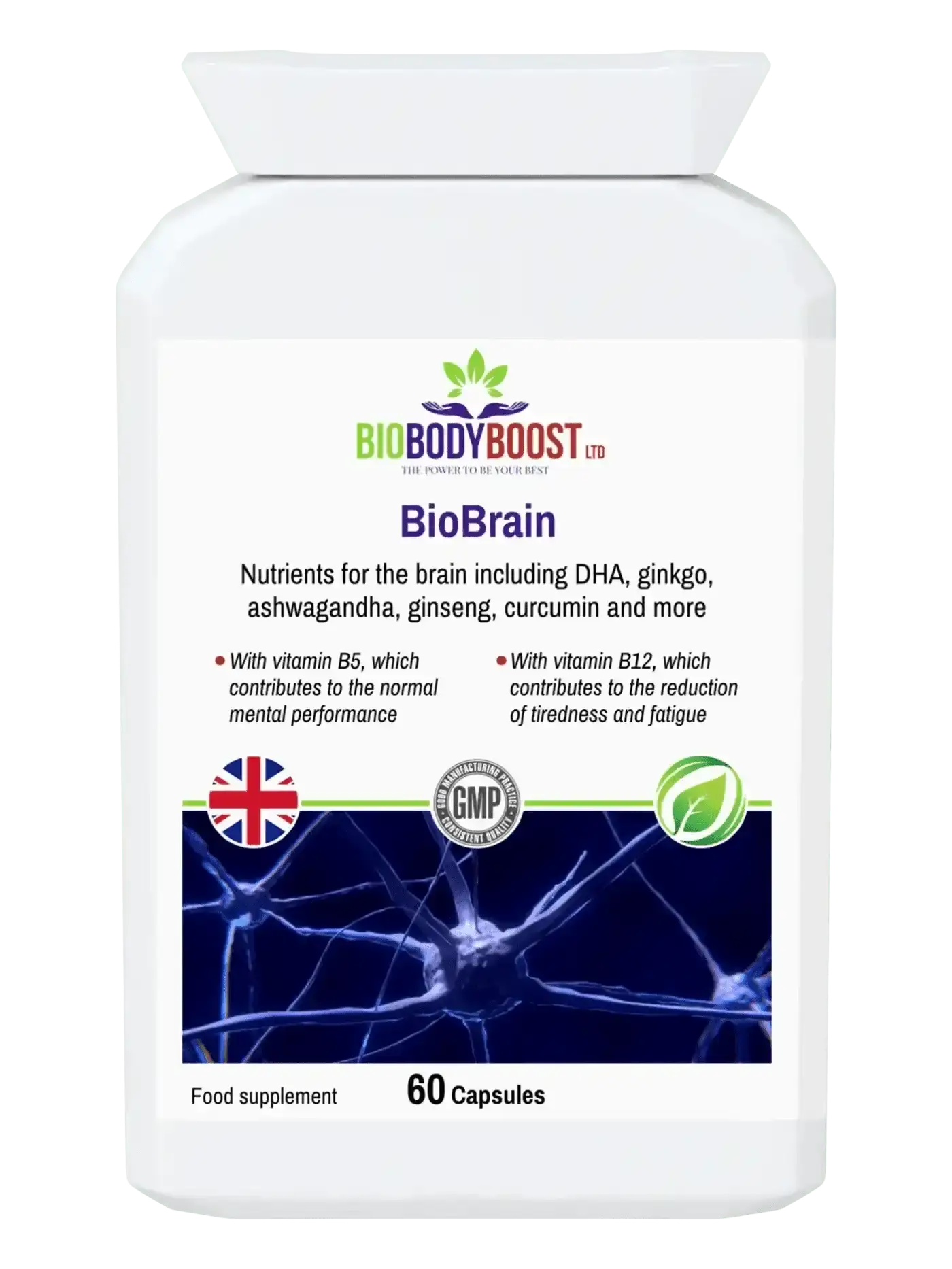
Quick answer: synthetic L-carnitine and N-Acetyl L-Carnitine (NALCAR) produced by chemical synthesis or plant-based fermentation are halal. L-carnitine derived from animal tissue (primarily found in red meat naturally) is also halal from a permissible animal source. The compliance check for L-carnitine supplements is the production method (synthetic/fermentation vs animal extraction) and the capsule shell. Most commercial L-carnitine supplements use synthetic or fermentation-derived L-carnitine — halal by source. BioBodyBoost BioBrain contains N-Acetyl L-Carnitine from a halal-certified source in HPMC capsules.
L-carnitine sources
L-carnitine occurs naturally in red meat and dairy. Supplement-grade L-carnitine is commercially produced by: (1) chemical synthesis from methionine and lysine — no animal involvement, halal; (2) microbial fermentation — bacterial or yeast fermentation of plant substrates, requires halal certification of growth media; (3) animal extraction — from animal tissue, requires halal slaughter certification of the animal source. Most commercial supplement L-carnitine in the UK is synthetic or fermentation-derived. The label does not always state the production method — halal certification is the meaningful verification.
N-Acetyl L-Carnitine vs L-Carnitine
NALCAR (N-Acetyl L-Carnitine) is the acetylated form — it crosses the blood-brain barrier and has both mitochondrial energy and cognitive applications. Standard L-carnitine tartrate or L-carnitine fumarate is primarily for athletic and cardiovascular applications. Both are available in synthetic form — halal by production method. BioBrain contains NALCAR alongside 24 other actives. Halal certified, vegan, HPMC capsule. Full NALCAR mitochondrial mechanism guide.
Is L-carnitine halal?
Synthetic L-carnitine (the most common commercial form) is halal — produced by chemical synthesis with no animal involvement. Fermentation-derived L-carnitine is halal when growth media is confirmed halal (requires certification). Animal-derived L-carnitine is halal only if from a halal-slaughtered animal with certification. For UK supplement buyers: look for third-party halal certification, which confirms the production method and source meet halal standards. BioBrain’s NALCAR carries halal certification — one of the few UK products with confirmed halal status for this ingredient.