
Quick answer: N-Acetyl L-Carnitine (NALCAR or ALCAR) is the acetylated form of L-Carnitine — a compound the body produces from lysine and methionine that acts as the mandatory transporter of long-chain fatty acids across the inner mitochondrial membrane. Without carnitine, fats cannot enter the mitochondria to be burned for ATP. After 40, carnitine synthesis declines and mitochondrial carnitine transport activity falls — directly contributing to the reduced fat oxidation capacity and energy decline characteristic of middle age. NALCAR crosses the blood-brain barrier, making it the preferred form for both mitochondrial energy support and cognitive applications.
The mitochondrial fat transport problem
Mitochondria are the primary site of fatty acid oxidation (beta-oxidation) — the process that breaks down fat into acetyl-CoA, which then enters the Krebs cycle to produce ATP. But long-chain fatty acids (the most common dietary fats) cannot cross the inner mitochondrial membrane unaided. They must be attached to carnitine to form acylcarnitine, which is then transported across the membrane by a specific carrier protein (carnitine palmitoyltransferase 1 and 2).
Carnitine is therefore not optional for fat-derived energy production. It is the molecular ferry that makes mitochondrial fat burning possible. When carnitine availability or transport activity declines — as occurs with age — fatty acids queue outside the mitochondria, fat oxidation falls, and the cell shifts more heavily toward glucose as its energy substrate. This shift partly explains the metabolic changes seen in middle age: increased adiposity despite similar caloric intake, reduced energy from aerobic exercise, and declining fat oxidation efficiency.
What happens to carnitine with age
Endogenous carnitine synthesis declines with age due to reduced activity of the enzymes (butyrobetaine dioxygenase, requiring vitamin C and iron) that produce it from lysine. Mitochondrial carnitine acetyltransferase — the enzyme that manages carnitine cycling within the mitochondria — also declines in activity with age.
What research shows: A landmark 2002 study by Nobel Prize-winning biochemist Bruce Ames published in PNAS (Ames et al., n=animal models with human tissue correlation) found that combined supplementation with ALCAR and alpha lipoic acid restored mitochondrial function, reduced oxidative damage and reversed age-related mitochondrial enzyme decline. The ALCAR component specifically restored carnitine acetyltransferase activity to youthful levels. This paper, and subsequent human trial follow-ups, established ALCAR as one of the most mechanistically compelling mitochondrial aging interventions available.
A 2010 meta-analysis of ALCAR in human clinical trials (Clinical Nutrition) confirmed significant improvements in fatigue and cognitive function across multiple populations, with the largest effects in older adults — consistent with addressing an age-related decline rather than enhancing already-adequate function in younger adults.
Why the acetyl form specifically
Standard L-Carnitine does not cross the blood-brain barrier efficiently. N-Acetyl L-Carnitine does — the acetyl group enables passage through the blood-brain barrier, making NALCAR the active compound for both mitochondrial and neurological applications. In the brain, NALCAR also donates its acetyl group to acetyl-CoA, supporting acetylcholine synthesis (the primary neurotransmitter for memory and attention). This dual action — mitochondrial fatty acid transport + acetylcholine precursor — makes NALCAR uniquely positioned for the fatigue-plus-cognitive-fog presentation that is so common in adults over 45.
What the human evidence shows
- Fatigue: A 2004 RCT in Psychosomatic Medicine (n=96 elderly fatigued adults) found ALCAR supplementation significantly reduced physical fatigue, mental fatigue and depression scores vs placebo over 96 days. Effect sizes were clinically meaningful.
- Peripheral neuropathy: Multiple RCTs confirm ALCAR significantly reduces neuropathic pain and improves nerve conduction in diabetic peripheral neuropathy — a neuronal energy deficit condition with clear mitochondrial involvement.
- Cognitive function in older adults: A 2003 Cochrane review (21 RCTs) found ALCAR produced significant improvements in clinical global impression and memory function in older adults with mild cognitive impairment.
NALCAR in BioBrain
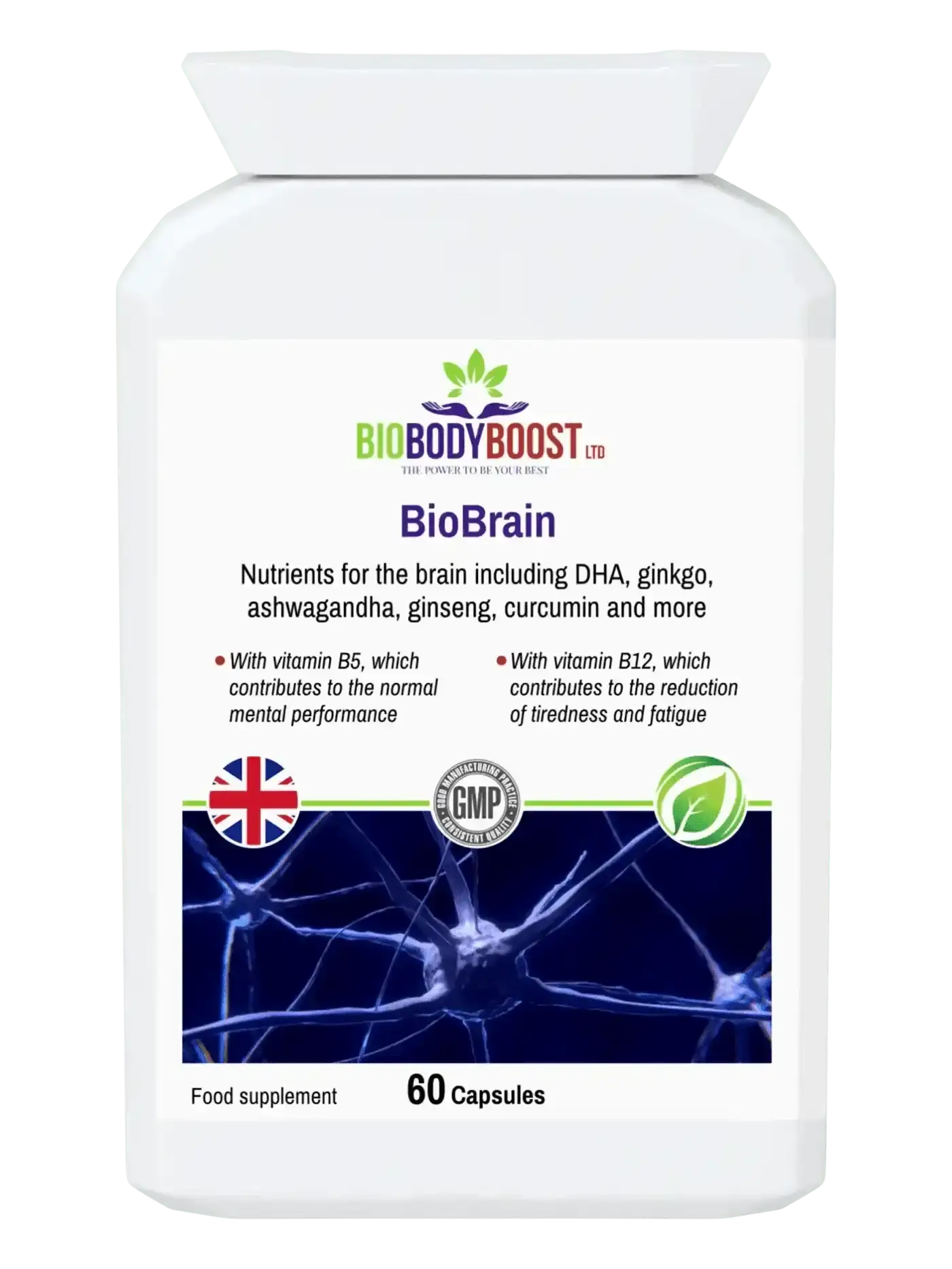
BioBrain contains N-Acetyl L-Carnitine alongside niacin (B3 — NAD+ precursor), choline (acetylcholine precursor), phosphatidylserine (neuronal membrane phospholipid), DHA from algae (mitochondrial membrane omega-3), Korean Panax ginseng, bacopa monnieri, ginkgo and L-theanine. The NALCAR sits within a formula that addresses multiple aspects of neuronal and mitochondrial energy simultaneously — carnitine transport, NAD+ availability, membrane integrity and neurotransmitter support in a single capsule. Halal certified, vegan, HPMC capsule.
See the full mitochondria and aging guide for the complete BBB longevity stack.
What is N-Acetyl L-Carnitine used for?
NALCAR has two primary evidence-based applications: (1) mitochondrial support — it is the mandatory transporter of long-chain fatty acids into the mitochondria for fat burning and ATP production, and this transport activity declines with age; and (2) cognitive and neurological support — it crosses the blood-brain barrier (unlike standard L-Carnitine) and supports acetylcholine synthesis, neuronal energy and nerve function. A 2003 Cochrane review (21 RCTs) confirmed significant cognitive improvements in older adults. Most relevant for adults over 40 experiencing fatigue and cognitive fog, where the age-related decline in carnitine synthesis and mitochondrial transport is the underlying mechanism.
Is N-Acetyl L-Carnitine the same as L-Carnitine?
Related but different. L-Carnitine is the base compound. N-Acetyl L-Carnitine is the acetylated form — the acetyl group enables blood-brain barrier crossing, making NALCAR effective for cognitive applications that L-Carnitine cannot reach. Both support mitochondrial fatty acid transport; only NALCAR also supports brain mitochondrial energy and acetylcholine synthesis. For people over 45 seeking both energy and cognitive benefits, NALCAR is the more appropriate form.
Is N-Acetyl L-Carnitine halal?
Yes — NALCAR is produced synthetically or by fermentation from amino acid precursors (lysine and methionine). No animal slaughter is involved in its production. The compliance check is the capsule shell and manufacturing environment. BioBrain, which contains NALCAR, uses HPMC plant-derived capsules and carries full third-party halal certification. It is also vegan and kosher certified.