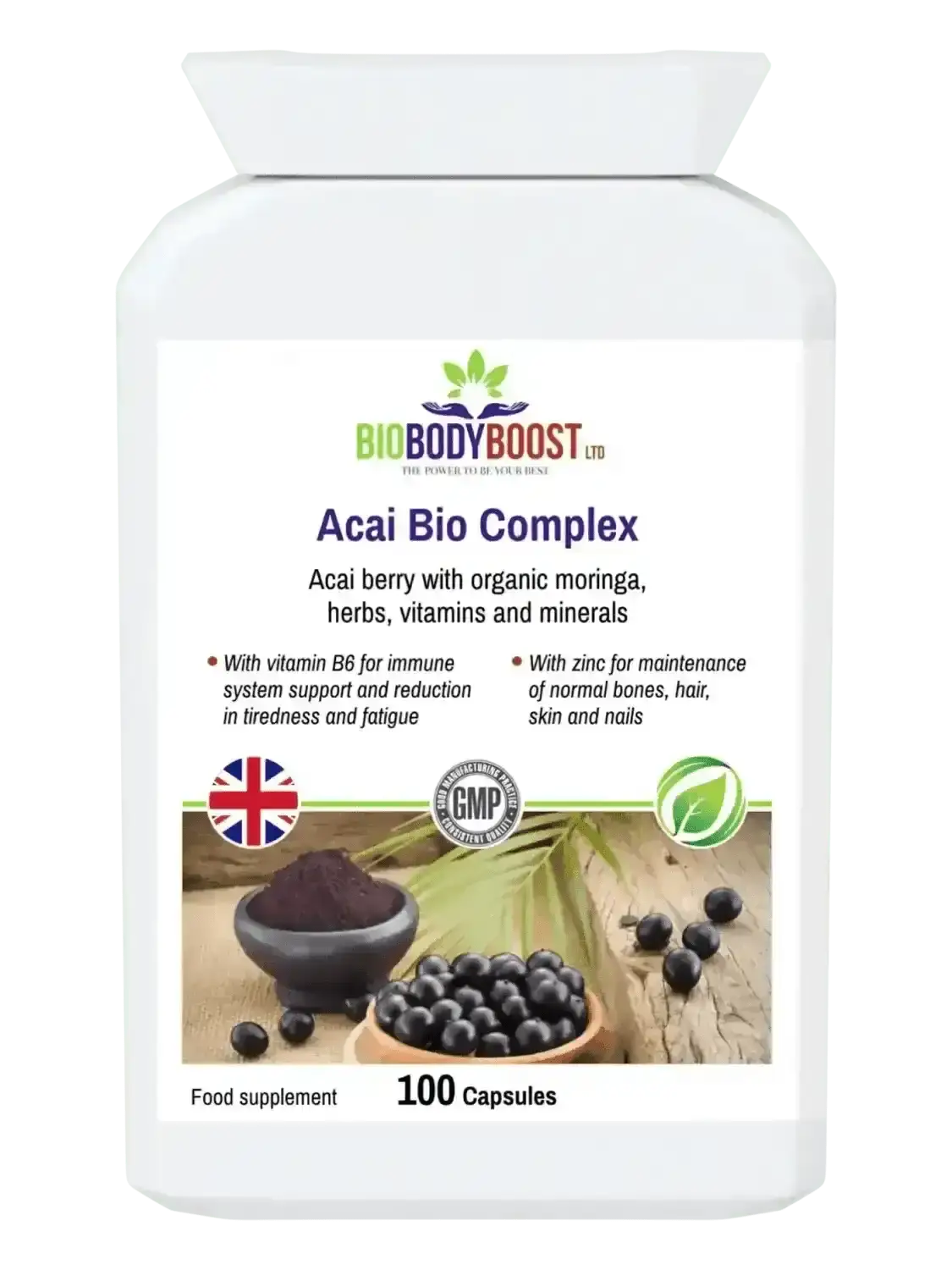
Acai has spent fifteen years as the internet's favourite superfood, which means most of what is written about it is marketing. Here is what the ingredient panel actually contains and which claims are legally permitted.
What are the proven benefits of acai berry capsules?
Acai berry itself carries no authorised health claims in the UK or EU — the permitted claims in an acai complex belong to the added vitamins and minerals, typically zinc, vitamin B6 and biotin.
That is a less exciting sentence than most acai pages offer, and it is the accurate one. Botanical ingredients cannot legally carry health claims here, however impressive the antioxidant research looks. So the honest approach is to name every botanical, then be precise about which nutrients are doing the regulator-recognised work.
The nutrients with authorised claims
- Biotin (vitamin B7) · contributes to normal energy-yielding metabolism, normal nervous system function, normal macronutrient metabolism, normal psychological function, the maintenance of normal hair and skin, and the maintenance of normal mucous membranes
- Vitamin B6 · contributes to normal energy-yielding metabolism
- Zinc · contributes to normal immune system function and the protection of cells from oxidative stress
Note which one carries the immunity claim. It is the zinc — not the acai.

The full botanical blend
Acai Bio Complex is a multi-botanical formula rather than a single-ingredient acai capsule:
- Moringa oleifera powder
- Beetroot extract · Beta vulgaris
- Acai berry extract · Euterpe oleracea Martius
- Bamboo extract · Bambusa vulgaris
- Pomegranate seed extract · Punica granatum
- Resveratrol · from Japanese knotweed, Polygonum cuspidatum
- Grape seed extract · Vitis vinifera
In a base of stoneground brown rice flour, with an HPMC capsule shell — plant-derived, no gelatine. Vegan, vegetarian, halal approved and kosher approved. Made in the UK.
Why a blend rather than acai alone
Acai was never eaten in isolation in its traditional Amazonian context — it was consumed alongside a range of forest fruits, each contributing different compounds. A multi-botanical formulation is closer to that pattern than a single 500mg acai capsule, though neither can make a health claim.
The format matters too. Acai gummies are popular but constrained by the gummy matrix: lower active doses, added sweeteners, and usually gelatine — which rules them out for halal, kosher, vegetarian and vegan diets. We cover this in our guide to whether gummy vitamins are halal.
For the wider category — how to judge acai tablet quality, what to check on any brand's label and what pack size actually costs per day — see our acai berry tablets UK guide.
How to take it
Take 1 capsule, 1 to 3 times per day, or as required. Do not exceed the recommended daily intake.
Questions we get asked
Does acai help with weight loss?
There is no authorised weight-loss claim for acai in the UK or EU, and we make none. Products marketed as acai diet pills are making claims that have not been authorised.
Is acai an antioxidant?
The only authorised oxidative-stress claim in this formula belongs to zinc — which contributes to the protection of cells from oxidative stress. Antioxidant claims for the botanicals themselves are not authorised, whatever the laboratory data suggests.
Is it vegan and halal?
Yes to both, plus kosher approved and vegetarian. The HPMC capsule shell is plant-derived. See the full Halal Vitamins UK range.
Food supplements should not be used as a substitute for a varied diet and healthy lifestyle. Consult your GP before use if pregnant, breastfeeding or taking prescription medication.