Sports nutrition is one of the harder categories to shop for on a halal diet. Protein powders, amino acids, pre-workouts and creatine all sit in an industry built around gelatine capsules, animal-derived processing aids and flavour systems that sometimes carry carmine or ethanol.
The good news is that most of the actual active ingredients are not the problem. Creatine and branched chain amino acids are manufactured synthetically or by fermentation. The problems are almost always in the delivery format and the excipients — which means a powder is usually far easier to assess than a capsule.
In sports nutrition, powders are almost always easier to verify than capsules. A powder has no shell. A capsule adds a gelatine shell by default, and gelatine with no stated source cannot be assessed at all.
Creatine
Creatine is the ingredient people most often assume must be animal-derived, because dietary creatine comes mainly from red meat. Supplemental creatine monohydrate is not extracted from meat — it is manufactured synthetically.
What to check instead:
- Powder or capsule? Powder removes the shell question entirely. Capsules may be gelatine.
- Is it flavoured? Unflavoured, single-ingredient creatine has nothing else to assess. Flavoured versions add flavourings, sweeteners and sometimes colours — each worth a look.
- Is there a stated halal approval? Plenty of creatine is halal in practice without being stated, but stated is better than assumed.
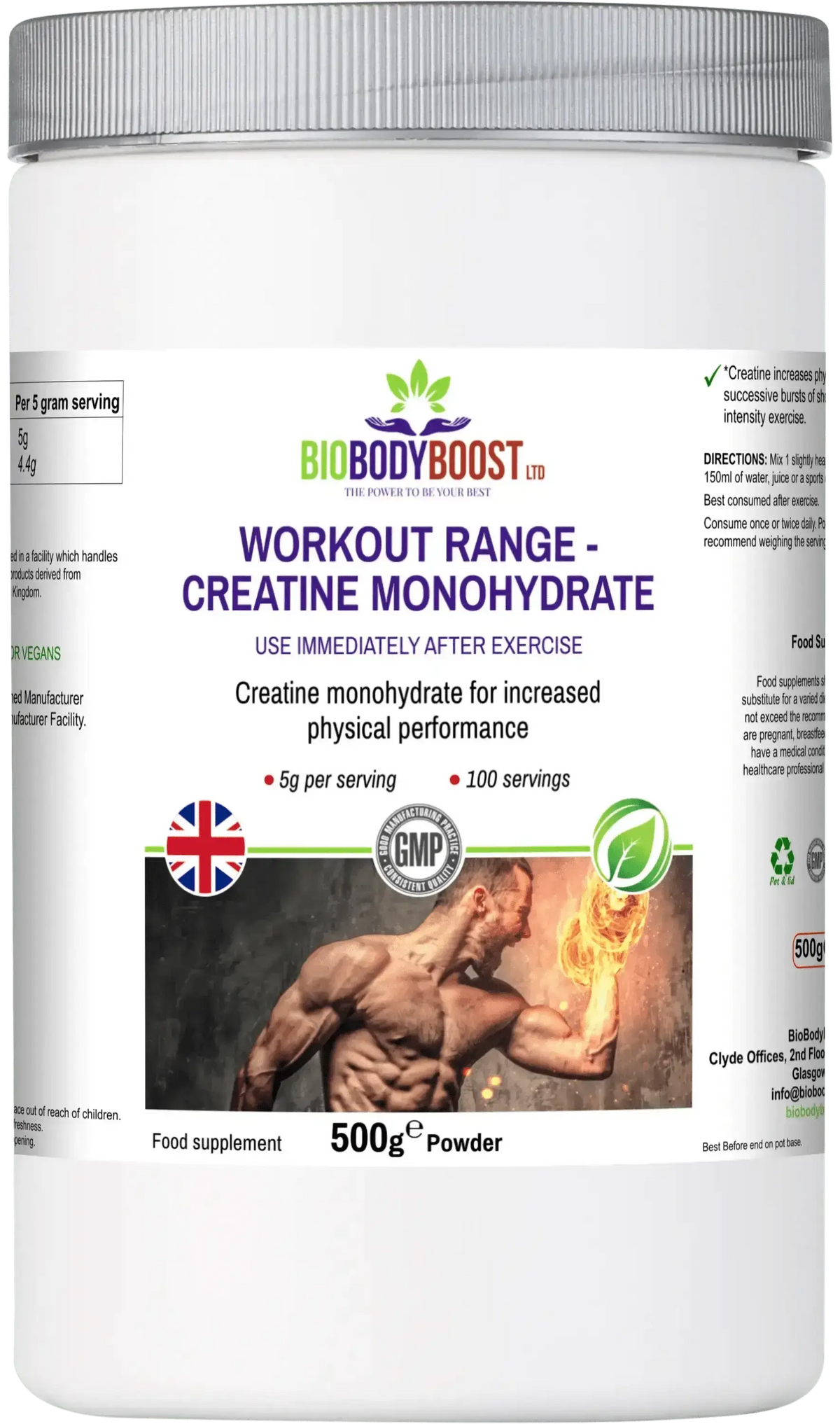
Our Creatine Monohydrate is the simplest possible case: the entire ingredient list is "creatine monohydrate powder". Nothing else. It is unflavoured, halal approved, and suitable for vegetarians and vegans. Each 5g serving provides 5g creatine monohydrate, of which 4.4g is creatine, with 100 servings in a 500g pot.

The authorised claim is carried by creatine itself: creatine increases physical performance in successive bursts of short-term, high-intensity exercise. The beneficial effect is obtained with a daily intake of 3g of creatine.
BCAAs and amino acids
Branched chain amino acids — leucine, isoleucine and valine — can be produced by bacterial fermentation or synthesis, or derived from animal sources such as duck feathers or human hair, which is why the category has a difficult reputation.
In practice, a product stating it is suitable for vegans resolves this, because a vegan amino acid cannot be animal-derived. That single line does more work than any amount of ingredient-list decoding.
What else to check on an amino acid powder:
- Sweetener and flavour system. Sucralose is synthetic and widely accepted. Colours matter: turmeric extract and beta carotene are plant-derived; carmine (E120) is insect-derived and not halal.
- Powder or capsule, for the same reason as creatine.
Our BCAA Amino Acids Drink Mix provides 5.6g of BCAAs per 8g serving in a 2:1:1 ratio — leucine 2.8g, isoleucine 1.4g, valine 1.4g — plus L-citrulline malate 0.94g, vitamin C 38mg (47% NRV) and vitamin B6 0.9mg (70% NRV). It is halal approved and suitable for vegetarians and vegans, and the natural colour is turmeric extract. There are 42 servings per 340g pot, with no caffeine and no creatine.

The authorised claims here are carried by the added vitamins, not the amino acids: vitamin B6 and vitamin C contribute to the reduction of tiredness and fatigue, normal energy-yielding metabolism, normal functioning of the nervous system and the normal function of the immune system.
Pre-workouts
Pre-workouts are the most complex products in this category, combining a dozen or more actives with a full flavour system. Three things deserve attention.
Caffeine content. Not a halal question but a safety one, and pre-workout caffeine varies enormously between brands. Check the per-serving figure, and remember many pre-workouts are dosed at multiple scoops.
Colours. Bright pre-workouts get their colour from somewhere. Beta carotene and turmeric extract are plant-derived. Carmine is not.
Beta alanine, taurine and tyrosine. Like BCAAs, these can be fermented or synthetic, and a vegan statement resolves the sourcing question.
Our Intra-Workout blend contains 40mg of caffeine per 5.5g serving — modest by pre-workout standards — alongside a nitric oxide combination (L-arginine aspartate 750mg, L-citrulline malate 750mg, beetroot nitrate 500mg, alpha lipoic acid 40mg), a creatine blend at 500mg, beta alanine 400mg, L-taurine 600mg and L-tyrosine 63mg. The natural colour is beta carotene. It is halal approved and suitable for vegetarians and vegans.
Because it contains caffeine, it is not recommended for children or for pregnant or breastfeeding women.
Protein powders
Whey protein is derived from milk, and the halal question is about rennet — the enzyme used to separate curds during cheese production, with whey as the byproduct. Microbial or vegetarian rennet is halal; animal rennet from non-zabiha slaughter generally is not. Most labels do not state which, so this is a question worth putting directly to the brand.
Plant proteins — pea, rice, soy, hemp — avoid the rennet question entirely.
A quick checklist
| Check | What you want to see |
|---|---|
| Format | Powder, or HPMC capsule shell |
| Vegan statement | Resolves aminos, gelatine and processing aids in one line |
| Halal approval | Stated on the label, not assumed |
| Colour | Turmeric or beta carotene — not carmine (E120) |
| Ethanol | Rare in powders, more common in liquids and flavour concentrates |
| Caffeine | A stated per-serving figure on anything pre-workout |
Food supplements should not be used as a substitute for a varied diet and healthy lifestyle. Do not exceed the recommended intake. If you are pregnant, breastfeeding, taking medication or under medical supervision, consult your healthcare professional before use. This article is general information about ingredient sourcing and is not medical advice. Halal rulings vary between scholars and schools of thought; where a ruling matters to you personally, consult a scholar you trust.