
Quick answer: monthly bloating and fluid retention — the kind that shows up predictably in the second half of the menstrual cycle, or around menopause as hormone levels shift — has a specific, well-understood driver: fluctuating oestrogen and progesterone alter aldosterone signalling, causing the kidneys to hold onto more sodium and water than usual. This isn't the same mechanism as sodium-driven bloating from a salty meal, which is why a generic "detox" product often doesn't touch it. A formula addressing hormonal fluid retention specifically needs magnesium, B6 and traditional diuretic botanicals working together, not one ingredient alone.
Why hormonal bloating is a different problem
Oestrogen and aldosterone both independently promote sodium and water retention. During the luteal phase of the menstrual cycle (roughly days 14-28) and during the hormonal fluctuations of perimenopause and menopause, this effect intensifies — which is why bloating during these windows can feel completely disconnected from what you've actually eaten or drunk. This is genuine physiological fluid retention, not "just bloating," and it responds to a different set of interventions than sodium-driven bloating does.
The three mechanisms that actually address it
Magnesium — regulates aldosterone sensitivity
Magnesium's role here is specific: it modulates how sensitively your kidneys respond to aldosterone, the hormone directly responsible for sodium and water retention. A randomised controlled trial found magnesium supplementation (200mg elemental daily) significantly reduced premenstrual fluid retention, weight gain and breast tenderness compared to placebo — one of the more targeted pieces of evidence in this whole category. Magnesium contributes to electrolyte balance, an EU-authorised health claim directly relevant to this mechanism.
Vitamin B6 — supports hormone metabolism
B6 works through a different route: it supports liver metabolism of oestrogen (helping clear the relative oestrogen excess that drives retention during the luteal phase) and contributes to the regulation of hormonal activity, an EU-authorised claim specifically relevant to this mechanism. Multiple trials examining premenstrual symptoms found B6 supplementation reduced bloating and breast tenderness alongside mood-related symptoms.
Traditional diuretic botanicals — gentle fluid clearance
Dandelion leaf has documented diuretic activity in human research — increasing urine output by reducing sodium reabsorption in the kidney, without the potassium depletion associated with pharmaceutical diuretics. It's traditionally combined with other mineral-rich botanicals with long histories of use in fluid and digestive preparations: nettle leaf, celery seed, juniper berry, parsley and alfalfa among them. These don't carry the same formal regulatory claim status as the vitamin and mineral components, but they're the traditional foundation this category of formula is built on.
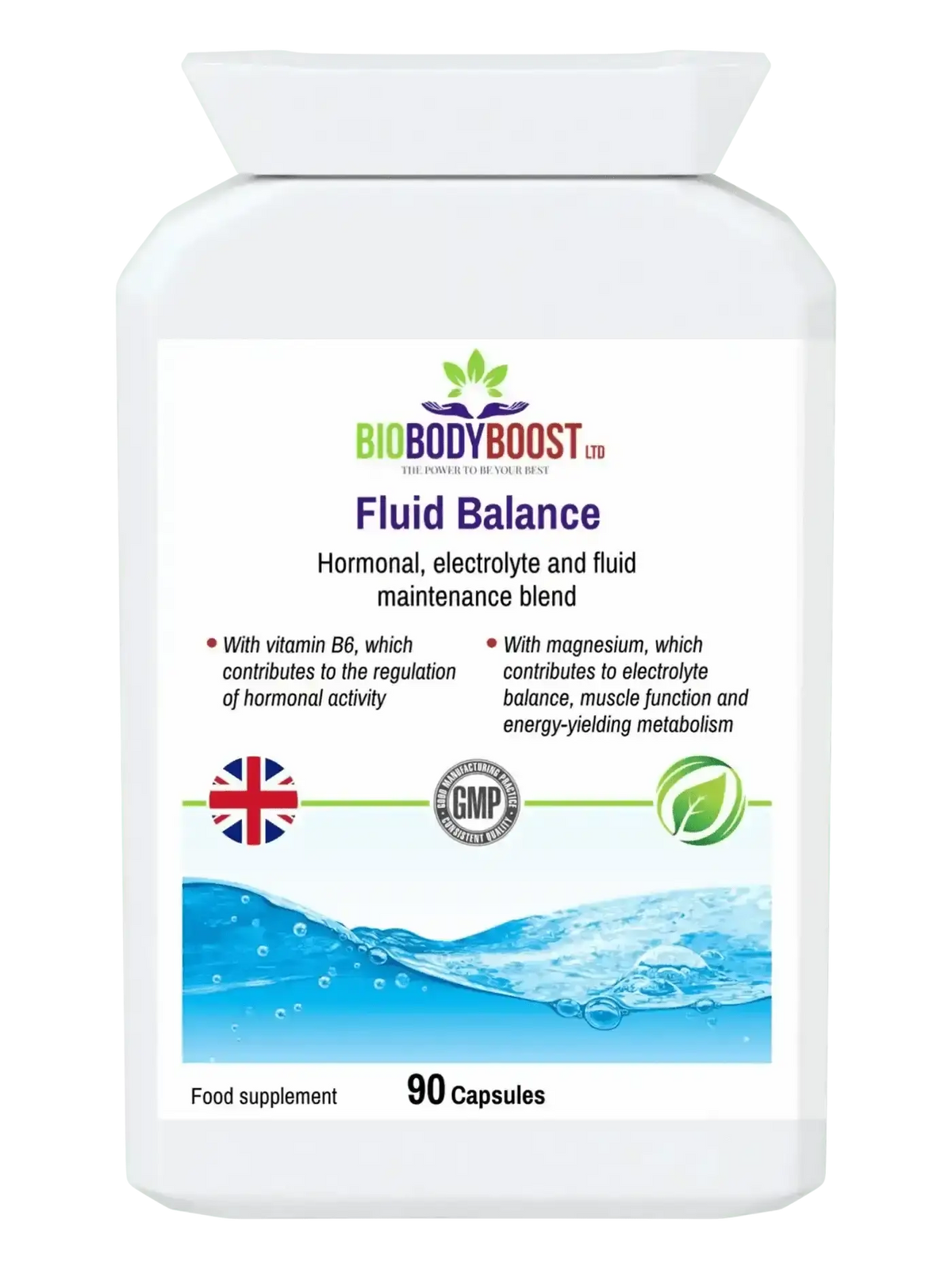
What's actually in Fluid Balance

Nine traditional botanicals alongside magnesium and B6 — the EU-authorised claims sit on the mineral and vitamin content specifically.
Fluid Balance combines dandelion root, alfalfa, juniper berry, celery seed, kelp, nettle leaf, parsley leaf, radish and watercress with magnesium (contributing to electrolyte balance) and vitamin B6 (contributing to the regulation of hormonal activity). It's worth being precise about what carries the regulated claim here: it's the magnesium and B6, not the nine herbs, which is why the formula includes both rather than botanicals alone. Halal and kosher approved, vegan, HPMC capsule.
Where this fits alongside your cycle or menopause routine
Fluid Balance addresses the bloating and fluid-retention symptom specifically. If you're also managing mood, cramping or broader hormonal symptoms across the cycle, our full PMS supplements guide covers the complete picture. For general (non-hormonal) water retention from diet, standing or travel, see our water retention guide.
Frequently Asked Questions
Why does bloating get worse before my period or during menopause?
Fluctuating oestrogen and progesterone independently affect aldosterone signalling, the hormone system that controls how much sodium and water your kidneys retain. This creates genuine physiological fluid retention during the luteal phase and perimenopause, distinct from sodium-driven bloating from diet.
Is Fluid Balance a diuretic?
It contains dandelion leaf, which has documented mild diuretic activity in human research, alongside magnesium and B6 which work through hormonal regulation mechanisms rather than direct diuretic action. It's a combination formula addressing multiple angles of hormonal fluid retention, not a single-mechanism diuretic product.
How long before I notice a difference?
Magnesium and B6's effects on hormonal fluid retention are generally observed with consistent daily use across a full cycle, since the mechanisms involve gradual regulation of hormone metabolism and receptor sensitivity rather than an immediate diuretic effect.
This article is for general information and does not constitute medical advice. Persistent, severe or sudden swelling should be assessed by a GP rather than treated with supplements alone. Consult your GP before use if pregnant, breastfeeding, or managing a thyroid, kidney or diagnosed health condition.
BioBodyBoost — Halal Certified UK Supplements
Use code HALAL10 for 10% off your first order — halal approved under UHA Certificate Ref. 24623, vegan, UK made. Shop Women's Wellness UK →