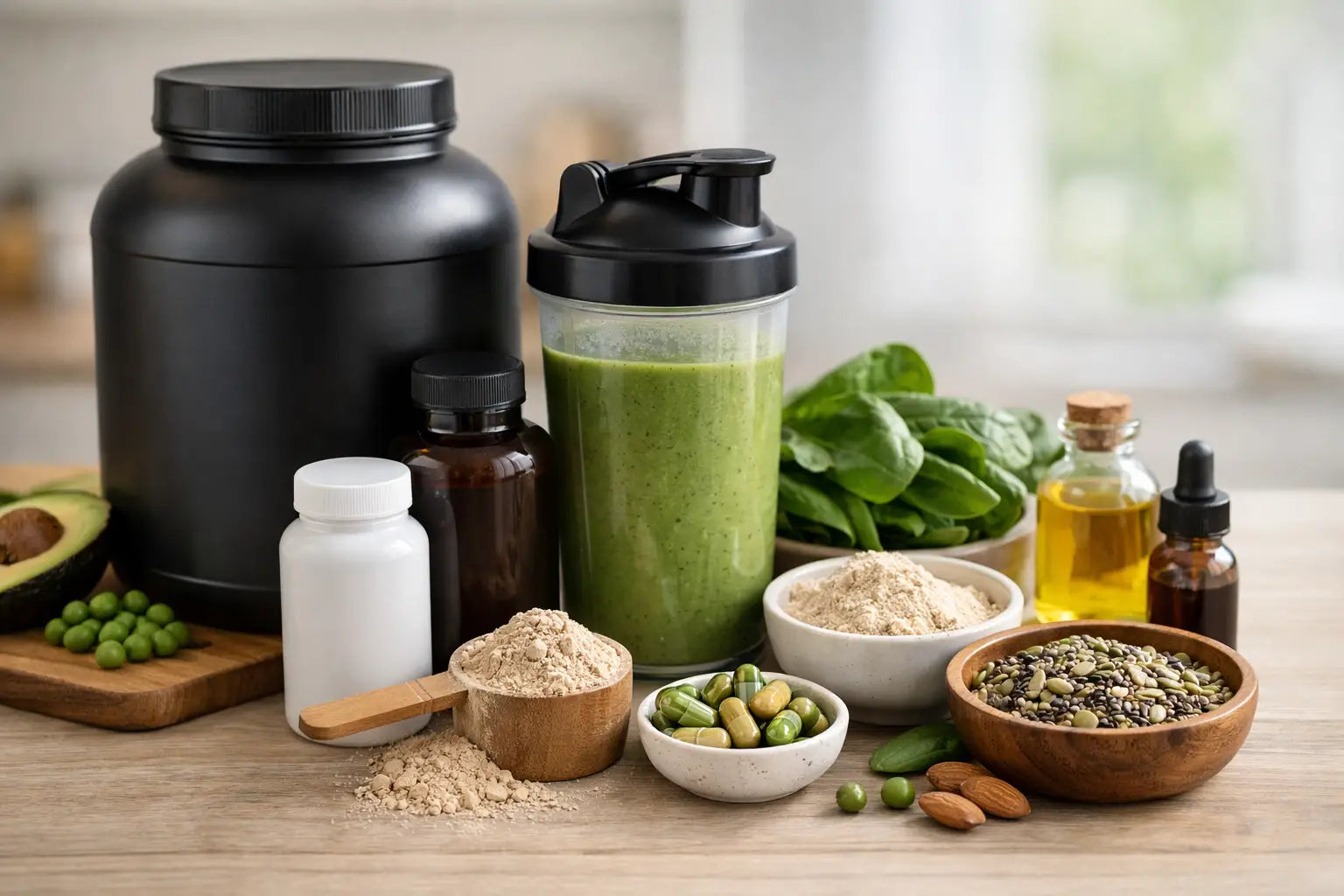
The difference between bouncing back well and dragging through your next session often comes down to what happens after training, not during it. A smart example vegan recovery supplement stack is not about throwing five powders into a shaker and hoping for the best. It is about supporting muscle repair, hydration, inflammation balance and energy restoration with plant-based options that actually fit your routine.
For most people, recovery starts with the basics. You train, you create stress, and your body adapts if you give it enough protein, fluids, electrolytes, rest and total calories. Supplements sit on top of that foundation. When they are chosen well, they make recovery more consistent, especially if you train several times a week, juggle work and family life, or struggle to hit targets from food alone.
What a vegan recovery stack needs to do
A useful recovery stack should solve real problems. That usually means helping with muscle soreness, supporting protein intake, restoring what you have lost through sweat, and keeping energy levels steady enough for the next session. If your legs still feel flat two days later, or you are always stiff, under-fuelled or depleted, the issue is often not motivation. It is recovery capacity.
Vegan formulas can work extremely well here, but the details matter. Plant-based eaters sometimes need to pay closer attention to total protein, leucine content, omega-3 intake, creatine stores, and minerals lost during hard training. That does not mean vegan recovery is harder. It means it benefits from a bit more structure.
An example vegan recovery supplement stack that makes sense
The most practical example vegan recovery supplement stack has four core pieces: a quality plant protein, creatine monohydrate, an electrolyte formula, and an omega-3 sourced from algae. Depending on training load, sleep, and how hard you push, magnesium and a targeted anti-inflammatory botanical or tart cherry blend can also earn a place.
1. Plant protein for muscle repair
Protein is the anchor. After resistance training or demanding cardio, your muscles need enough amino acids to repair and adapt. A vegan protein blend is often more effective than relying on a single source because combining pea, rice, pumpkin or other plant proteins can improve the amino acid profile.
The key point is not just grams of protein, but whether the serving gives you enough leucine to switch on muscle protein synthesis. In practical terms, many adults do well with around 25 to 35 grams of plant protein after training, depending on body size and total daily intake. If you are training hard, older, or in a calorie deficit, aiming at the higher end usually makes more sense.
A clean-label formula matters too. If a protein leaves you bloated, gassy or reluctant to use it daily, it is not supporting recovery. Look for vegan blends that are third-party tested and straightforward on ingredients, without unnecessary fillers that create gut disruption.
2. Creatine for strength, power and recovery capacity
Creatine deserves more attention in plant-based nutrition because vegans often start with lower muscle creatine stores than omnivores. That can make supplementation especially worthwhile. While creatine is often framed as a performance supplement, it also supports training quality over time, which feeds directly into better recovery and adaptation.
A standard daily dose of 3 to 5 grams of creatine monohydrate is enough for most people. You do not need complicated loading phases unless you want faster saturation. The main win is consistency. It supports repeated high-intensity output, can help with strength progression, and may reduce the sense of hitting a wall when training volume climbs.
If your recovery issue is not just soreness but feeling weak and flat in the next session, creatine is one of the most evidence-backed additions you can make.
3. Electrolytes for hydration and less post-training slump
Hydration is often treated like an afterthought until headaches, cramps or heavy fatigue show up. Water helps, but if you sweat heavily, especially in warm gyms, classes or endurance sessions, electrolytes can make the difference between rehydrating properly and simply washing through fluid.
Sodium does the heavy lifting here, with potassium and magnesium playing supporting roles. A vegan electrolyte formula can be especially useful after longer sessions, back-to-back training days, or any workout where you finish drenched and drained. If you only do light activity, plain food and water may cover it. If your sessions are intense, hydration support becomes far more important.
This is where context matters. Someone doing three short strength sessions a week will not need the same recovery support as someone mixing running, lifting and high-output classes. The stack should reflect the workload.
4. Algae omega-3 for inflammation balance
Recovery is not about stopping inflammation completely. Some inflammation is part of the adaptation process. The goal is balance - enough response to recover and improve, not so much that soreness and stiffness drag on longer than necessary.
That is where omega-3s can help. For vegans, algae-based DHA and EPA are the cleanest fit. They support cell membrane health and can be useful for people dealing with regular training stress, joint discomfort or a general feeling of being inflamed after hard sessions.
Not everyone notices an instant effect, and this is not the flashiest supplement in the stack. It is more of a long-game addition that supports recovery quality over weeks and months.
Useful add-ons if recovery still feels poor
Magnesium for muscle relaxation and sleep quality
If your issue is tight muscles, poor sleep or feeling wired at night after evening training, magnesium can help. It is not a miracle fix, but it can support relaxation, normal muscle function and better recovery rhythm. This is especially relevant if your diet is inconsistent or your stress levels are high.
The best use case is simple: you train, your body is tired, but your nervous system never seems to switch off. In that situation, magnesium may offer more value than another performance powder.
Tart cherry or botanicals for soreness
If delayed onset muscle soreness is your main problem, tart cherry can be worth considering. Some people find it helps reduce the severity of post-exercise soreness, particularly during blocks of higher training volume. Certain botanical blends may also support inflammation balance, but this is where quality becomes critical. Research-backed dosing and third-party testing matter far more than trendy labels.
That said, if soreness is extreme after every session, the first question should be whether your programme, sleep or calorie intake is off. Supplements can support recovery, but they cannot rescue poor training decisions every time.
How to build the right example vegan recovery supplement stack for you
The best example vegan recovery supplement stack is not always the biggest one. If your training is moderate and your diet is solid, a plant protein and creatine may cover most of what you need. If you sweat heavily and struggle with post-session fatigue, electrolytes become a priority. If joint stiffness and lingering soreness are common, omega-3s and targeted recovery support may add more value.
Busy professionals often need convenience above all. In that case, choose products you will actually use without turning recovery into admin. A simple shake after training, daily creatine, and an electrolyte drink on harder days is realistic. For regular gym-goers pushing for strength or body composition goals, the stack may need to be tighter and more consistent.
There is also the digestion factor. Clean recovery should feel clean. If a supplement causes bloating, nausea or gut discomfort, it is working against the result you want. Better absorption and no gut disruption are not just nice extras. They are central to daily compliance.
Common mistakes with vegan recovery
One of the biggest mistakes is overfocusing on supplements while under-eating overall. If your calorie intake is too low, recovery slows down fast. Another is assuming all vegan protein is equal. Amino acid quality, digestibility and serving size matter.
People also tend to ignore timing more than they should. You do not need second-by-second precision, but leaving recovery nutrition for hours after training is rarely ideal, especially if you train again the next day. And finally, there is the temptation to stack too much at once. If you add six products together, you will not know what is helping.
A smarter approach is to build in layers. Start with protein. Add creatine. Bring in electrolytes if sweat losses are high. Then assess whether omega-3s, magnesium or tart cherry fill a genuine gap.
What good recovery should feel like
Good recovery is not zero soreness and endless energy. It is being ready to train again without that heavy, depleted feeling. It is waking up with less stiffness, moving better through the day, and not feeling like every session sets you back for 48 hours.
That is the real value of a well-built stack. It supports your baseline so progress feels sustainable. For a brand like BioBodyBoost, that clean, research-backed approach is the whole point - simple daily upgrades that help you perform, recover and keep going.
If your current routine leaves you achy, flat and inconsistent, do not start by chasing exotic fixes. Build a recovery stack that covers the fundamentals, use it consistently, and let your results come from better support rather than more noise.