Key takeaways
- Diabetes can damage the small blood vessels at the back of the eye. This is called diabetic retinopathy.
- It often has no symptoms early on, which is why screening matters.
- The NHS invites everyone with diabetes aged 12 and over to regular eye screening.
- Keeping blood sugar, blood pressure and cholesterol in range is the best protection. No supplement replaces that.
In this guide
What diabetic retinopathy is
The retina is the light-sensitive layer at the back of your eye. High blood sugar over time can damage its tiny blood vessels, causing them to leak or become blocked.
Early on, you usually won't notice anything. Left untreated, it can lead to sight loss. Caught early, treatment can help prevent that (NHS).
What NHS diabetic eye screening checks
| Diabetic eye screening | Routine eye test | |
|---|---|---|
| Who | Everyone with diabetes aged 12+ | Everyone |
| What it looks for | Diabetic changes in the retina | Vision, glasses prescription and general eye health |
| How | Photos of the back of the eye | Optometrist examination |
| Replaces the other? | No | No |
Keep both: you still need regular eye tests with an optometrist, even if you go to diabetic eye screening. People with diabetes are entitled to free NHS eye tests.
What happens at the appointment
- Eye drops widen your pupils. They may sting briefly.
- After about 15 to 20 minutes, photos are taken of the back of each eye.
- The photos are checked, and you get results by letter, usually within a few weeks.
Don't drive afterwards. The drops can blur your vision for several hours. Bring sunglasses and arrange a lift or public transport. If you notice sudden vision changes at any time, don't wait for your next screening: contact your GP, optometrist or NHS 111.
Why it matters for South Asian families
People of South Asian heritage in the UK are more likely to develop type 2 diabetes, and often at a younger age. That means more years living with diabetes, and more reason to attend every screening.
If diabetes runs in your family, ask your GP about a check. Our South Asian diabetes prevention guide covers everyday steps.
How to protect your eyes with diabetes
- Go to every screening, even if your sight seems fine
- Keep blood sugar in your target range, as agreed with your diabetes team
- Look after your blood pressure and cholesterol
- Don't smoke
- Eat a varied diet with plenty of vegetables, including leafy greens


Halal & kosher approved · vegan
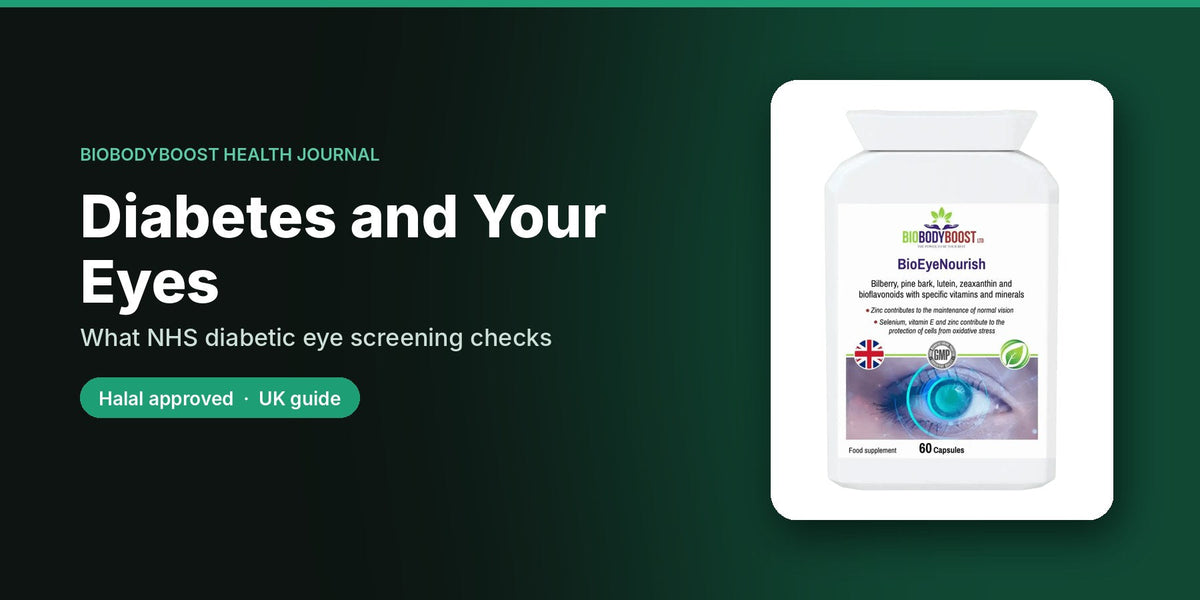
BioEyeNourish
- Lutein and zeaxanthin with bilberry and pine bark
- Zinc contributes to the maintenance of normal vision
- Selenium and vitamin E contribute to the protection of cells from oxidative stress
HALAL10 10% off your first order
Shop BioEyeNourish →If you have diabetes or take medication, check with your GP or pharmacist before starting any supplement.
Questions people ask
How often is diabetic eye screening?
Usually every one or two years, depending on your previous results. Your local screening service will tell you.
Is diabetic eye screening the same as an eye test?
No. Screening looks specifically for diabetic changes. You still need regular eye tests too.
Does diabetic eye screening hurt?
No. The drops may sting for a moment, and the camera flash is bright, but nothing touches your eye.
Can I drive after diabetic eye screening?
No. The drops blur your vision for several hours.
Can supplements prevent diabetic retinopathy?
No supplement has been shown to prevent it. Managing blood sugar, blood pressure and cholesterol, and attending screening, are what matter.
Sources: NHS: diabetic retinopathy · NHS: diabetic eye screening · GB NHC register
This article is general information, not medical advice. Follow the advice of your diabetes team. Food supplements should not replace a varied, balanced diet and healthy lifestyle.