
Quick answer: vitamin C gets most of the attention in collagen conversations, but copper, zinc and silica each play a distinct, evidenced role in how your body builds and maintains connective tissue, hair and nail structure — and a supplement supplying collagen peptides without these minerals is missing a genuinely different set of mechanisms than the vitamin C gap alone. Copper specifically enables the cross-linking step that turns newly synthesised collagen into strong, stable fibres.
Copper: the cross-linking enzyme cofactor
Once collagen molecules are synthesised (the step vitamin C supports), they still need to be cross-linked together into stable, load-bearing fibres. This cross-linking is carried out by the enzyme lysyl oxidase, which requires copper as its essential cofactor. Without adequate copper, lysyl oxidase activity is impaired, and newly made collagen remains under-cross-linked — structurally present but mechanically weaker and less resistant to breakdown than properly matured collagen fibres.
Copper carries an EU-authorised health claim for contributing to normal connective tissue maintenance, directly reflecting this cross-linking function. It's a genuinely separate mechanism from vitamin C's role — vitamin C enables the synthesis step, copper enables the maturation step that follows it. A formula addressing only one of these two mineral/vitamin cofactors is still leaving a gap in the overall collagen-building pathway.
Zinc: structural maintenance across skin, hair and nails
Zinc carries an EU-authorised claim for contributing to the maintenance of normal hair, skin and nails specifically — one of the more directly relevant claims in this entire category, since it names all three tissues the "hair, skin and nails" supplement trend is built around. Zinc is involved in numerous enzymatic processes relevant to cell division and protein synthesis broadly, including the keratinocyte and follicle activity relevant to hair growth and nail formation.
Silica: the overlooked structural mineral
Silicon (commonly supplied as bamboo-derived silica, since bamboo is the richest natural plant source) doesn't carry an EU-authorised health claim in the same way vitamin C, copper and zinc do, but it has a genuine, evidenced structural role: silicon is involved in the cross-linking and stabilisation of connective tissue, and some research has associated silicon intake with collagen content and bone matrix quality. It's also directly relevant to keratin — the structural protein that makes up the majority of hair and nail material — where it's theorised to contribute to structural integrity, though this evidence base is less extensively developed than the vitamin C and copper mechanisms.
Silica is one of the more commonly omitted ingredients in collagen formulas generally, likely because it lacks the same formal EFSA claim status as the mineral cofactors, even though its structural relevance to hair and nails specifically is well recognised in the wider research literature on connective tissue.
Why these three rarely appear together
Copper, zinc and silica each address a genuinely different part of the collagen-and-keratin picture — cross-linking, general tissue maintenance, and structural stabilisation respectively — rather than three versions of the same claim. Including all three, at declared doses, requires a formula built around the full pathway rather than a single headline ingredient, which is part of why this combination is less common than single-ingredient collagen or vitamin-C-only formulas.
Where these fit in a complete formula

Copper (0.5mg), zinc (5mg) and bamboo silica alongside the collagen and vitamin C — the cross-linking and structural layer most formulas skip.
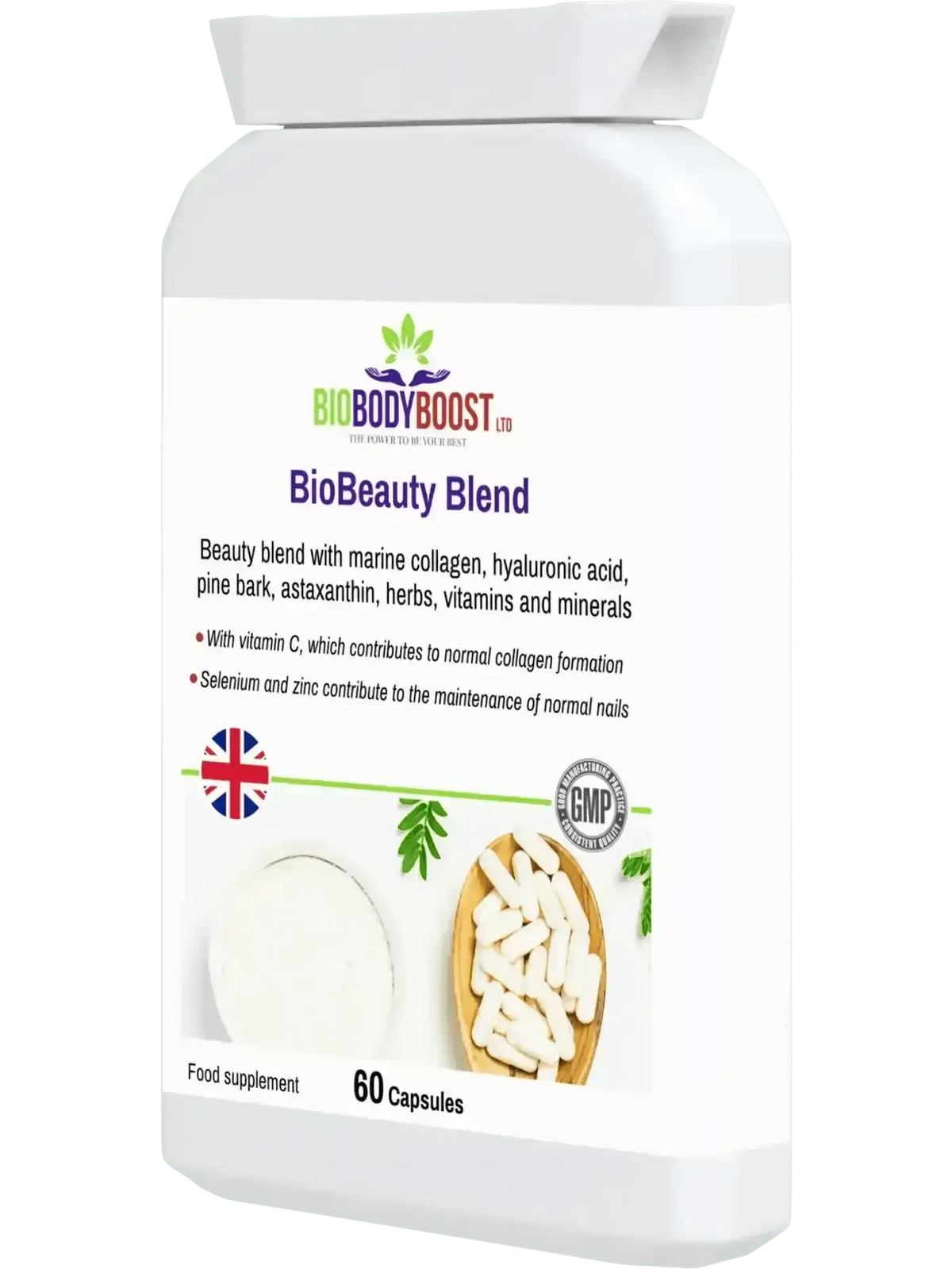
Our BioBeauty Blend provides copper (0.5mg, 50% NRV), zinc (5mg, 50% NRV) and bamboo silica alongside 400mg Peptan® Type I marine collagen and 40mg vitamin C — the fuller cofactor stack across synthesis, cross-linking and structural maintenance. See our companion piece on vitamin C's role in collagen synthesis and the full synthesis vs supply guide.
Frequently Asked Questions
What does copper do for collagen specifically?
Copper is the essential cofactor for lysyl oxidase, the enzyme that cross-links newly synthesised collagen molecules into stable, mechanically strong fibres. Without adequate copper, collagen can be synthesised but remains under-cross-linked and structurally weaker. Copper carries an EU-authorised claim for normal connective tissue maintenance reflecting this role.
Is silica actually proven to help hair and nails?
The evidence for silicon's structural role in connective tissue and keratin is genuine but less extensively developed than the vitamin C and copper mechanisms, and it doesn't carry a formal EU-authorised health claim in the same way. It's included in well-formulated products for its plausible structural relevance to hair and nail keratin, though this should be understood as a supporting rather than headline mechanism.
Do I need copper, zinc and vitamin C all at once, or does one matter more?
They address different steps in the same overall pathway rather than competing with each other — vitamin C for synthesis, copper for cross-linking, zinc for broader tissue maintenance. A formula providing all three alongside collagen addresses more of the pathway than one providing only a single cofactor.
This article is for general information and does not constitute medical advice. Speak to a healthcare professional before starting any new supplement, particularly if pregnant, breastfeeding, or managing a diagnosed health condition.
BioBodyBoost — Halal Certified UK Supplements
Use code HALAL10 for 10% off your first order — halal approved under UHA Certificate Ref. 24623, UK made. Shop Hair, Skin & Beauty UK →