Key takeaways
- Constipation, tummy pain and dark poo are common side effects of iron tablets, according to the NHS.
- Don't stop prescribed iron without speaking to your GP or pharmacist.
- Fluid, fibre and movement help, and your GP may be able to change the dose, timing or type.
- Keep magnesium, antacids and calcium at least 2 hours apart from iron, as they can reduce how much iron you absorb.
In this guide
Why iron tablets cause constipation
Iron tablets are often prescribed for iron deficiency anaemia, especially for women with heavy periods and during pregnancy.
Not all the iron in a tablet is absorbed. The rest passes through the gut, where it can irritate the lining and slow things down. The NHS lists constipation, tummy pain, diarrhoea, heartburn and black poo as possible side effects.
Practical steps that help
| Step | Why it helps |
|---|---|
| Drink more water | Keeps stools softer |
| Eat more fibre | Fruit, vegetables, pulses, oats and wholegrains add bulk |
| Move every day | Walking helps the bowel work |
| Don't ignore the urge | Holding it in makes stools harder |
| Try prunes or kiwi | Popular, food-based options many people find helpful |
Our guide to fibre for constipation has more food ideas.
Questions to ask your GP or pharmacist
- Can I take it with food? This may make it easier to tolerate, though it can reduce absorption a little.
- Could I take it less often? Some people are advised to take iron every other day.
- Is there a different type? There are several iron salts and formulations.
- Can I take something for the constipation? Your pharmacist can suggest a suitable laxative if needed.
Pregnant? Talk to your midwife or GP before changing your iron or taking anything for constipation. And always keep iron tablets out of children's reach: iron overdose is dangerous for children.
The timing mistake to avoid
Some common supplements and medicines make it harder for your body to absorb iron if you take them at the same time:
- Antacids and magnesium (including magnesium-based bowel products)
- Calcium supplements, and large amounts of milk
- Tea and coffee
The simple rule: leave at least 2 hours between iron and these products, and check the patient leaflet. On the other hand, vitamin C increases iron absorption, so many people take iron with a glass of orange juice or a vitamin C-rich meal.


Herb-free · halal & kosher approved · vegan
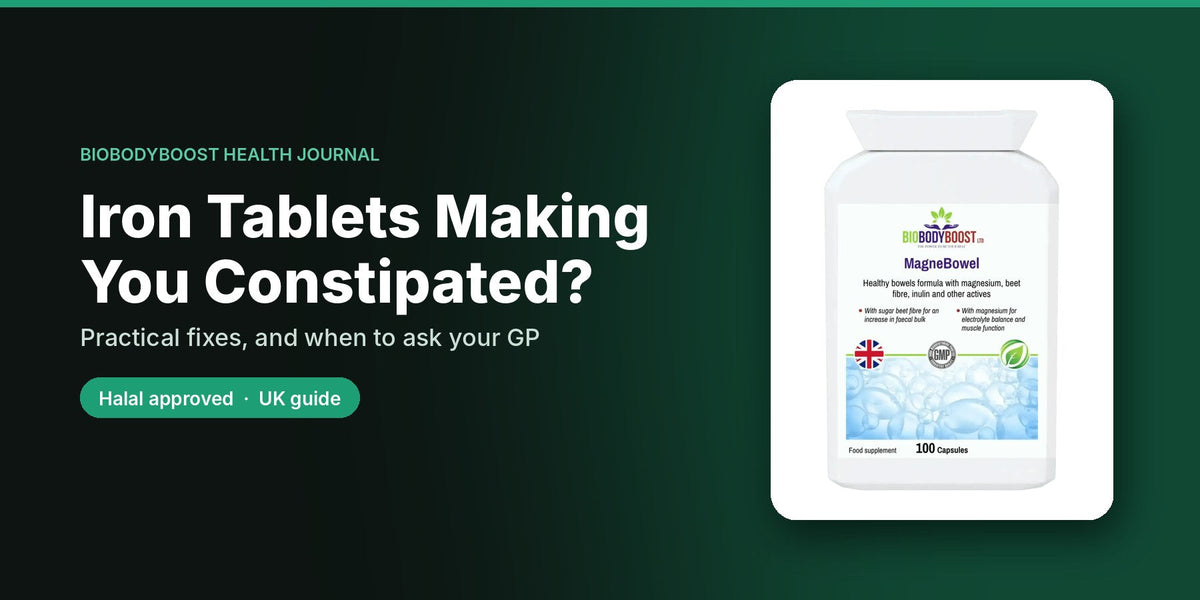
MagneBowel
- 498mg magnesium per serving from four sources
- Sugar beet fibre contributes to an increase in faecal bulk
- Take at a different time of day from iron tablets
HALAL10 10% off your first order
Shop MagneBowel →Ask your pharmacist before combining with prescribed iron or other medicines. Don't use if you have kidney disease. Not for use in pregnancy without medical advice.
Questions people ask
Do all iron tablets cause constipation?
Not everyone gets it, but it's one of the most common side effects. Different types and doses can affect people differently.
Is black poo normal on iron tablets?
Dark or black poo is a common, harmless effect of iron. But if it's tarry and sticky, or you feel unwell, contact your GP.
Can I stop my iron tablets if I'm constipated?
Speak to your GP or pharmacist first. They can often adjust things so you can keep taking it.
When is the best time to take iron?
Follow your GP's advice and the patient leaflet. Many people take it with vitamin C and away from tea, coffee, milk and antacids.
Do iron-rich foods cause constipation?
Iron from food is much less likely to cause constipation than tablets.
Sources: NHS: iron deficiency anaemia treatment · NHS: constipation · GB NHC register
This article is general information, not medical advice. Don't change prescribed medication without speaking to your GP or pharmacist. Food supplements should not replace a varied, balanced diet and healthy lifestyle.