"Clean protein powder" gets searched thousands of times a month in the UK, and the results are a mess — because "clean" has no legal definition, so every brand claims it. Here's a working definition you can actually check on a label in 30 seconds, and how the market's options measure against it.
The 30-Second Clean Label Test
- Count the ingredients. A clean protein needs: the protein, a flavour, a sweetener, maybe a natural stabiliser. That's 4–6 ingredients. Mainstream tubs regularly hit 15–25.
- Check the sweetener. The hierarchy, cleanest first: unflavoured (none) → stevia/thaumatin → sucralose and acesulfame-K (the pair found in most mainstream tubs) → sweetener blends plus added sugars.
- Scan for the padding: thickening gum stacks (xanthan + guar + carrageenan together), "flavouring" listed multiple times, added creamers and vegetable oils, colourings, and proprietary "enzyme blends" used as label decoration.
- Protein percentage. Divide protein per serving by serving size. Above ~75% for whey concentrate and ~70% for plant blends is honest; below 60% means you're buying filler.

The Cleanest Options by Category
Cleanest whey
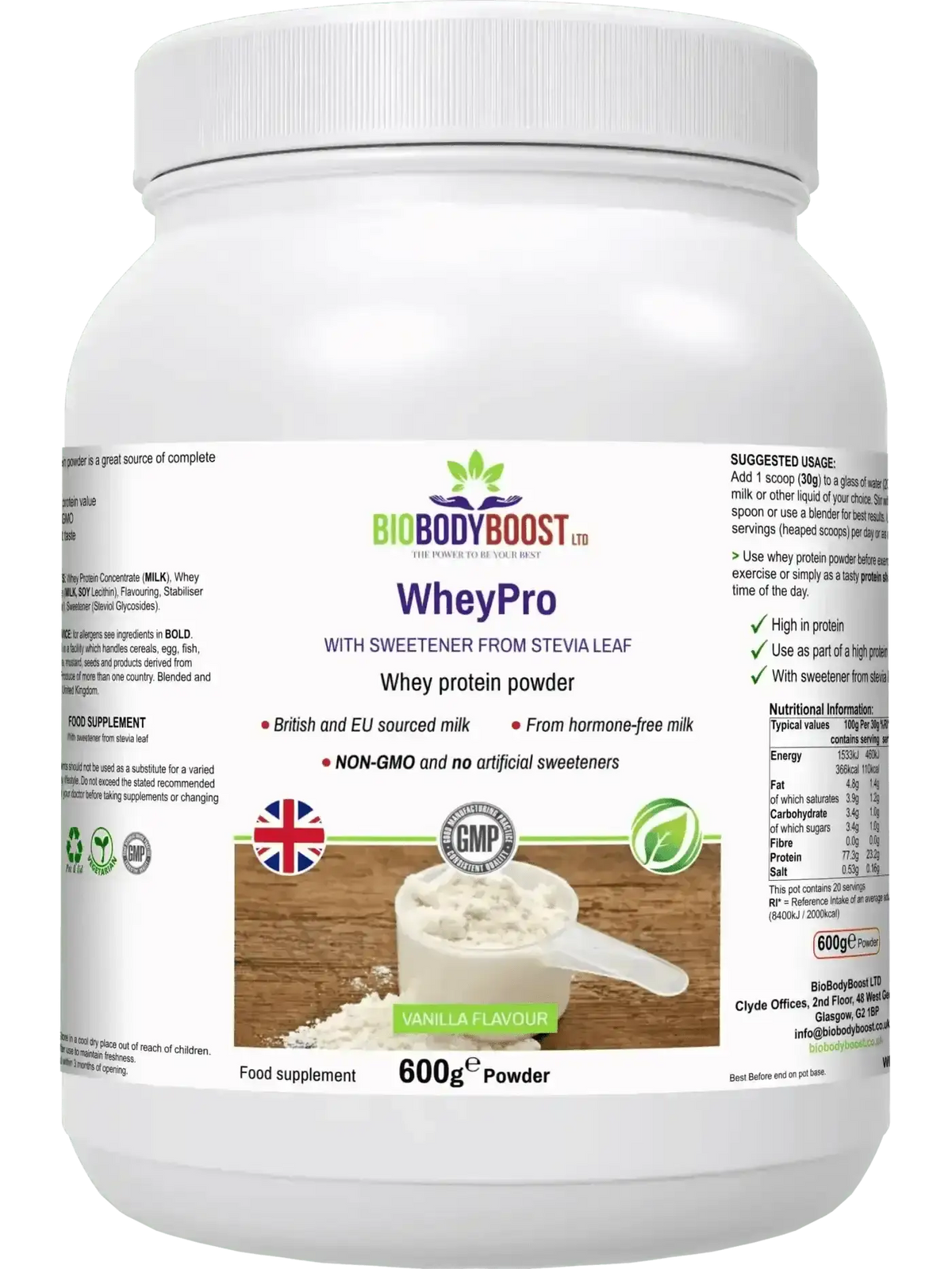
WheyPro Vanilla (and Chocolate) is built to pass the test above: 23.6g protein per serving, a short label with no sweetener-pair stack, no thickening-gum cocktail, no added oils — and halal certified, which almost no "clean" whey on the UK market is. Whey sourcing and halal status is its own minefield; we've mapped it in Is Whey Protein Halal?.
Cleanest plant proteins
Single-source plant proteins are structurally the cleanest category — the protein is the ingredient list:
- PeaPro — hexane-free pea protein, no artificial sweeteners
- RicePro — hexane-free brown rice, the hypoallergenic pick (full guide)
- HyperHemp — hemp with naturally occurring fibre and omega fats
"Hexane-free" matters here: some isolates are solvent-extracted with petroleum-derived hexane; water and enzymatic processing is the clean route.
Honest Caveats — Because Clean Cuts Both Ways
- Sucralose isn't poison. UK/EU-approved sweeteners have large safety margins. Choosing to avoid them is a preference about ingredient minimalism — a legitimate one — not an emergency.
- Unflavoured means unflavoured. The cleanest possible powders taste like their source. Lightly stevia-sweetened is the practical middle ground most people stick with.
- Clean ≠ complete nutrition. A short label is a protein decision; overall diet still does the heavy lifting.
Clean Protein Buyer's Checklist
- ≤ 8 ingredients
- No sucralose/ace-K pair (unless you've decided you're fine with it)
- No gum stack, added oils or colourings
- Protein % above 70
- Named protein source and, if it matters to you, halal certification and hexane-free processing
Deeper label-reading skills: how to spot clean ingredients fast.
FAQs
What is the cleanest protein powder in the UK?
Structurally: an unflavoured single-source protein (pea, rice or plain whey) — the label is one ingredient. Among flavoured options, judge by the checklist above rather than any brand's "clean" badge.
Is whey or plant protein cleaner?
Neither inherently — a 5-ingredient whey beats a 20-ingredient vegan blend. Plant single-sources are the easiest place to find short labels; the comparison beyond cleanliness is in pea vs whey.
Which sweeteners should I avoid in protein powder?
"Avoid" is strong — all approved sweeteners passed safety review. For minimalists the ranking is: none, then stevia, then single artificial sweeteners, then multi-sweetener blends with added sugar.
Why do protein powders contain gums?
Texture — gums fake milkshake thickness cheaply. One stabiliser is normal; three stacked gums usually signals a formula compensating for low protein content.
Browse the full Protein & Performance UK collection.
Food supplements should not replace a varied diet. WheyPro contains milk. Consult your GP if pregnant, breastfeeding or managing a medical condition.