Every UK protein guide compares whey and pea, and stops there. But there's a third option that solves a problem neither can: brown rice protein is naturally free of dairy, soy AND legumes — making it the go-to for the surprisingly large group of people who bloat on whey and react to pea. Here's what it offers, where it genuinely falls short, and how to use it well.
Who Rice Protein Is Actually For
- Pea protein reactors. Pea is a legume; people with legume sensitivity (common alongside IBS) often get gas and bloating from it. Rice is a grain — different protein family entirely.
- Dairy-free lifters who've already ruled out whey.
- Soy avoiders — many vegan blends lean on soy; rice needs none.
- Sensitive stomachs generally. Rice protein is widely regarded as one of the most hypoallergenic proteins available.

The Amino Acid Question — Answered Honestly
Rice protein contains all nine essential amino acids, so calling it "incomplete" is technically wrong. What's true is that it is relatively low in lysine compared with animal proteins, and its leucine content per gram is below whey's. Two honest responses:
1. Eat a normal diet. Lysine is abundant in legumes, so beans, lentils or hummus anywhere in your day plug the gap — the classic grain-plus-legume pairing that traditional diets stumbled onto centuries ago. If you tolerate pea protein fine and just want variety, blending rice and pea produces an amino profile very close to whey.
2. Mind the total dose. A frequently cited 2013 study (Joy et al., Nutrition Journal) compared 48g of rice protein against 48g of whey after resistance training over 8 weeks and found no significant difference in muscle gain or strength. The catch: 48g is a big serving. At larger doses, rice protein's leucine total crosses the threshold that matters for muscle protein synthesis.
Rice vs Pea vs Whey at a Glance
- Whey — highest leucine, fastest absorption, but dairy; check halal certification of the source. See our halal whey guide.
- Pea — strong amino profile, cheap, but a legume; some react. Full guide: Pea Protein UK.
- Rice — most hypoallergenic, grain-based, lighter texture; pair with legume foods or take a fuller serving.
- Hemp — adds fibre and omega fats but lower protein percentage. Guide: Hemp Protein UK.
What "Hexane-Free" Means and Why It Matters
Some protein isolates are extracted using hexane, a petroleum-derived solvent. Hexane-free rice protein is processed by enzymatic and water-based methods instead. Residual solvent levels in finished products are regulated and low either way — but if you're buying a plant protein specifically to keep things clean and minimal, solvent-free processing is consistent with the reason you're here.
Our Formula
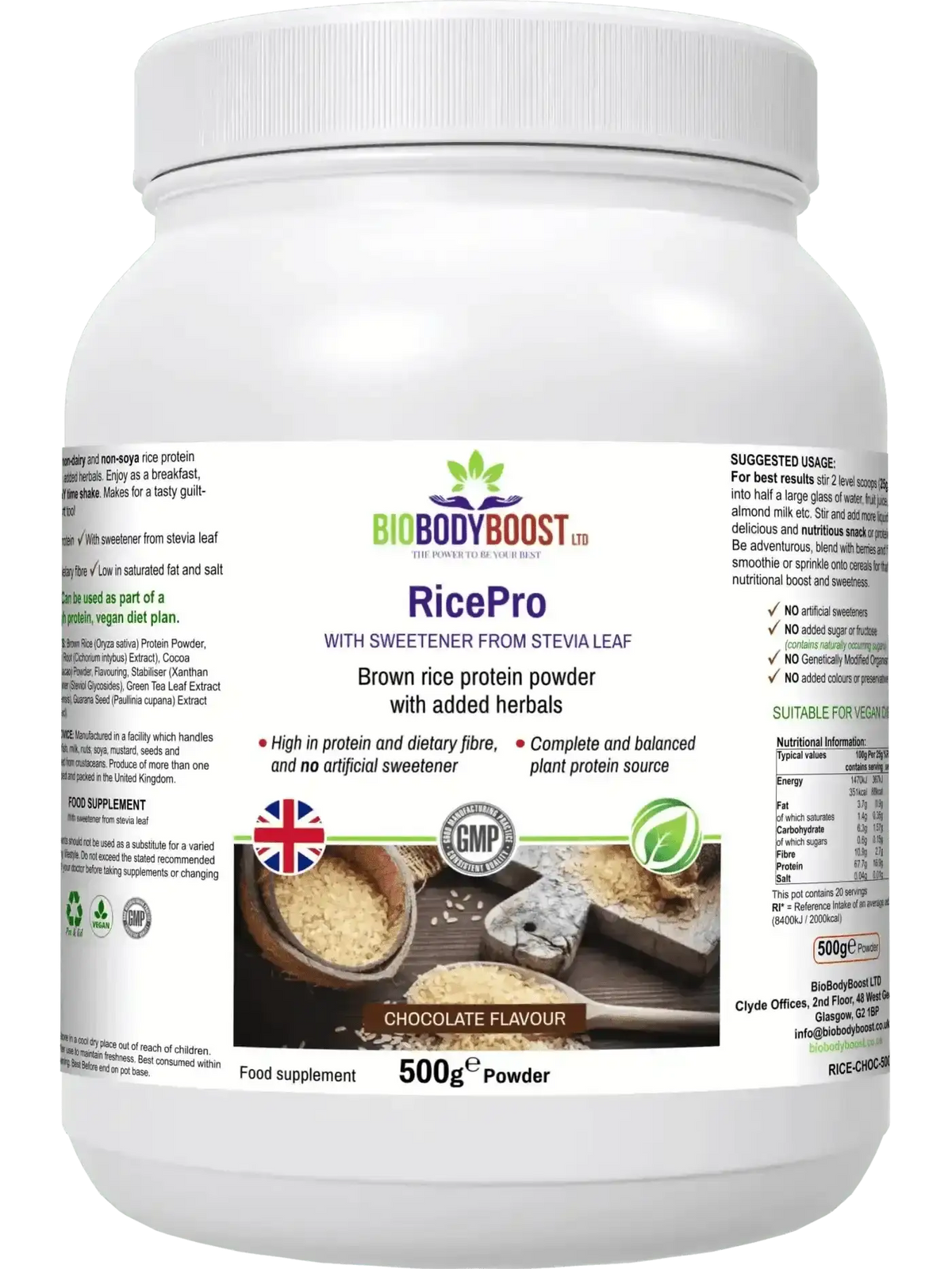
RicePro is a hexane-free brown rice protein blend, 500g, vegan and halal approved, with no artificial sweeteners. It mixes lighter than pea — closer to a smoothie thickener than a milkshake — which many people prefer in porridge, pancakes and fruit blends where whey's texture is too heavy.
Practical usage: 1–2 scoops post-workout or in breakfast; combine with creatine for strength goals, or with PeaPro half-and-half for a whey-matching amino profile.
FAQs
Is rice protein as good as whey for building muscle?
At matched higher doses (~48g), the head-to-head evidence shows equivalent gains over 8 weeks. At small doses whey's leucine density gives it an edge. Dose accordingly.
Is rice protein a complete protein?
Yes — all nine essential amino acids are present. Lysine is the limiting one, easily covered by legumes elsewhere in your diet or by blending with pea protein.
Is rice protein good for sensitive stomachs?
It's one of the most hypoallergenic options available: no dairy, no soy, no legumes, no gluten. That's its core use case.
Does rice protein contain arsenic?
Rice-derived foods can contain trace inorganic arsenic; reputable suppliers batch-test raw materials against EU/UK contaminant limits. Buy from brands that source tested protein rather than the cheapest bulk powder available.
Browse the full Protein & Performance UK and Vegan Supplements UK collections.
Food supplements should not replace a varied diet or healthy lifestyle. Consult your GP if pregnant, breastfeeding or taking prescription medication.